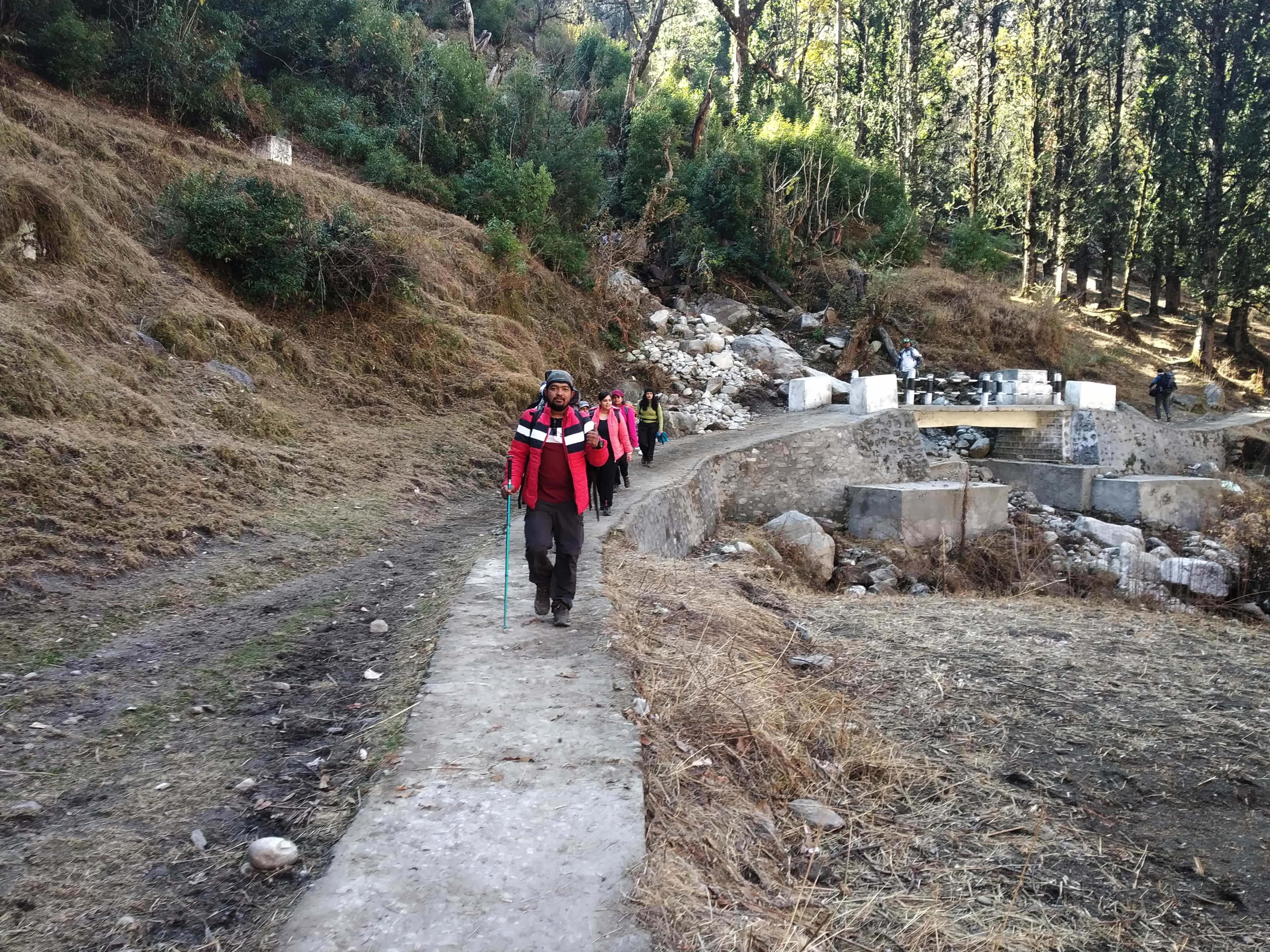
On day 5 and Day 6, you will be retracing the route back Sankri. The descent is likely to be as taxing on your knees as the ascent was on your lungs.
Fitness level required
Although Har Ki Dun is an easy-moderate trek, you will need good lung capacity and leg strength to reach the summit safely and back. If you are struggling most of the time, you won’t be able to enjoy the trek. With the end goal being enjoying the trek thoroughly and not just completing it, the following is the fitness level we recommend.
Practice jogging/running four to five days a week and see if you can cover 5 kms in 30-40 minutes. In addition to this, you can also add some resistance workouts for legs (like squats and lunges), and core workouts into your training schedule.
If you are completely new to the world of trekking and are unsure of your fitness levels, we recommend starting with a level 2 or level 3 trek from our portfolio. Treks like the Beas Kund or Brahmatal which are of lower altitude and lesser duration are excellent choices.
These will give you an idea of the terrain you are likely to encounter at Har Ki Dun while equipping you with knowledge of layering on Himalayan Treks, the kind of gear needed, the fitness levels required etc.
Gear Required for Har ki dun
While we will be providing most of the equipment needed for trekking (tents, sleeping bags, crampons, snow boots etc), there are some basic gear you will need from your end to get through your hike comfortably.
These are a sturdy, lightweight backpack and comfortable trekking shoes. In case, you plan on purchasing them, please refer to the articles below for some helpful tips on how to go about choosing the right gear for your trek.
- How to choose your back pack – Choosing the right backpack is one of the important steps for a comfortable trek. Even a slight discomfort or imbalance can be a pain. Refer to the article linked above to get some helpful tips on how to choose your backpack.
- How to choose a good pair of hiking shoes – Normal sports shoes are not well suited for trekking trails. We recommend wearing high ankle shoes which are likely to provide better support and minimize the possibility of injury. Please refer to the article linked for some helpful tips to keep in mind when choosing trekking shoes.
- How to use a Trekking pole – If you are self-reliant then you don’t need a trekking pole. But while crossing a river or descending downhill, a trekking pole can give you both physical and mental support. To know more, please refer to the article linked for some helpful tips on how to use a trekking pole.
Skills required for Har Ki Dun
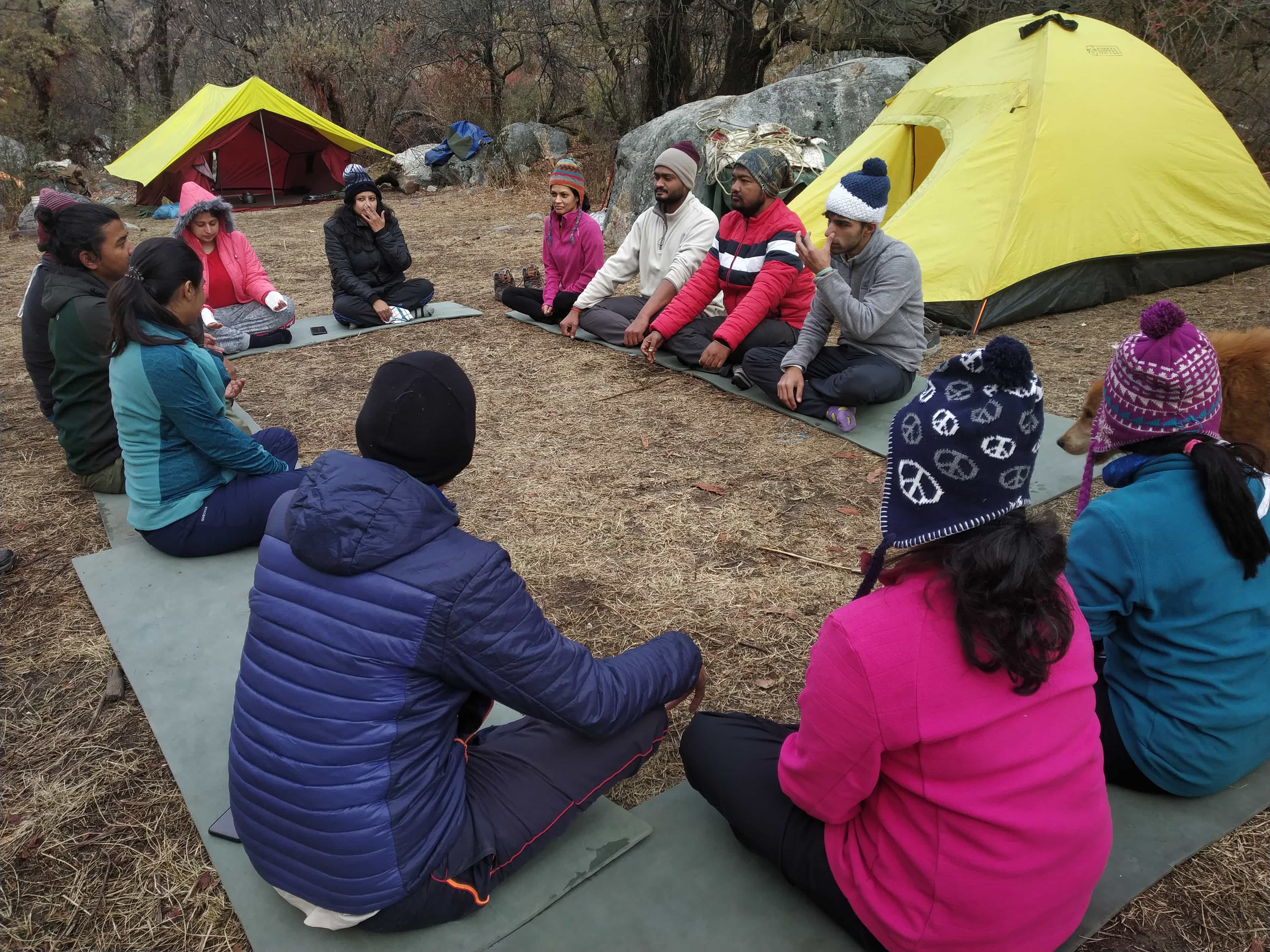
Bikat Adventures is primarily an adventure learning organization. This means our key objective is not just to help our trekkers complete treks but also to help them pick up some valuable skills in trekking and camping along the way.