logo icon
  • Treks
    New Category
    • Kedar Kantha Trek
    • Har Ki Dhun Trek
    • Chopta Tugnath Trek
    • Beas Kund Trek
    Medium
    • Valley of Flowers Trek
    • Hampta Pass Trek
    • Sundakphu Trek
    • Goecha La Trek
    Hard
    • Chadar Trek
    • Stok Kangari Trek
    • Rupin Pass Trek
    • Pin Parvati Pass Trek
    image
    Choose your trek difficulty
    View All Treks
  • Expeditions
    New Category
    • New Link
    • New Link
    image
  • Skiing
    • Skiing
  • Why Bikat
  • Full On Travel
  • Blog
  • Shop
  • About

Pure Grit. Pure Adventure.

Bikat means difficult. But with us, that’s not a warning—it’s a promise. Of stories worth telling. Of adventures worth chasing.

Region

Month

Difficulty

Adventure Name

brand
  • Treks
    • Difficulty
      • New Category
        • Kedar Kantha Trek
        • Har Ki Dhun Trek
        • Chopta Tugnath Trek
        • Beas Kund Trek
      • Medium
        • Valley of Flowers Trek
        • Hampta Pass Trek
        • Sundakphu Trek
        • Goecha La Trek
      • Hard
        • Chadar Trek
        • Stok Kangari Trek
        • Rupin Pass Trek
        • Pin Parvati Pass Trek
    • Region
      • Uttarakhand
        • Kedar Kantha
        • Har Ki Dhun
        • Rupin Pass Trek
        • Valley of Flowers Trek
      • Himachal Pradesh
        • Hmpta Pass Trek
        • Beas Kund Trek
        • Pin Parvati Pass Trek
        • New Link
      • Ladakh
        • Chadar Trek
        • Stok Kangari Trek
        • Markha Vallery Trek
        • Lumayuru Trek
      • Sikkim
        • Goecha La Trek
        • Dzongari Trek
        • Greem Lake Trek
      • Bhrigu Pass Trek
        • Annapurna Circuit Trek
        • Langtag valley
        • New Link
    • Season
      • Summer (Apr-Jun)
        • Valley of Flowers
        • Hampta Pass Trek
        • Kedarkantha Trek
      • Monsson (Jul-Sep)
        • Sundakphu Trek
        • Goecha La Trek
        • Markha Valley Trek
      • Autumn (Oct-Nov)
        • Rupin Pass Trek
        • Pin Parvati Trek
        • Har Ki Dhun Trek
      • Winter (Dec-Mar)
        • Chadar Trek
        • Kedarkantha Trek
        • Chopta Tungnath Trek
    • Family Trek
      • Family Treks
        • Chopta Tungnath Trek
        • Har Ki Dun Trek
        • Beas Kund Trek
        • Bhrigu Lake Trek
    • Beginner Friendly
      • Beginner Friendly
        • Kedarkantha Trek
        • Hampta Pass Trek
        • Sandakphu Trek
        • Dzongri Trek
    • Off-beat
      • OFF-BEAT
        • Green Lake Trek
        • Lumayuru Trek
        • Lantang Valley Trek
        • Rupin Pass Trek
    • High Adventures
      • High Adventures
        • Stok Kangari Trek
        • Chadar Trek
        • Pin Parvati Pass Trek
        • Everest Base Camp Trek
    • Bikat Recommends
      • Bikat Recommends
        • Kedarkanth Trek
        • Valley of Flowers Trek
        • Goecha La Trek
        • Chadar Trek
    • Fresh Explorations
      • Fresh Explorations
        • Lamayuru Trek
        • Green Lake Trek
        • Langtang Valley Trek
        • Bhrigu Lake Trek
  • Expeditions
    • New Column
      • New Category
        • New Link
        • New Link
  • Skiing
    • Skiing
  • Why Bikat
  • Full On Travel
  • Blog
  • Shop
  • About
Whatsapp
Chat With Us
Pre Sale
Pre Booking - 8448680062
Post Sale
Post Booking - 9319028363 /8588878499
Email
Email - info@bikatadventures.com
Email
support@bikatadventures.com

Follow us on social media

Subscribe to our newsletter

Get the latest updates and offers.

Contact Us

Whatsapp
Chat With Us
Pre Sale
Pre Booking - 8448680062
Post Sale
Post Booking - 9319028363 /8588878499
Email
Email - info@bikatadventures.com
Email
support@bikatadventures.com

Company

About Us
Careers
Blog
Why Bikat

Support

Contact
Environment Policy
Privacy Policy
Terms and Conditions
Sitemap

Services

Treks
Mountaineering
Crossover Expeditions
Cycling
Bikat Experiences
Skiing
Custom

Mobile

Download on the
Apple Store
Get in on
Google Play
© 2026 Bikat Adventures. All Rights Reserved|Powered by: Novel Knett Software Solutions
Privacy PolicyTerms of Service
FacebookTwitterInstagram
Home
>
Blog
>
Sleeping Bags that Actually Work in the Himalayan Winters (Not Just on Websites)
Informative

Sleeping Bags that Actually Work in the Himalayan Winters (Not Just on Websites)

Shivam Billore
Written by
Shivam Billore
27 Oct 2025
0 views
0 comments
Sleeping Bags that Actually Work in the Himalayan Winters (Not Just on Websites)

2021 January.

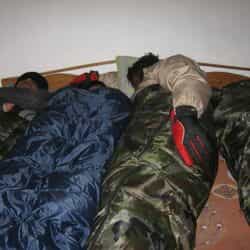
I had just come down to the lower camp of Kareri Lake after walking for almost 9 non-stop hours in almost waist-deep snow, twisted an ankle, was dehydrated, and famished. I wanted to push my body to the limit and had tried to complete a 3-day trek in a single day. Once I made it down, there was hot chai, hot food, and hot everything (anything that wasn’t freezing seemed comfortable). I felt much better. After a great dinner of dal, lentils, and rice, it was time for a well-earned sleep, or so I hoped. The tent was pitched well away from any open area and was located near a small fire we had built for cooking dinner. In my mind, it was a perfect day in the mountains. As I tried to retire inside my winter sleeping bag, I realised that, in a hurry, I slipped my head in where I was supposed to put my legs. Funny as it was, I quickly changed my position and re-entered the sleeping bag. As I was about to adjust my air pillow inside the bag and pull the zipper, tragedy struck. The zipper tore off, and the left side of my body was exposed to the elements, with just a small layer or two of the tent separating me from the snowy mountain air around. Although for the first 10 minutes, my body heat kept me warm, the opening of the bag meant bad news. After about 30 minutes, I was freezing. Despite multiple efforts to curl up into a warm ball and sleep with all my spare clothes stuffed around me, it was in vain. To add insult to a freezing injury, the insulation system of the sleeping bag was poor. So, there was cold air on my left, right, top, and bottom. Needless to say, my sleep, mood, and hence my enthusiasm to do anything the next day, vanished. One bad sleeping bag ruined an entire adventure. Don’t make the same mistake. Here’s how to actually pick the best sleeping bag for a Himalayan trek

blog-image-0

Marketing v/s Reality

Freezing temperatures and harsh winds are what will test your sleeping bag’s true capacity.  

When it comes to the best sleeping bag for a Himalayan trek, ignore nothing.
If something seems too good to be true, it probably is.

Tall tales and over-the-top promises can often lead to risks on the mountains. Avoid them.

An outdoor company can promise:

  • Tested in extreme conditions
  • Sustains up to -X degrees Celsius
  • Has XYZ synthetic and feather to keep you warm
  • Double insulation layers inside to keep your body heat from escaping 

And so on, in their advertising and marketing videos. But you (or I) haven’t seen the testing happen.

Be sceptical until you have a hands-on experience wherever feasible, and never trust a brand just for the name alone. 

Insulation and Temperature Ratings

Reading the box/specifications is key when you check for the temperature rating on a winter sleeping bag. 

  • Always go for a little extra (in this case, a little lower) when it comes to temperature.

  • Look for EN/ISO ratings before you buy and factor in a +/- 5 degrees.

  • If the bag says ‘comfortable up to -10 degrees’, then it's probably an ideal bag for 0 degrees only. So, you are better off with something warmer. 
  • Look for the ‘comfort’ rating. Any temperature range mentioned would mean you can ‘manage yourself’ well inside the bag. 
  • ‘Extreme’ ratings would mean you can live, but sleep or comfort isn’t guaranteed.

Remember to always factor in dehydration, fatigue, and not being well-fed when you think of the elements. You get colder and more uncomfortable than you think. So, going for an extra layer of insulation that adds a little bit of weight to your backpack is a good investment. 

Size and Weight


A winter sleeping bag must be relatively light and spacious, yet cosy enough not to be too big or too spacious inside.

  • As a rule of thumb, a sleeping bag can weigh anywhere between 1.5 and - 1.8kgs.
    Anything exceeding it may slow you down over time.

  • Length: You want no more than 5 inches of extra leg room. Any longer, and your body has to heat a bunch of empty, cold space.
  • Width: The sweet spot is a shoulder girth that's about 10-12 inches wider than your own. This gives you enough room to move slightly without creating dead air zones that suck heat.

  • Torso: It should feel snug around your core. A tight seal here means less warm air escapes and less cold air gets in. That's the difference between sleeping and shivering.
  • Cold spots often happen because of the extra space inside your bag. A smaller person in a large bag = icy feet, and a larger person in a small bag = cramps. 

Material and Layering

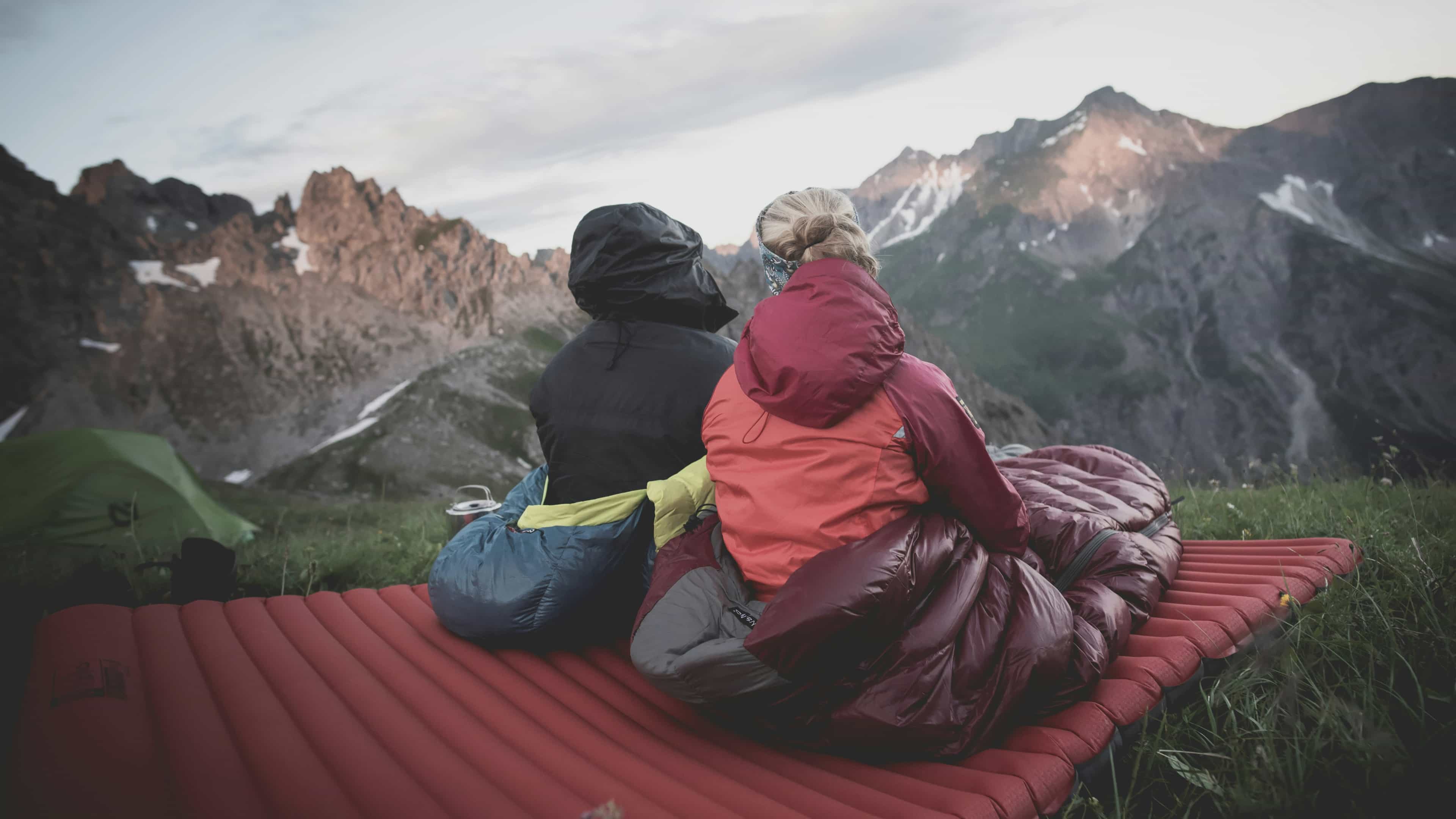
Outside of the insulation, layers, and all-encompassing anti-snag zippers, what keeps you warm is your own body heat. If your sleeping bag helps trap your heat inside the small space efficiently, then it's a win. 

Materials

The materials and the layering system make it happen.

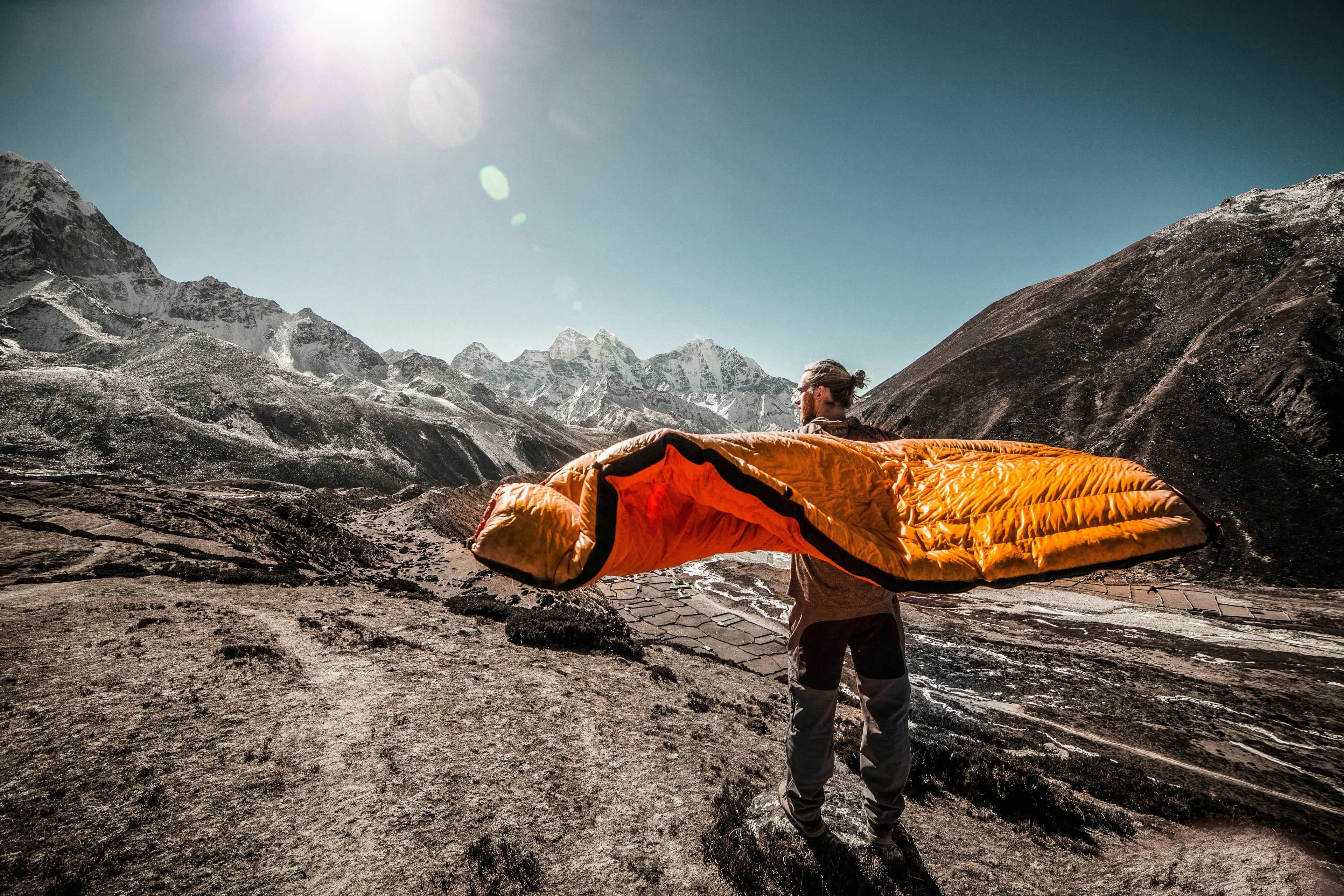
The best sleeping bags for a Himalayan trek are often of 2 types: Synthetic and Down. 

The Down is made of Goose/Hawk feathers, and is often preferred by super-experienced, ultralight mountaineers as its warmth-to-weight ratio is excellent, compared to anything synthetic.

  • It's light, warmer, and packs in compact spaces, saving you the headache of sacrificing an important piece of gear to make way for the sleeping bag. 
  • Even though it is much more fancier, friendlier, and practical in most winter weather treks, a down sleeping bag performs only when it's dry. A little Moisture, some accidentally spilled water, and all insulation is lost immediately. 

A synthetic sleeping bag is the bulkier of the two, but it is more reliable in unpredictable weather and harsher conditions. 

  • It is relatively heavy, but it is reliable and keeps you warm; however, its warmth-to-weight ratio is low compared to its down counterpart. It also takes up more space in your backpack, owing to its make and materials.

  • It can perform at any mentioned temperature range, sustain rugged handling, and can dry faster, making it more ideal for a winter trek, withstanding condensation and snow. 

When it comes to maintenance, cost, availability, and the need for a waterproof stuff sack, a synthetic sleeping bag outweighs (literally) its down counterpart, making it the safer bet in the rugged Himalayan winters. 

A regular synthetic sleeping bag can handle upto -10/-15 degrees Celsius of cold well. 

Layering

Sometimes, just a sleeping bag isn’t enough. 

  • Your sleeping bag will have silk/fleece inners/ insulation layers to protect you from the elements. If not, look for them before you purchase. 
  • Always put on a pair of thermal baselayers before you get into the sleeping bag. 
  • Change into a pair of woollen socks, and never take in the sweaty hiking socks inside your bag.
  • Make sure your sleeping bag comes with a hood (most do) and zip it up entirely to make your body heat work for you. 

blog-image-0

Common Winter Sleeping Bag Mistakes

Here are 4 mistakes to avoid while you purchase and use your sleeping bag. 

  • Do not go for a lower-priced option or the first thing you find at the shop. Check for 2-3 options, and try out whatever fits the need: A -10 degree+ comfort rating.

  • If you pick a down bag, look for 600+ fill power, and PrimaLoft® Gold or an equivalent grading for a synthetic bag.

  • Never buy a sleeping bag ONLINE, unless you are 100% SURE. Always check for a robust zipper with a full-length insulated draft tube.  
  • Never neatly fold your bag before stuffing it in. Fluff it up after use to shake and loosen the insulation. It needs air to trap heat. A compressed bag is a cold one.

When you trek in the Himalayan winters, you need a sleeping bag that works for you. Never compromise on quality when you purchase. The winters are brutal. Your bag is your first layer of defence. There is no ‘best sleeping bag for winter’. One size may not fit all. But a slim-cut mummy-shaped sleeping bag can work the best. We hope you use this guide to pick out the most efficient winter sleeping bag and enjoy the next few months on the trails!

The Gear That Gets It Right

If you’re looking for a sleeping bag that actually matches everything this article just preached — warmth, durability, and real cold-weather performance — the Tripole Zanskar Army Sleeping Bag with Fleece Lining is one of those rare ones that passes the Himalayan test.

Built for –15°C conditions, its mummy shape, water-repellent shell, and fleece-lined insulation make it a dependable fortress for cold, high-altitude nights. The 3-year warranty isn’t just a promise — it’s confidence earned from trails tougher than most people ever walk.

So, before your next trek, don’t just pack a sleeping bag. Pack one that’s been built for the same terrain you dream of.

Share
Prev
Snowfall Areas in India You Can Actually Trek Through
All blogs
Next
Gulmarg vs Auli: Where to Learn Skiing in India (An Honest Guide for 2025)

Leave a Reply

Your email address will not be published.

Max 5 images, total size 3MB
Preview images

Related content

Discover these similar Blogs

10 Mountain Features Every Trekker Should Know: Master the Lingo of the Himalayas

10 Mountain Features Every Trekker Should Know: Master the Lingo of the Himalayas

02 Apr 2026
Kedarkantha vs Dayara Bugyal: The Ultimate Winter Trek Showdown

Kedarkantha vs Dayara Bugyal: The Ultimate Winter Trek Showdown

01 Dec 2025
Skiing in Kashmir: A No-Nonsense Guide to the Gulmarg Skiing Scene

Skiing in Kashmir: A No-Nonsense Guide to the Gulmarg Skiing Scene

09 Nov 2025
Go Nuts November — Official Explainer (How to Enter + Win)

Go Nuts November — Official Explainer (How to Enter + Win)

31 Oct 2025
Gulmarg vs Auli: Where to Learn Skiing in India  (An Honest Guide for 2025)

Gulmarg vs Auli: Where to Learn Skiing in India (An Honest Guide for 2025)

31 Oct 2025
Snowfall Areas in India You Can Actually Trek Through

Snowfall Areas in India You Can Actually Trek Through

19 Oct 2025
Skiing in India: All You Need to Know Before You Hit the Slopes This Winter

Skiing in India: All You Need to Know Before You Hit the Slopes This Winter

10 Oct 2025
Trekking in Winter: Why Winter Trails Are a Different Kind of Magic

Trekking in Winter: Why Winter Trails Are a Different Kind of Magic

08 Oct 2025
Snow Trekking Shoes in India: What Actually Works on the Himalayan Trails

Snow Trekking Shoes in India: What Actually Works on the Himalayan Trails

08 Oct 2025
12 Real Winter Mistakes People Make on Winter Treks in India (And How to Avoid Them)

12 Real Winter Mistakes People Make on Winter Treks in India (And How to Avoid Them)

08 Oct 2025

Popular tags

Explore more categories and themes from the same trail journal.

March

March

0 treks
April

April

0 treks
Skiing Courses

Skiing Courses

4 treks
May

May

0 treks
June

June

0 treks
Kayaking Courses

Kayaking Courses

0 treks
July

July

0 treks
6000M+ Peaks

6000M+ Peaks

1 treks
Nepal Treks

Nepal Treks

6 treks
Offbeat Treks

Offbeat Treks

26 treks
Scuba Courses

Scuba Courses

2 treks
August

August

0 treks
Wild Life Treks

Wild Life Treks

2 treks
Winter Treks

Winter Treks

28 treks