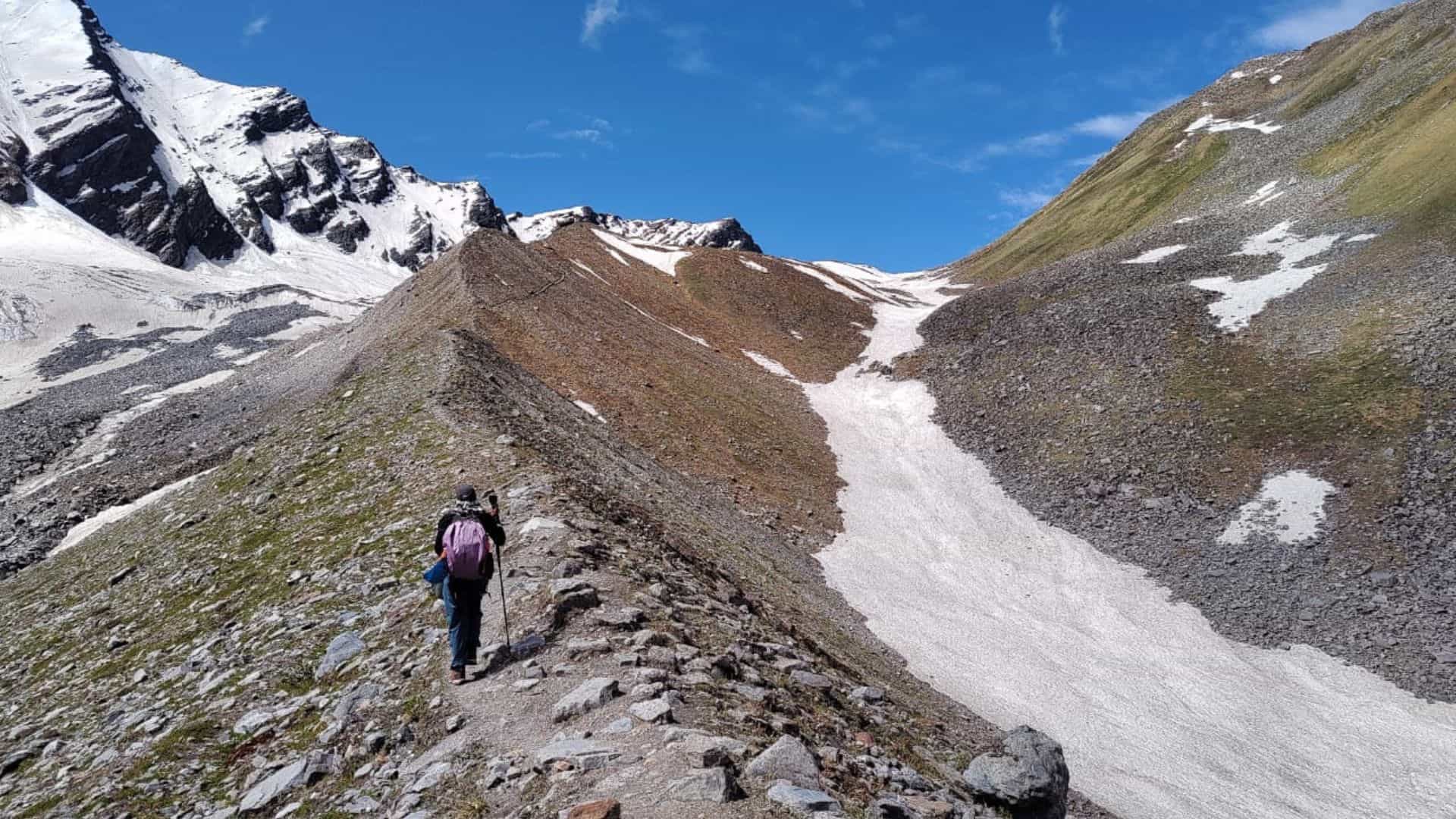
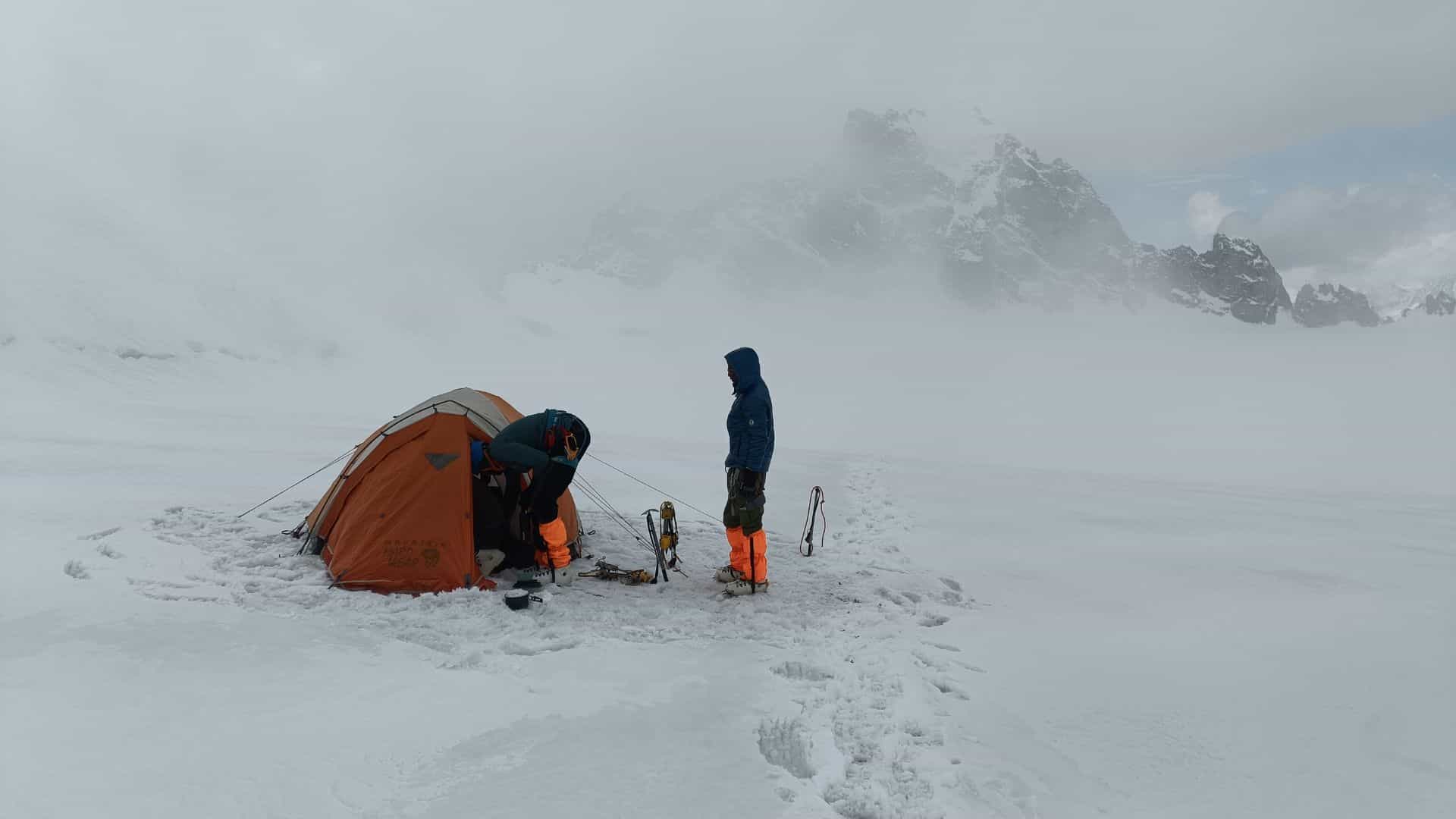
A soft, fluffy cotton T-shirt sure sounds comfortable for an evening cup of hot chai with friends. But the same cotton T-shirt for a hot chai at 12600ft in the snowy mountains of Parvati valley is a bad idea.
The fix:
- When on a winter trek, always switch to polyester and lighter, synthetic fabric options. (They keep moisture away and keep your body heat from escaping, even in wet conditions)
- Pick a light pair of weatherproof/insulated pants to go with it, and you will be fine on the snowy trails.
How do you know you’re doing it right?
- Your clothes dry quickly, don’t feel heavy, and keep you warm during and after a trek.
Dry Legs and Warm Palms
We kid you not, on a Dayara Bugyal trip during the winter of 2023, we saw 2 guys wearing Converse sneakers. Neither had any gloves in sight, either. After falling a few times, they learnt life the hard way.
Making a fashion statement in the snow is an easy way to get blisters, frostbite and injuries.
The Fix: Choose Winter Boots with:
- Deep lugs and a thick rubber outsole
- Gore-Tex or a waterproof outer layer
- High/mid ankle support & Pack at least 3 pairs of dri-fit socks, a pair of woollen socks, and a pair of woollen and waterproof gloves each.
How do you know you’re doing it right?
- You feel good, slip/fall rarely, and your hands and toes are always warm.
Not carrying a small tube of lip balm, any sunscreen with good SPF, and a pair of snow goggles can cause:
- Sunburnt skin
- Super-dry lips
- Snow blindness
- All of the above (If you are super unlucky)
The Fix:
Just carry everything mentioned above.
How do you know you’re doing it right?
- You are not sunburnt, snowblind, or have cracked lips.
Snow reflects over 80% of UV rays. And it gets harsher as you go higher. So, never treat safety on a winter trek in India as optional.
It's the Himalayan winter. It is cold enough as it is, and you don’t feel like drinking water at all. Within hours, you get dizzy, slur your words, and feel like you can’t go any further.
So, not drinking enough water is not the flex you think it is. Skipping breakfast because
‘You don’t feel like it’ is not safe. These 2 mistakes can wreck your trek.
The fix:
Every 20 minutes, take a sip of water from your insulated bottle. Have a small snack, such as a protein bar/chocolate/dry fruit, and take a bite every hour.
Make these non-negotiable, and you will handle the elements with ease.
How do you know you’re doing it right?
- You are trail-aware, energetic, and… your urine isn’t 50 shades of metallic yellow!
You feel great on the trail, so you push extra hard. The cold-dry winter air will drain you and leave you gasping for air.
Up Next: You develop altitude sickness/AMS, and your trek is over.
The fix:
- Hike high, but sleep low. Have an acclimatisation day whenever you are to gain too much in less time.
- Do not ‘race’ up the trail. Take your time and pace yourself. Let your body adjust to the altitude naturally.
- Lose altitude and go down to the lower camps, in case you have headaches.
How do you know you’re doing it right?
- You are free from nausea, discomfort, and headaches.