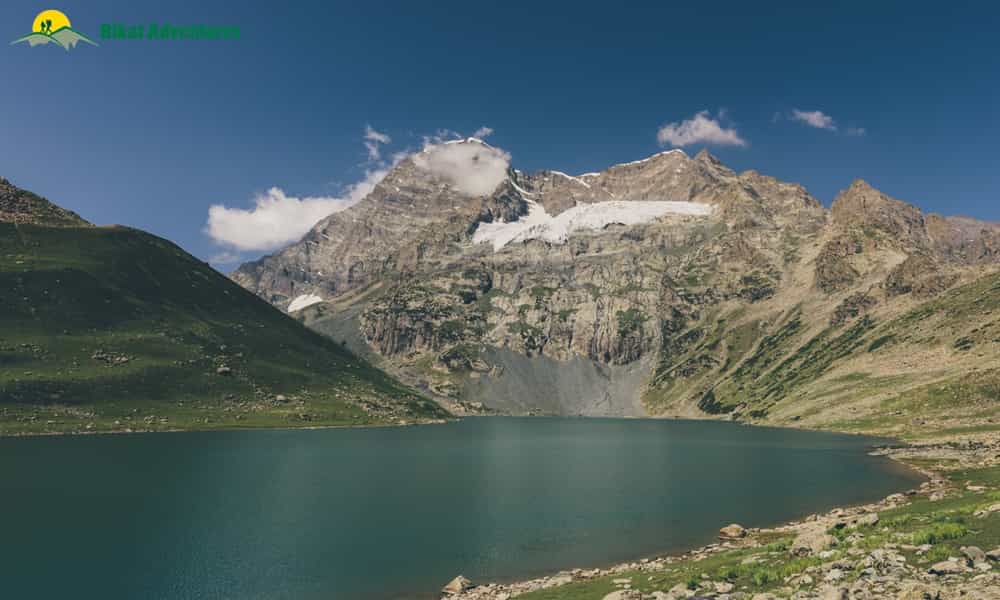
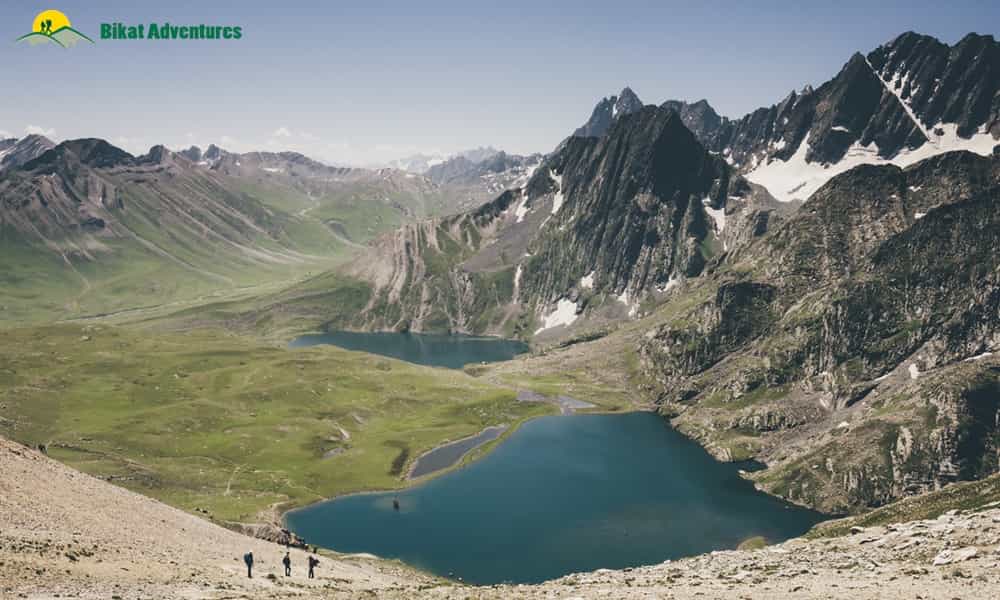
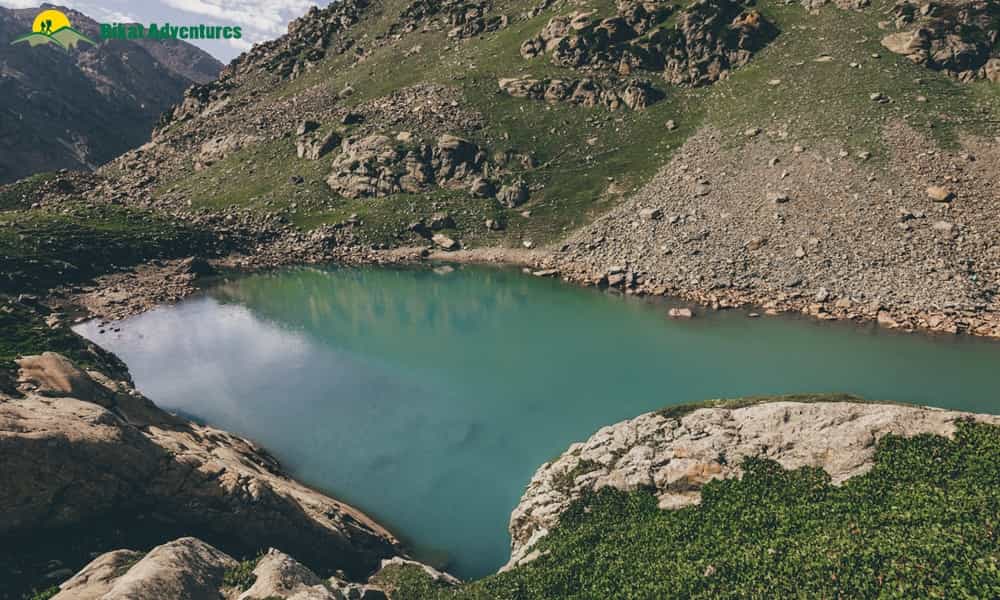
Beginning in Sonamarg and ending in Naranag, the KGL trail takes adventurers to the shore of six stunning alpine lakes in the span of eight days, with trekkers covering 69km on foot over high mountain passes and neon green valleys. Filled with mistique (local shepherds even claim a giant octopus lives in one of the lakes) and pristine views, it’s a corner of India truly worth a visit - but the lakes themselves remain the highlight of the week with their iridescent hues.
I’ve come across only a few other lakes quite as colorful as these. Ghepan Ghat is one that comes to mind, tucked away up a valley in the Lahaul region of Himachal Pradesh, that also has this mesmerizingly blue color. I’ll never forget the day we found it - it was a cloudy day and yet it seemed to almost glow turquoise. We were shocked.
The lakes of KGL are no different, and after seeing Ghepan Ghat’s color and that of those in Kashmir, my curiosity had been peaked. What makes them SO blue?? I went researching to find out…
What Makes the Kashmir Great Lakes so Blue?
First thing’s first, what type of lakes are the Kashmir Great Lakes anyways?
Answer? Oligotrophic. Sounds like a mouthful, I know, but this is the first huge part of answering why these specific bodies of water are so dang pretty, so I’ll explain a bit what this means.
One way lakes are categorized is to measure how ‘productive’ they are. In other words, see how many nutrients are in the water. If there is a high nutrient content in a lake, you will know because it will have a large amount of algae and possibly aquatic plants. These are called Eutrophic lakes, coming from the Grrek word ‘eutrophos’ that translates to mean ‘well-nourished.”
While they’re filled with fish, mainly trout, the Kashmir Great Lakes are the opposite. They are highly-oligotrophic, given that their waters have very low levels of nutrients. Oligotrophic lakes are oftentimes found in cold or high-altitude areas, as the temperature makes it difficult for the lake to be ‘productive,’ as it is called. They also are very oxygen rich and often support a lot of fish that need chilly, oxygenated waters to survive.