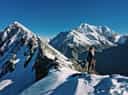
Yep. Think about it. The U.S. has been around for less than 300 years, and we are notoriously bad at carrying over cultural stories of those who rightly called this land home before we did. So we essentially have roughly 250 years of blandly mediocre info to reference when checking the history of just about anywhere we go.
A perfect example:
Pikes Peak, famous for its altitude exceeding 14,000 ft in the state of Colorado, has a remarkably underwhelming story to tell.
Zebulon Pike, the first guy to try and climb the thing, with an exceptional lack of creativity, named the mountain "Highest Peak" in 1806, saying it could never be climbed. Realizing that his choice of title totally sucked, someone renamed it "Pike's Highest Peak," which is in no way better. Finally someone named James figured out how to get on top of the thing, and it was briefly renamed James Peak in his honor, before it was changed back to Pikes Peak because it sounds cooler.
Knowing this is how to not make friends at a party, FYI.
Meanwhile in India…
I’m truly, consistently amazed by how many stories, legends and superstitions can be found at literally ever turn of a trail in this country. It gives everything an ethereal, supernatural feel, gives extra meaning and significance to almost everything you find and adds, as you say, masala to your travels.
With deities around every corner, pilgrimage sites atop the most remote corners of the earth and sages just outside your tent, I’ve made it a point now to ask the local guides what stories they can tell me about the trek we find ourselves on- because it’s bound to be good.
Most recently on Deo Tibba Base Camp trek, the stories again did not disappoint. Straight from the tellings of our local guide, Chetram, here are the legends of Deo Tibba Base Camp…
Right off the bat, our first camp of Chikka had a gem waiting for us. Just a stone’s throw away from our tents, Chetram led us to an old mossy boulder with a level excitement that is unusual for a human to exhibit toward a rock.
Then we look closer.