logo icon
  • Treks
    New Category
    • Kedar Kantha Trek
    • Har Ki Dhun Trek
    • Chopta Tugnath Trek
    • Beas Kund Trek
    Medium
    • Valley of Flowers Trek
    • Hampta Pass Trek
    • Sundakphu Trek
    • Goecha La Trek
    Hard
    • Chadar Trek
    • Stok Kangari Trek
    • Rupin Pass Trek
    • Pin Parvati Pass Trek
    image
    Choose your trek difficulty
    View All Treks
  • Expeditions
    New Category
    • New Link
    • New Link
    image
  • Skiing
    • Skiing
  • Why Bikat
  • Full On Travel
  • Blog
  • Shop
  • About

Pure Grit. Pure Adventure.

Bikat means difficult. But with us, that’s not a warning—it’s a promise. Of stories worth telling. Of adventures worth chasing.

Region

Month

Difficulty

Adventure Name

brand
  • Treks
    • Difficulty
      • New Category
        • Kedar Kantha Trek
        • Har Ki Dhun Trek
        • Chopta Tugnath Trek
        • Beas Kund Trek
      • Medium
        • Valley of Flowers Trek
        • Hampta Pass Trek
        • Sundakphu Trek
        • Goecha La Trek
      • Hard
        • Chadar Trek
        • Stok Kangari Trek
        • Rupin Pass Trek
        • Pin Parvati Pass Trek
    • Region
      • Uttarakhand
        • Kedar Kantha
        • Har Ki Dhun
        • Rupin Pass Trek
        • Valley of Flowers Trek
      • Himachal Pradesh
        • Hmpta Pass Trek
        • Beas Kund Trek
        • Pin Parvati Pass Trek
        • New Link
      • Ladakh
        • Chadar Trek
        • Stok Kangari Trek
        • Markha Vallery Trek
        • Lumayuru Trek
      • Sikkim
        • Goecha La Trek
        • Dzongari Trek
        • Greem Lake Trek
      • Bhrigu Pass Trek
        • Annapurna Circuit Trek
        • Langtag valley
        • New Link
    • Season
      • Summer (Apr-Jun)
        • Valley of Flowers
        • Hampta Pass Trek
        • Kedarkantha Trek
      • Monsson (Jul-Sep)
        • Sundakphu Trek
        • Goecha La Trek
        • Markha Valley Trek
      • Autumn (Oct-Nov)
        • Rupin Pass Trek
        • Pin Parvati Trek
        • Har Ki Dhun Trek
      • Winter (Dec-Mar)
        • Chadar Trek
        • Kedarkantha Trek
        • Chopta Tungnath Trek
    • Family Trek
      • Family Treks
        • Chopta Tungnath Trek
        • Har Ki Dun Trek
        • Beas Kund Trek
        • Bhrigu Lake Trek
    • Beginner Friendly
      • Beginner Friendly
        • Kedarkantha Trek
        • Hampta Pass Trek
        • Sandakphu Trek
        • Dzongri Trek
    • Off-beat
      • OFF-BEAT
        • Green Lake Trek
        • Lumayuru Trek
        • Lantang Valley Trek
        • Rupin Pass Trek
    • High Adventures
      • High Adventures
        • Stok Kangari Trek
        • Chadar Trek
        • Pin Parvati Pass Trek
        • Everest Base Camp Trek
    • Bikat Recommends
      • Bikat Recommends
        • Kedarkanth Trek
        • Valley of Flowers Trek
        • Goecha La Trek
        • Chadar Trek
    • Fresh Explorations
      • Fresh Explorations
        • Lamayuru Trek
        • Green Lake Trek
        • Langtang Valley Trek
        • Bhrigu Lake Trek
  • Expeditions
    • New Column
      • New Category
        • New Link
        • New Link
  • Skiing
    • Skiing
  • Why Bikat
  • Full On Travel
  • Blog
  • Shop
  • About
Whatsapp
Chat With Us
Pre Sale
Pre Booking - 8448680062
Post Sale
Post Booking - 9319028363 /8588878499
Email
Email - info@bikatadventures.com
Email
support@bikatadventures.com

Follow us on social media

Subscribe to our newsletter

Get the latest updates and offers.

Contact Us

Whatsapp
Chat With Us
Pre Sale
Pre Booking - 8448680062
Post Sale
Post Booking - 9319028363 /8588878499
Email
Email - info@bikatadventures.com
Email
support@bikatadventures.com

Company

About Us
Careers
Blog
Why Bikat

Support

Contact
Environment Policy
Privacy Policy
Terms and Conditions
Sitemap

Services

Treks
Mountaineering
Crossover Expeditions
Cycling
Bikat Experiences
Skiing
Custom

Mobile

Download on the
Apple Store
Get in on
Google Play
© 2026 Bikat Adventures. All Rights Reserved|Powered by: Novel Knett Software Solutions
Privacy PolicyTerms of Service
FacebookTwitterInstagram
Home
>
Blog
>
A Travel Guide to Manipur
Informative

A Travel Guide to Manipur

Rishabh Tiwari
Written by
Rishabh Tiwari
30 Sept 2023
0 views
0 comments
A Travel Guide to Manipur

Home to three major ethnic communities, the Meiteis, the Nagas and the Kuki-Chins, Manipur is the Jeweled Land of India. Apart from being a corner blessed with unlimited natural beauty, Manipur is also a land of boundless colour, tradition, music and arts born of all the cultural diversity within the state.  As a self-contained civilization, it is a sanctuary for old traditions and new, all of which celebrate the land and its magnificent people. From paddy-strewn fields to hilltops blooming with orchids, a vast network of water bodies, thick forests filled with rare birds and flora, and the generosity of its people, Manipur is stunning inside and out.


blog-image-0


Manipur is also where the sport of Polo was born. It is locally known as Sagol Kangjei. Sagol means horse and Kangjei means a sport similar to hockey. It is still played in Manipur. The state also has its own form of martial arts.  

Although political unrest in the region has lent a certain reputation to the state, it is safe to travel to Manipur as long as you keep abreast about the political scenario there at the time and stick to exploring the areas with proper facilities. The government has, since the recent past, taken up the task of improving the facilities within the state to invite more tourists to its borders. 

Here is some information which might be useful to plan your trip to this green haven. 


The magnificence of Manipur

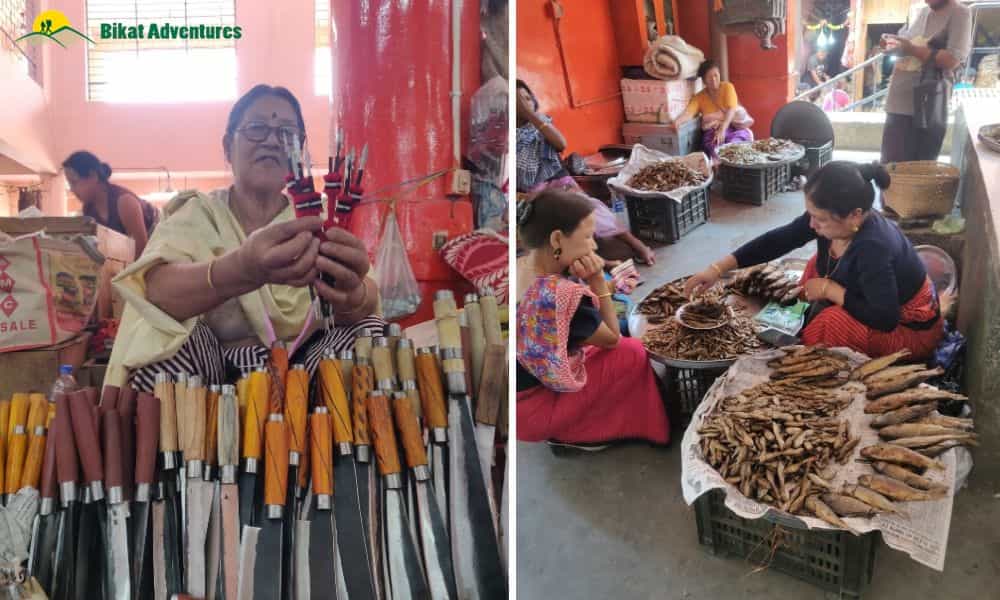
What is Manipur known for, you ask? Two things. The first of course, is the Ima Market which is the only market in the world run solely by women. Male shopkeepers and vendors are forbidden in these long, bright alleyways of the market stationed in the heart of the capital city of Manipur i.e. Imphal. Ima Market literally translates to ‘Mother’s Market’. Vendors here broadly range between the ages of 45-70 years old. It is also known to have a strange rule allowing only women who have been married at least once to set up stalls in the market.


blog-image-0


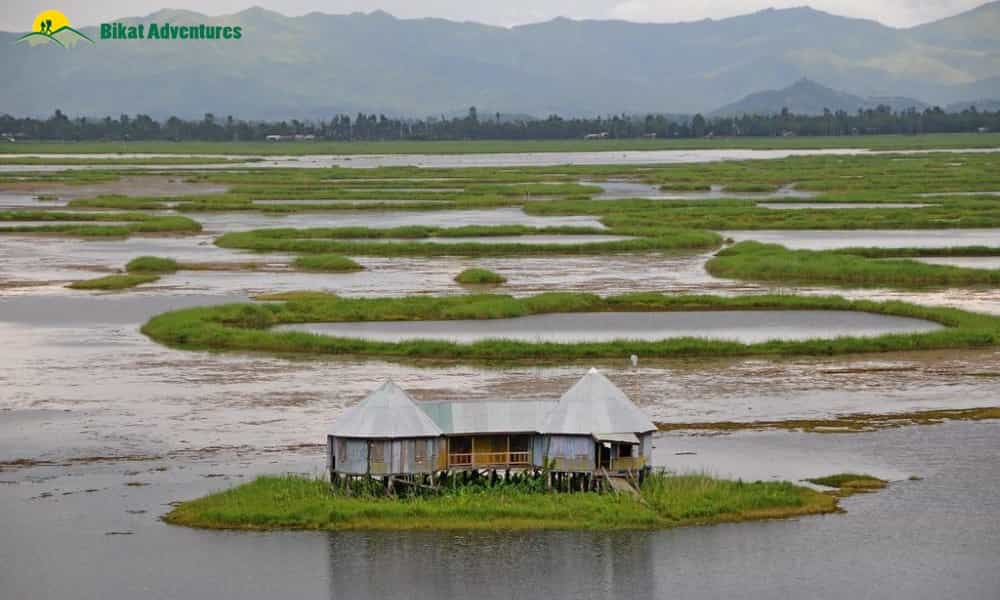
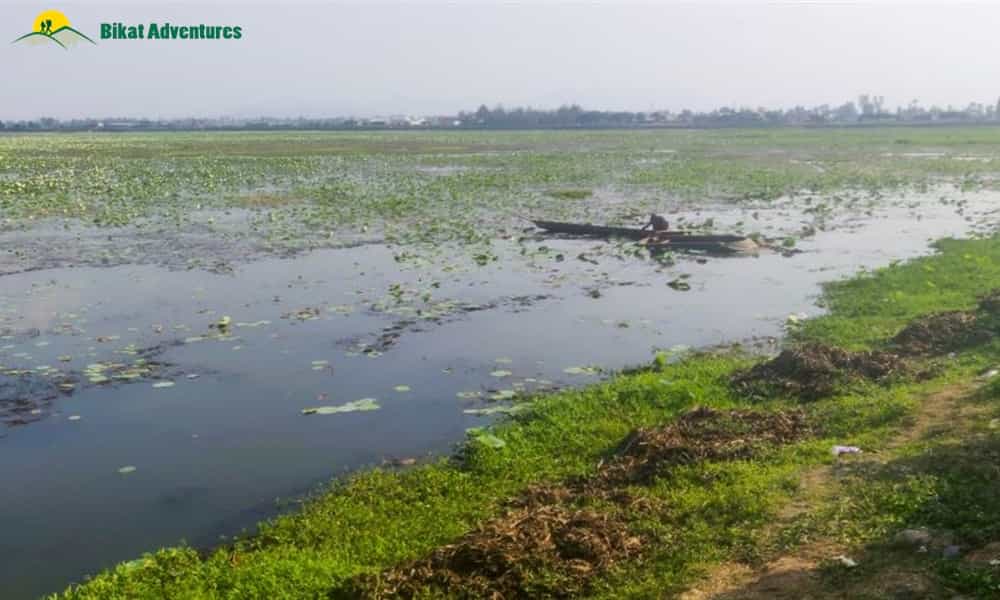
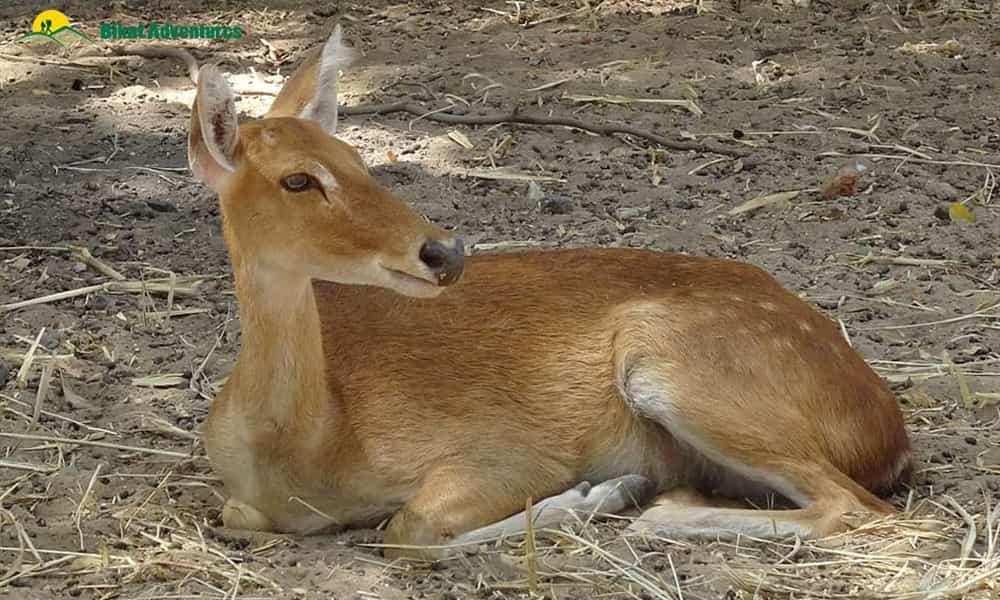
The second most intriguing feature of Manipur is the Keibul Lamjao National Park which is the world’s only floating national park. It lies within the Loktak Lake which holds a title of its own – that of being the largest freshwater lake in South Asia. Loktak is an extraordinary lake which has massive circular masses of green grass floating over its surface, covering the entire length of the lake. These hollow, circular land masses are called phumdi which is basically a local term for a mass of vegetation, soil and organic matter in various stages of decay. They are literally floating islands which are used by locals to build huts for fishing and other livelihood purposes. The lake on the whole has a residency of over 4000 inhabitants. The largest single mass of phumdi covers an area of 40 km. This mass is where the world’s largest floating park, the Keibul Lamjao National Park, is. This park is the only place you will find the Eld’s Deer or Sangai as it is known in the local language. It is the state animal for Manipur and the park was created to protect the species from extinction. It is also called the dancing deer and the government of Manipur organizes a festival just to celebrate the Eld’s deer. The festival is called Sangai Festival.   

This is not the end of all the fascinating things going on on this very fascinating lake. The lake houses, on one of its landmasses, a village called Karang. With close to 300 houses and a total population of a little less than 2000, this island village became the first island in India to adopt the idea of a cashless economy. The island became the first fully cashless island village in 2017, as declared by the Union Electronic and Information Technology Ministry.

The lake truly is a world of its own.


The story behind mulberry silk rearing in Manipur

The tradition of sericulture has an old association with the state of Manipur. The state produces all 4 types of silk namely mulberry, tasar, eri and muga. Each kind of silk is produced in different regions of the state. One of the many interesting myths from the state tells a tale of how this art was born.


blog-image-0


It is believed that a long, long time ago, a Burmese princess married a common soldier from the rival kingdom of Manipur. When she moved there after marriage, she realized that her husband and his mother are common folk who live a modest life. She wanted to do something to turn their fate around. For this, she came up with a plan. She asked her husband to prepare a room for her with no windows. She then proceeded to collect mulberry leaves each day, lock herself in her closed room and get to work. After a long time of doing this for every single day, she managed to finish her beautiful silk cloth which glowed like the sun. She then asked her husband to sell it in the market and as she rightly assumed, they got a handsome price for it. This soon turned into routine, where the princess would collect mulberry, get to work and have her husband sell her creations in the market until they managed to accumulate large sums of fortune. 

This is how weaving became a household engagement in the villages of Manipur and remains so to this day.


How to Get to Manipur

The best entry point into Manipur is its capital city, Imphal.

By Air

There is an airport at Imphal which is at a distance of 8 kms from the main city. It is well connected to Delhi, Guwahati, Kolkata and other major cities. 


By Rail

There are no direct train services to Manipur. The closest railheads to Imphal are at Guwahati (485 kms) and at Dimapur (200 kms). You can reach Imphal from these cities by air or road. 


By Road

There are daily buses to Imphal from Guwahati in Assam and Dimapur in Nagaland. Both private and state buses are available. There are also shared cabs between Dimapur (Nagaland) and Imphal (Manipur). 


Travelling Within Manipur

Imphal is the state center. All roads in Manipur lead to Imphal – it is the only major city in Manipur which connects all the other districts within the state. 

The bus system across Manipur is somewhat unreliable. The best way to travel is shared jeeps or private hired cars. Remember that the sun rises early and sets early in the Northeast. Start your day early and be indoors before 5 pm when it gets dark.


blog-image-0


Permits

The Inner Line Permit (ILP) regime was extended to Manipur on 11 December 2019. You can apply for an eILP for your dates of visit at https://manipurilponline.mn.gov.in/. 


Best Season to Travel to Manipur

April to June are best to experience the natural beauty of the state. This is when the rich flora of Manipur is in full bloom, including the much celebrated Shirui Lily which is the state flower of Manipur. November and December are the high season, best to get a taste of Manipur’s culture since most festivals of the state are celebrated in these months.


Understanding the Map of Manipur


blog-image-0


Manipur is divided into 16 districts. Some of the main districts from a tourism perspective are:


1. Imphal

Imphal is the entry point to Manipur. It is also the state center which connects all the other districts within the state. Some places of interest in Imphal are Kangla Fort – the ancient capital of Manipur, Manipur State Museum, Ima Market, the War Memorial. You will also find the best hotels and frequent transport facilities from the bustling city of Imphal. Remember to walk down its streets to feel the pulse of the city. 


2. Bishnupur

Bishnupur is just 30 kms south of Imphal and should be the next logical stop in your itinerary. The district is drenched in war history and also houses the beautiful Loktak Lake. State buses may not be very reliable; it is best to hire a private or a shared cab from Jiri Parking Lot which is in the heart of Imphal city.  Some places of interest in Bishnupur are Loktak Lake, Keibul Lamjao National Park, INA Memorial and War Museum, Thanga Island, Red Hill and Japanese War Memorial, Loukoi Pat and of course the many bazaars in the area. The small street stalls with fresh street food around Loktak Lake are also worth a visit. 


3. Tamenglong

Tamenglong is one of the most scenic regions of Manipur and also the farthest from the state center, Imphal. The 165 kms between Imphal and Tamenglong takes close to 4 hours to cover. Remember to spend at least one week in the district to explore all that it has to offer by the way of its scenic hills, deep subtropical and bamboo forests, blooming orchids, mandarin farms, rugged rock faces, placid lakes and its many tribes and tribal villages. The region is also a sanctuary for very many varieties of Great Pied Hornbill. Private cabs may prove to be very expensive since it is one of those offbeat regions which is not frequented by tourists. Buses leave every morning from Imphal to get to Tamenglong. Some places of interest in the district are Barak River, Tharon Cave, Zeiladzang Village, Mount Kisha Khou, Buning Hills, Lawachara National Park.


4. Ukhrul

Ukhrul is the hill district of Manipur. Eighty kilometers from the city of Imphal, Ukhrul is known for its scenic views, Naga cuisine and a chance to see the infamous Shirui Lily. Buses may be unreliable but private cabs are aplenty. A day trip to Ukhrul and back to Imphal may cost quite a lot, however. Some places of interest here are Shirui Hills, Khangkhui Caves, Sihai Phangrei, Khayang waterfalls. 


Eight Things You Absolutely Must Do in Manipur

1. Trek to Dzukou Valley to explore its natural beauty

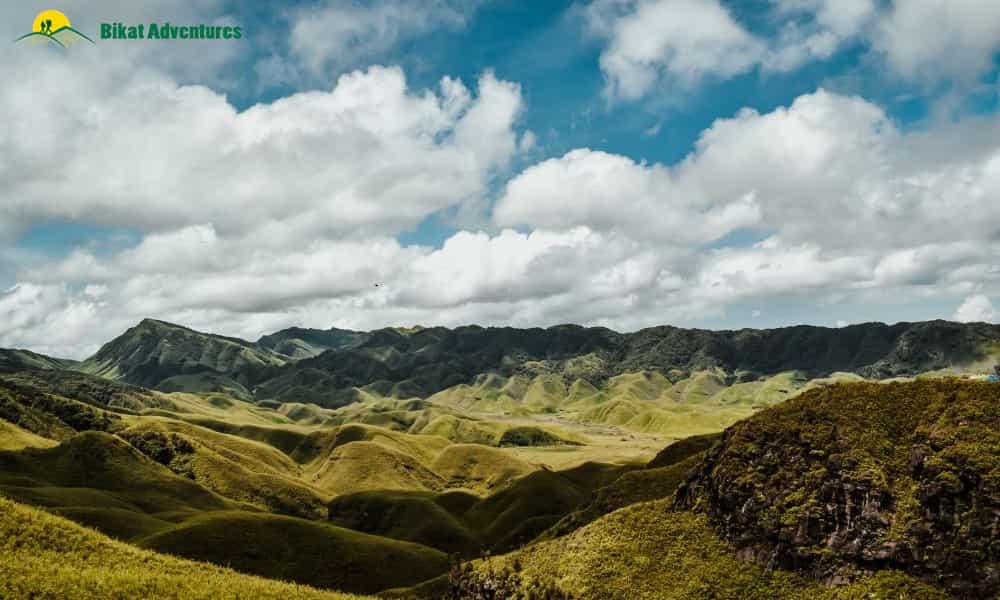
Lush green forests and a wide expanse of rolling hills as far as your eye can see – that is pretty much what describes Dzukou valley, one of the most beautiful treks on the border of Manipur and Nagaland. The flora and fauna found on this trek are unmatched in their beauty and charm. The trail is an introduction to the unique culture of Nagaland as it takes you through some of the most remote villages in the state.


 

blog-image-0


2. Visit its many National Parks

Thick forests, deep valleys and multiple river systems make Manipur a sanctuary for common and rare species of mammals, birds and flowers. Some of the easily accessible national parks that house the best of Manipur’s flora and fauna are:


a. Keibul Lamjao National Park, Manipur

It is the world’s only floating national park. It lies within the Loktak Lake in Manipur which holds a title of its own – that of being the largest freshwater lake in South Asia. This park is the only place you will find the Eld’s Deer or Sangai as it is known in the local language. It is the state animal for Manipur and the park was created to protect the species from extinction. It is also called the dancing deer and the government of Manipur organizes a festival called Sangai Festival, just to celebrate the Eld’s deer.


b. Sirohi National Park, Manipur 

It is a protected area in the Ukhrul district of Manipur. It is said to be the only place in the world where you will find Shirui Lily which is an extremely rare species of land-lily. This endangered species of the lily, which is also the state flower of Manipur, is known to grow only 8,500 ft above sea level.


blog-image-0


3. Attend the local festivals

As a home to multiple cultures and a diverse range of natural life, Manipur naturally has a lot of festivals celebrating all of the life that inhabits it. Manipur Sangai Festival is one of the most important festivals of the state. It is a multi-day affair that exhibits the best of the state’s culture, craft, textile heritage, indigenous sports, adventure sports, music and dance. It is held every year towards the end of November. The state also celebrates a host of other festivals all throughout the year. Participating in these local celebrations is the best way to feel a part of the community and witness it as an insider. The festivals will also introduce you to some of the best local music and Manipuri dances.


4. Visit the only market in the world run by women

Ima Market, in the heart of Imphal city, is the only market in the world run solely by women. Ima Market literally translates to ‘Mother’s Market’; male shopkeepers and vendors are forbidden in the long, bright alleyways of this bazaar which sells everything of everyday need from handicrafts to vegetables and fishes to utensils and clothes. Vendors here broadly range between the ages of 45-70 years old. It is also known to have a strange rule allowing only women who have been married at least once to set up stalls in the market.


blog-image-0


5. Try Manipuri Cuisine

Manipuri food is simple, organic and full of nutrition. A typical Manipuri meal includes fresh vegetables grown locally, bamboo and a rich variety of meat preparations served with a scoop of rice, all prepared with local herbs and spices. The vegetarian food options in the state are just as elaborately prepared and mouth watering as their non-veg counterparts. Manipuris especially love their chillies, so if you cannot handle spice, you might want to inform your host beforehand. Some of the popular local dishes of Manipur are Boras, Aloo Kanghou, Chakhao amubi (black rice), paknam, yongchaak singju, and nga thongba.


6. Experience the state through its many traditions

Manipur has a rich natural as well as cultural history which is best explored through its museums, memorials, sports and arts. Another thing that is unique to the state is the rich history of its textiles and fabrics which are a big part of the Manipuri identity.


7. Head outdoors into the wilderness

The landscape of Manipur is a good playground for adventure – it offers a wide range of outdoor exploration options. Senapati and Ukhrul, especially, are the best regions to engage in some trekking and caving activities.


blog-image-0


8. Visit the Indo-Myanmar border and enter Myanmar through Indi-Myanmar Friendship Gate

Manipur shares its borders with Myanmar. Moreh, in the Chandel district, as the last settlement on the Indian side is a hub of unique products and goods born of the intermingling of multiple ethnicities from both sides of the border. If you have an Indian passport, you can even cross over to the other side of the border to enter Tamu which is the last village on the Myanmar side. After paying a nominal fee at the check post, you can go through the Indo-Myanmar Friendship Gate to reach Namphalong Market (originally known as the Burma Market) in Myanmar. It is quite an experience. Although remember not to go further ahead from Tamu – you need a proper visa to explore more of Myanmar.  

This is all from us about Manipur. We hope this helps you kick off your travel plans to the state. If you happen to visit this haven and see something you think we should share with our community of outdoor enthusiasts, we’d love to know!


Share
Prev
An Exploration of Northeast India
All blogs
Next
A Travel Guide to Arunachal Pradesh

Leave a Reply

Your email address will not be published.

Max 5 images, total size 3MB
Preview images

Related content

Discover these similar Blogs

10 Mountain Features Every Trekker Should Know: Master the Lingo of the Himalayas

10 Mountain Features Every Trekker Should Know: Master the Lingo of the Himalayas

02 Apr 2026
Kedarkantha vs Dayara Bugyal: The Ultimate Winter Trek Showdown

Kedarkantha vs Dayara Bugyal: The Ultimate Winter Trek Showdown

01 Dec 2025
Skiing in Kashmir: A No-Nonsense Guide to the Gulmarg Skiing Scene

Skiing in Kashmir: A No-Nonsense Guide to the Gulmarg Skiing Scene

09 Nov 2025
Go Nuts November — Official Explainer (How to Enter + Win)

Go Nuts November — Official Explainer (How to Enter + Win)

31 Oct 2025
Gulmarg vs Auli: Where to Learn Skiing in India  (An Honest Guide for 2025)

Gulmarg vs Auli: Where to Learn Skiing in India (An Honest Guide for 2025)

31 Oct 2025
Sleeping Bags that Actually Work in the Himalayan Winters (Not Just on Websites)

Sleeping Bags that Actually Work in the Himalayan Winters (Not Just on Websites)

27 Oct 2025
Snowfall Areas in India You Can Actually Trek Through

Snowfall Areas in India You Can Actually Trek Through

19 Oct 2025
Skiing in India: All You Need to Know Before You Hit the Slopes This Winter

Skiing in India: All You Need to Know Before You Hit the Slopes This Winter

10 Oct 2025
Trekking in Winter: Why Winter Trails Are a Different Kind of Magic

Trekking in Winter: Why Winter Trails Are a Different Kind of Magic

08 Oct 2025
Snow Trekking Shoes in India: What Actually Works on the Himalayan Trails

Snow Trekking Shoes in India: What Actually Works on the Himalayan Trails

08 Oct 2025

Popular tags

Explore more categories and themes from the same trail journal.

March

March

0 treks
April

April

0 treks
Skiing Courses

Skiing Courses

4 treks
May

May

0 treks
June

June

0 treks
Kayaking Courses

Kayaking Courses

0 treks
July

July

0 treks
6000M+ Peaks

6000M+ Peaks

1 treks
Nepal Treks

Nepal Treks

6 treks
Offbeat Treks

Offbeat Treks

26 treks
Scuba Courses

Scuba Courses

2 treks
August

August

0 treks
Wild Life Treks

Wild Life Treks

2 treks
Winter Treks

Winter Treks

28 treks