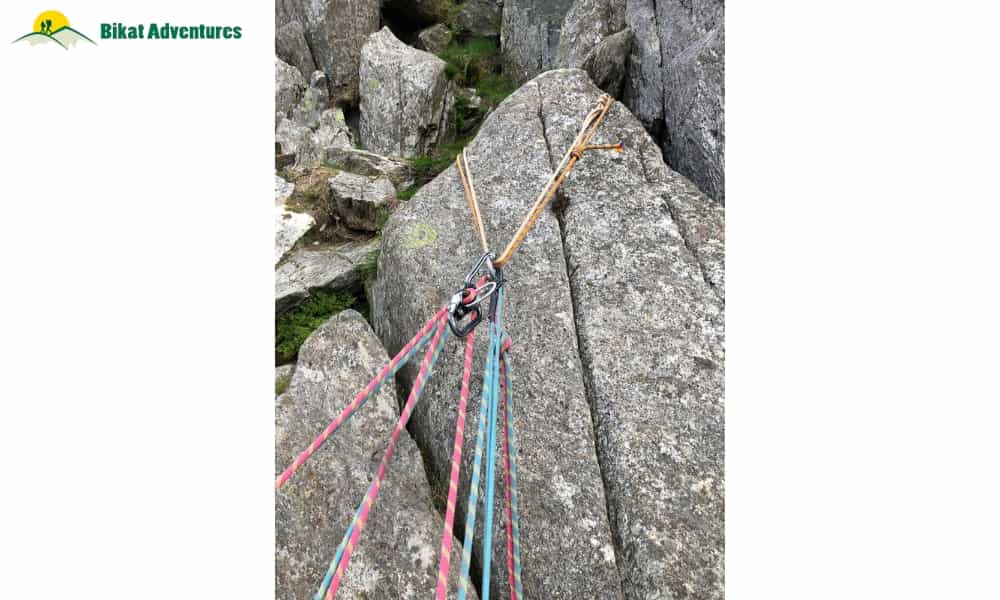

Climbing rope forms an essential part of a long chain of protective equipment that are used by climbers to avoid a serious risk of injuries during a fall. They also enable the climber to ascend on slopes and help in hauling up gear when required. These ropes are designed to be extremely strong, durable and also light, in order to meet strict requirements that ensure that the rope does not break or tear during an accident.
This article provides an insight into the kinds of climbing ropes available, their functions and a few general tips on their care and maintenance.
Different Types of Climbing Rope and their Usage
Dynamic Rope: True to its name, these ropes are designed to stretch, which helps absorb the impact during an accidental fall. Dynamic ropes are available in four variants: single, half, twin and multi-purpose ropes.
Single ropes are made to be used by themselves and not with other ropes. These are popular among climbers as they come in different lengths and diameters, making them suitable for a variety of climbing disciplines. They are best suited for top roping, sport and trad climbing. Single ropes are distinguished with a circled 1 marked on either end of the rope.
Half ropes involve two ropes, both clipped for protection on either sides during ascent. On wandering routes, this helps reduce rope drag and are also best suited for ice climbing and mountaineering. Two ropes prove to be useful if one of them breaks during an accident or a fall. However, half rope requires a higher degree of effort and skill when compared to a single rope as you will be belaying and climbing with two ropes. It is important to not mix half ropes as they are designed to be used as a matching pair. They are distinguished with a circled ½ on each end.
Like half ropes, twin ropes involve a two rope system. However, with twin ropes, both the ropes are always clipped through each piece of protection, like in a single rope system. This results in higher drag, making twin ropes more suitable for non-wandering routes, ice climbing and mountaineering. These weigh less and are thinner than half ropes, thus offering a lighter rope system. In a twin rope system, two ropes prove to be useful if one of them breaks during an accident or a fall. However, twin rope requires a higher degree of effort and skill when compared to a single rope as you will be belaying and climbing with two ropes. Similar to half ropes, it is important to not mix half ropes as they are designed to be used as a matching pair. They are distinguished with an infinity symbol on either end.
Multi-purpose ropes have multiple ratings and have been tested and rated for different applications. You will see that some ropes have the rating of two or all three of the above (single, half and twin) ropes. These offer more flexibility and can be used for all the purposes that the above ropes serve.
Static Rope: These ropes are designed and best suited for hauling loads, ascending fixed lines and in situations where climbers have to be rescued. They prove to be extremely useful in situations where you do not want the rope to stretch, such as during rescue work or hauling up loads. These ropes are not to be used for lead climbing or top roping as they are not made or designed for such activities.
Rope length and weight are important considerations while buying any kind of rope or even deciding which one you need to carry for your expedition. For example, if your climbing route is 30m, you will need a minimum of 60m of rope. Dynamic rope is available between 30m-80m. A 60m rope is the standard and often meets all the requirements in most circumstances. Static rope comes in varying lengths and is even sold by the foot, allowing you to buy the exact length you require. Weight of the rope depends on the length, diameter and its core construction. The information pertaining to its length and weight can be found on one end of the rope. Dynamic rope weight is given in weight per meter whereas static rope is given in weight per foot.
Functions of a Rope
Ropes are quite literally a life-line for
Climbing: One of the most important functions of rope is to aid the climb. Jumars are clipped onto the ropes and used in pairs for the climber to make their way up. This also adds to the safety of the climber and avoids the risk of serious injuries. All mountaineering without rope is very uncommon and rope is almost indispensable during expeditions involving a peak climb.