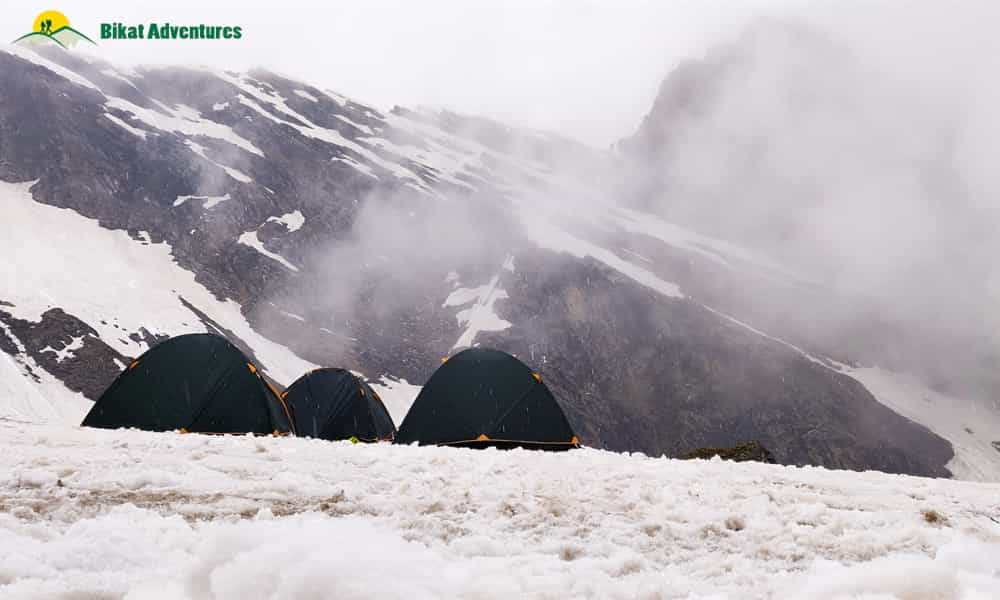
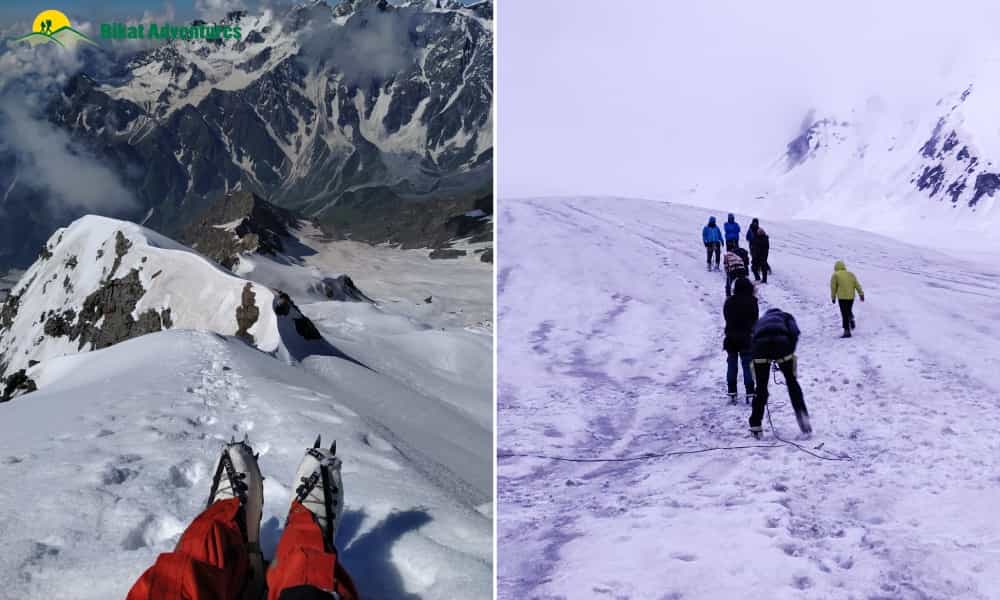
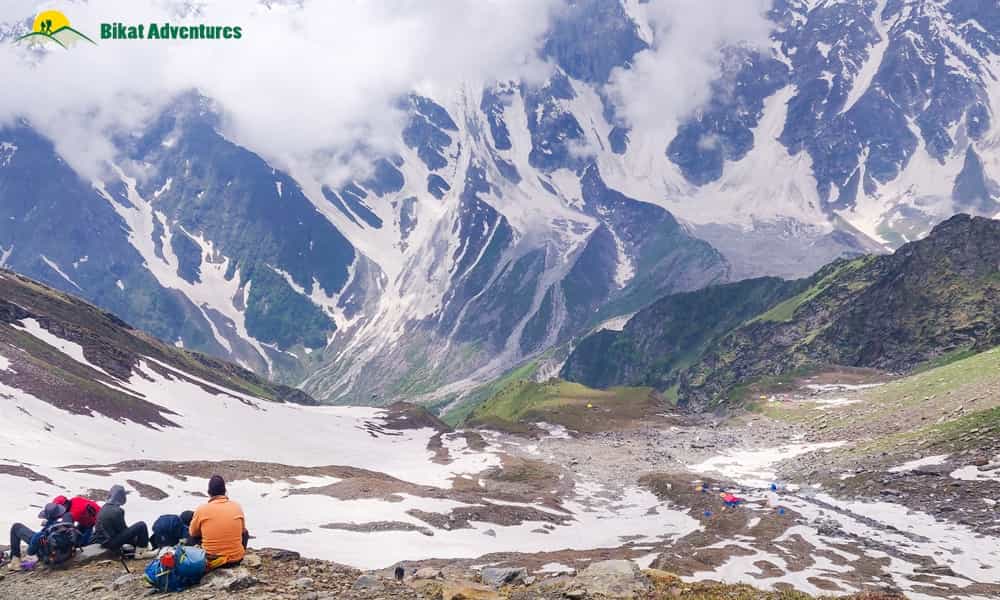
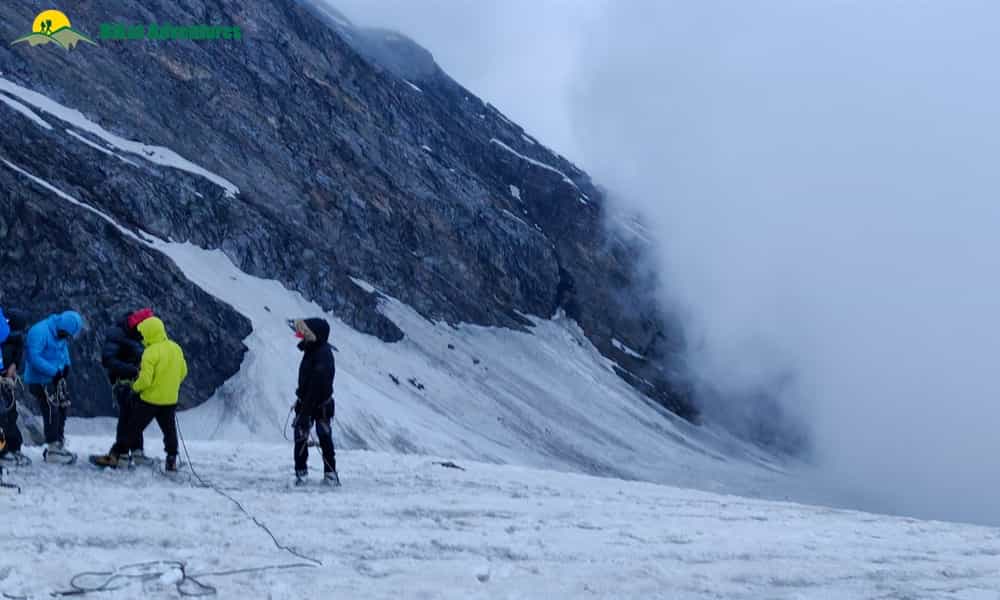
This might require long hours of mental preparation but we can assure you that once you are back down, the memory of the climb is sure to keep your brain firing for weeks to come.
Gear required for Friendship
While we will be providing most of the technical equipment needed for the trek (tents, sleeping bags, crampons, snow boots, ice axe), there is some basic gear you will need from your end to get through your hike comfortably.
Some of the things you will need are:
1) A sturdy, lightweight backpack: A good backpack which sits comfortably on your back without putting too much pressure on it can be the deciding factor between making it to the summit or not. Good, however, is not a synonym for expensive.
One of our founders, Pankaj, purchased a non-branded pack for INR 1100 in 2010 and the pack continues to work just fine for him even today. In the article linked below, he shares some helpful tips on what to look for when choosing a trekking backpack.
How to choose your backpack
2) Comfortable trekking shoes: Happy feet equal a happy trek. Conventional sports shoes don’t suit trekking trails. We recommend wearing high ankle shoes with sturdy soles. These not only provide better support but also reduce the possibility of injuries while hiking. In case, you need help with a list of deciding factors that make for good trekking shoes, please refer to the article below.
How to choose a good pair of hiking shoes
3) Right Clothing: Any high-altitude trek requires specific kinds of clothing. It should be warm but light weight. It should also be such that it is easily packaged. On high-altitude treks like Friendship Peak, we usually employ the layering method where you put on multiple layers of clothing instead of one very heavy, thick jacket. This is for two reasons:
- The weather in Himalayan regions is unpredictable and changes very quickly. Layering gives you the freedom to adapt to that accordingly where you are not left feeling too hot or too cold.
- These are easy to carry and are packing-friendly.
4) Right Sunglasses: When you know you are going to be in and around snow or in any high-altitude location where the sun is harsh, you might want to carry a good pair of sunglasses. A lack of these could prove to be fatal. The article below can help you pick out just the right pair.
How to pick high-altitude UV protection glasses?
Skills required for Friendship Peak
Bikat Adventures is primarily an adventure learning organization. This means our key objective is not just to help trekkers complete their treks but also to ensure they pick up some valuable lessons and skills in trekking along the way.
To achieve this, we have created learning modules and paired them to different levels on the Bikat Rating Scale.
These modules are taught real-time on the trails by our trek leaders.
The following are some skills that are likely to come in handy on a trek like Friendship Peak.
While you will have all the assistance you need on the trek from our capable trek leaders and guides, we suggest browsing through the articles below to get an idea of what is involved.
1. Ascending Descending on Trails
Friendship Peak is full of steep ascents and equally steep descents. While ascending and descending on rocky terrain is difficult, achieving this on icy slopes is trickier. A set of simple techniques can help you navigate rocky as well as icy landscapes with considerable ease while also reducing chances of injuries and stress to specific body parts. The guide linked below shares some useful tips on how to ascend and descend on trails.
Ascending and Descending on Trails
Here is an additional article for some more in-depth information specific to an icy terrain.
Ice-craft Basics: Glacier Travel
2) Packing Your Rucksack
Given how unpredictable the weather gets on Friendship Peak, you are likely to keep changing your layering frequently along the way. Also, due to the vast difference in day temperature and that at night, you most probably will spend a lot of time packing and re-packing your sack.
Accessing your stuff can get a bit messy and confusing during this process.
A sack packed right can facilitate your trekking while incorrect packing can make even an easy trail seem difficult. Worry not, we are here to help. The article linked below shares some useful guidelines you can follow to pack efficiently.
How to pack your rucksack
3. How to Pitch a Tent
Our trek leaders will be guiding you on how to pitch a tent during the trek. Nevertheless, we are linking the article below for anyone who might be interested in reading about it.
How to pitch a tent
4. Layering Basics
Layering appropriately to protect you from the cold is essential. The article linked below will give you a fair idea of the winter layers you will need and guide you on how to layer up at campsites and while hiking.
Hiking attire and layering
5. Understanding Equipment
Like we said before, Friendship Peak is rife with sharp ascents and equally sharp descents in an assortment of landscapes. This, along with its peculiar terrain and environment require you to use some mountaineering equipment. The articles below will acquaint you to a few of these and help you understand how to use them as well as how they can facilitate your climb.
- How to use a trekking pole?
- How to use gaiters?
- How to use Microspikes?
We hope this article answers all the questions you may have about Friendship Peak. In case you need further assistance/information with something, please feel free to reach out to us. We are only a phone call away.