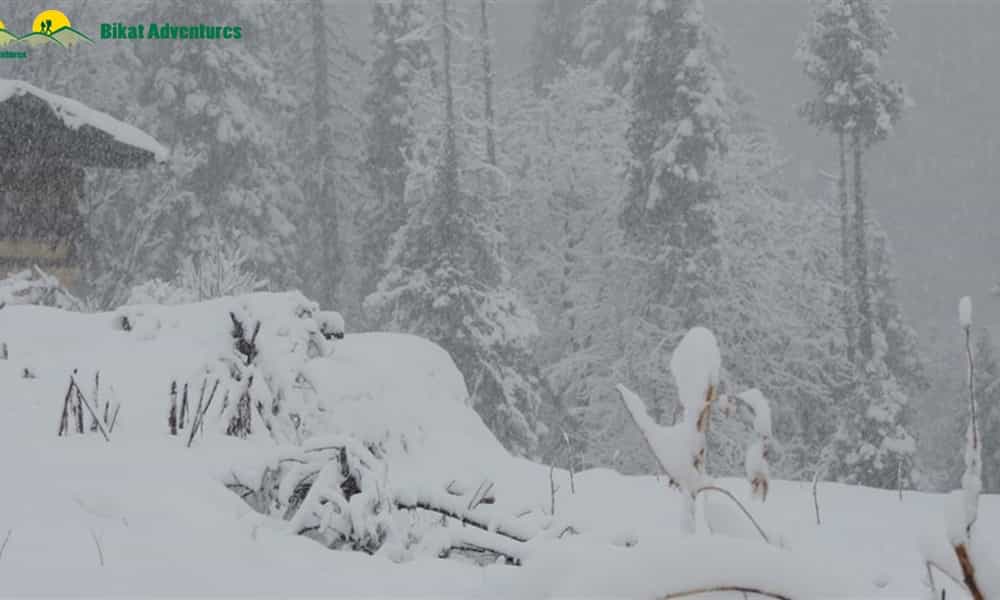
This could mean rain and hailstorm in the lower campsites and heavy snowfall from the Kedarkantha base camp and onwards. Our trek leaders closely monitor the situation in such inclement weather conditions and make the necessary alterations to the itinerary. For example, the trek leader might stay back at Juda Ka Taal campsite instead of ascending to Kedarkantha base camp and push for summit directly from here once the weather settles down.
This would mean covering a distance of 7 km one way till the summit instead of the usual 3 km from the Kedarkantha campsite. Such a situation could pose a challenge as the trek now stretches beyond 7 hours. The excess snowfall can also make navigation demanding in the upper reaches of the trail.
That said, the weather is generally amicable on the Kedarkantha trek. A rough weather is a one-off occurrence.
Fitness Levels Required for the Kedarkantha Trek
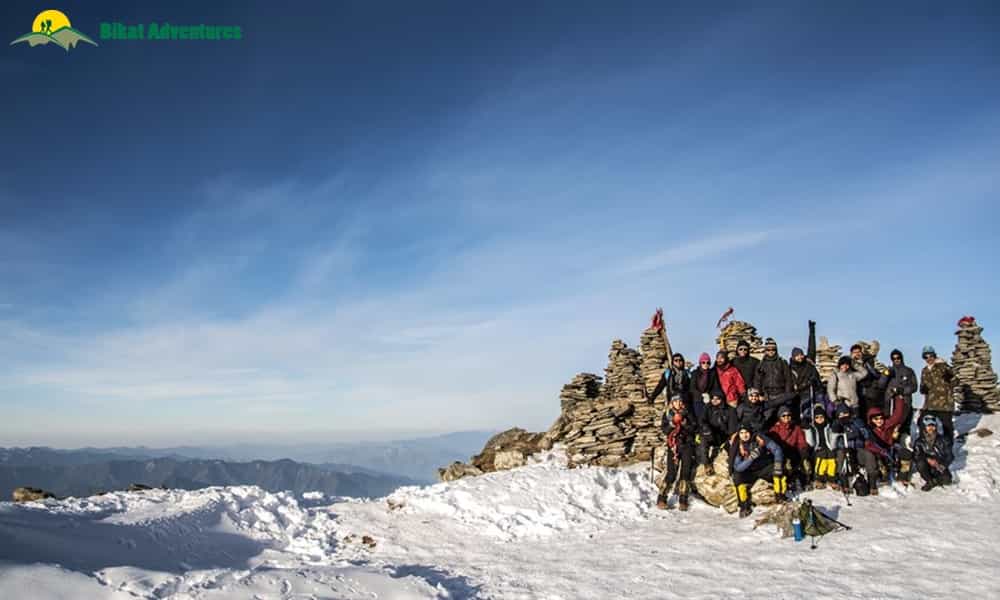
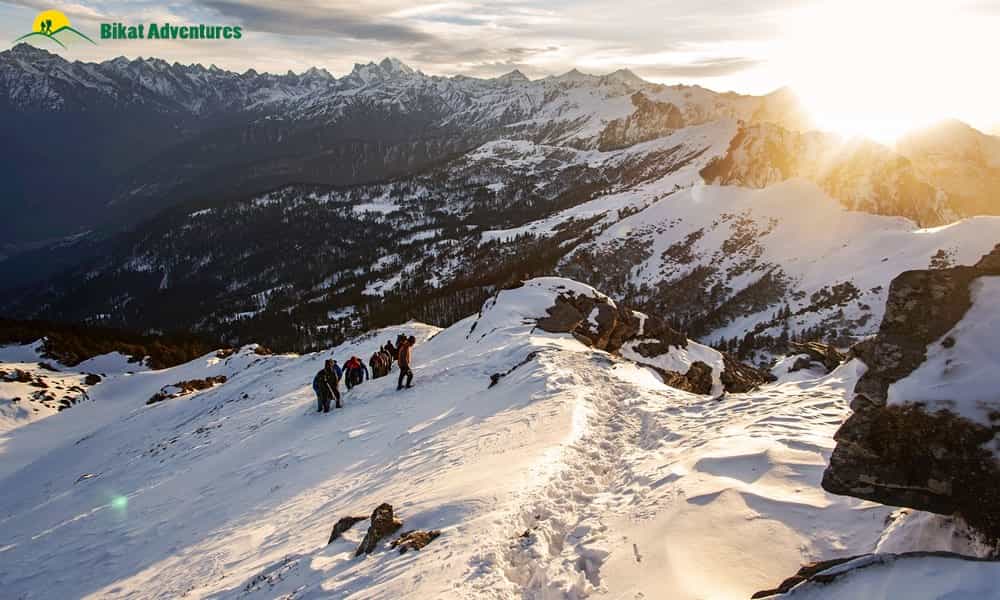
The trails of Kedarkantha are relatively easy to navigate after April since the snow melts away by then. However, in winter months the trail is covered with a thick blanket of snow throughout. The last segment till the summit is long & steep with an inclination of 45 to 60 degrees and can be challenging to navigate in knee-deep snow.
Although it is a beginners’ trek, you will need good lung capacity and leg strength to finish the trek strongly. If you are struggling most of the time, you won’t be able to enjoy the trek. With the end goal being enjoying the trek thoroughly and not just completing it, the following is the fitness level we recommend.
Practice jogging/running three days a week and see if you can cover 5 kms in 30-40 minutes. In addition to this, you can also add some resistance workouts for legs (like squats and lunges) and core into your training schedule.
Gear Required for Kedarkantha Trek
While we will be providing most of the equipment needed for trekking (tents, sleeping bags, crampons, snow boots etc), there is some basic gear you will need from your end to get through your hike comfortably.
These are a sturdy, lightweight backpack and comfortable trekking shoes. In case, you plan on purchasing them, please refer to the articles below for some helpful tips on how to go about choosing the right gear for your trek.
How to choose your backpack
A branded backpack can be a hefty spend when it comes to trekking. But this needn’t be the case if you know what to look for when purchasing one.
One of our founders, Pankaj, purchased a non-branded pack for INR 1100 in 2010 and the pack continues to work just fine for him. In the article linked above, he shares some helpful tips on what to look for when choosing a trekking backpack.
How to choose a good pair of hiking shoes
Conventional sports shoes don’t suit trekking trails. We recommend wearing high ankle shoes with sturdy soles. These not only provide better support but also reduce the possibility of injuries while hiking. For a trek like Kedarkantha, where you are likely to encounter snow during the winter months, we recommend wearing water resistant shoes to avoid exposing your feet to cold temperatures. Please refer to the guide linked above for some useful tips on choosing trekking shoes.
Trekking Pole
Trekking poles are not mandatory butcan help take the stress off joints especially during descents and save energy. It is an accessory that helps the trekker with stability and rhythm on rough terrain.
The article linked above explains how to use trekking poles.
Skills required for Kedarkantha trek
Bikat Adventures is primarily an adventure learning organization. This means our key objective is not just to help trekkers complete their treks but also to ensure they pick up some valuable lessons and skills in trekking along the way.
To achieve this, we have created learning modules and paired them to different levels on the Bikat Rating Scale.
These modules are taught real-time on the trails by our trek leaders.
On the Kedarkantha trek, our trek leaders guide and train the group on how to steer through the snow during ascent and descent before attempting the summit.
The trekkers are instructed about various trekking equipment that will be used during the trek like gaiters, micro-spikes and trekking pole, all in coordination with one another.
All these equipment except trekking poles will be provided by the Bikat Adventures team. During descent, the snow becomes slippery adding to the challenges for the trekkers. To avoid slipping, trekkers are taught descent techniques like the right placement of foot, where and how to apply pressure and much more.
While you will have all the assistance you need on the trek from our capable trek leaders and guides, we suggest browsing through the articles below to get an idea of the skills that are likely to come in handy on a trail like the Kedarkantha.
Ascending and Descending on Trails
Although Kedarkantha is a beginners’ trek, the ascent to the summit can be quite challenging. Maintaining the right rhythm and body posture can help avoid injuries and reduce the stress on your ankles and knees. The guide linked above shares some useful tips on how to ascend and descend down trails.
How to pack your rucksack
During the Kedarkantha Winter Trek, one is likely to experience subzero temperatures at night. This means you will have to pull out all the winter clothes you have to layer up at the campsite. This in turn will require you to re-pack your backpack in the mornings.
The article linked above shares some useful guidelines you can follow to pack efficiently.
Hiking attire and layering
Layering appropriately to protect yourself from the cold is essential. The temperatures at Kedarkantha can dip as low as -7 degree Celsius in the winters. Hence, it is crucial to understand how many layers one needs to carry to have a comfortable trek.
The article linked above will give you a fair idea of the winter layers you will need and guide you on how to layer up at campsites and while hiking.
How to use Microspikes
When trails become slippery because of the snow, microspikes give you the support and balance you will need to navigate these trails efficiently. Since we are likely to be using them on the Kedarkantha Trek, please ensure the shoes you are wearing are compatible for microspikes.
How to use gaiters
Gaiters are special layers that you wear over your shoes and ankles to prevent dirt, pebbles, and snow from getting inside your shoes. When the snow level is high on the Kedarkantha Trek, Bikat Adventures will also be providing gaiters to trekkers right from Sankri. The article linked above will give you an idea of how to use them.
We hope this article answers all the questions you may have about the Kedarkantha Trek. In case you need further assistance/information with something, please feel free to reach out to us. We are only a phone call away.