logo icon
  • Treks
    New Category
    • Kedar Kantha Trek
    • Har Ki Dhun Trek
    • Chopta Tugnath Trek
    • Beas Kund Trek
    Medium
    • Valley of Flowers Trek
    • Hampta Pass Trek
    • Sundakphu Trek
    • Goecha La Trek
    Hard
    • Chadar Trek
    • Stok Kangari Trek
    • Rupin Pass Trek
    • Pin Parvati Pass Trek
    image
    Choose your trek difficulty
    View All Treks
  • Expeditions
    New Category
    • New Link
    • New Link
    image
  • Skiing
    • Skiing
  • Why Bikat
  • Full On Travel
  • Blog
  • Shop
  • About

Pure Grit. Pure Adventure.

Bikat means difficult. But with us, that’s not a warning—it’s a promise. Of stories worth telling. Of adventures worth chasing.

Region

Month

Difficulty

Adventure Name

brand
  • Treks
    • Difficulty
      • New Category
        • Kedar Kantha Trek
        • Har Ki Dhun Trek
        • Chopta Tugnath Trek
        • Beas Kund Trek
      • Medium
        • Valley of Flowers Trek
        • Hampta Pass Trek
        • Sundakphu Trek
        • Goecha La Trek
      • Hard
        • Chadar Trek
        • Stok Kangari Trek
        • Rupin Pass Trek
        • Pin Parvati Pass Trek
    • Region
      • Uttarakhand
        • Kedar Kantha
        • Har Ki Dhun
        • Rupin Pass Trek
        • Valley of Flowers Trek
      • Himachal Pradesh
        • Hmpta Pass Trek
        • Beas Kund Trek
        • Pin Parvati Pass Trek
        • New Link
      • Ladakh
        • Chadar Trek
        • Stok Kangari Trek
        • Markha Vallery Trek
        • Lumayuru Trek
      • Sikkim
        • Goecha La Trek
        • Dzongari Trek
        • Greem Lake Trek
      • Bhrigu Pass Trek
        • Annapurna Circuit Trek
        • Langtag valley
        • New Link
    • Season
      • Summer (Apr-Jun)
        • Valley of Flowers
        • Hampta Pass Trek
        • Kedarkantha Trek
      • Monsson (Jul-Sep)
        • Sundakphu Trek
        • Goecha La Trek
        • Markha Valley Trek
      • Autumn (Oct-Nov)
        • Rupin Pass Trek
        • Pin Parvati Trek
        • Har Ki Dhun Trek
      • Winter (Dec-Mar)
        • Chadar Trek
        • Kedarkantha Trek
        • Chopta Tungnath Trek
    • Family Trek
      • Family Treks
        • Chopta Tungnath Trek
        • Har Ki Dun Trek
        • Beas Kund Trek
        • Bhrigu Lake Trek
    • Beginner Friendly
      • Beginner Friendly
        • Kedarkantha Trek
        • Hampta Pass Trek
        • Sandakphu Trek
        • Dzongri Trek
    • Off-beat
      • OFF-BEAT
        • Green Lake Trek
        • Lumayuru Trek
        • Lantang Valley Trek
        • Rupin Pass Trek
    • High Adventures
      • High Adventures
        • Stok Kangari Trek
        • Chadar Trek
        • Pin Parvati Pass Trek
        • Everest Base Camp Trek
    • Bikat Recommends
      • Bikat Recommends
        • Kedarkanth Trek
        • Valley of Flowers Trek
        • Goecha La Trek
        • Chadar Trek
    • Fresh Explorations
      • Fresh Explorations
        • Lamayuru Trek
        • Green Lake Trek
        • Langtang Valley Trek
        • Bhrigu Lake Trek
  • Expeditions
    • New Column
      • New Category
        • New Link
        • New Link
  • Skiing
    • Skiing
  • Why Bikat
  • Full On Travel
  • Blog
  • Shop
  • About
Whatsapp
Chat With Us
Pre Sale
Pre Booking - 8448680062
Post Sale
Post Booking - 9319028363 /8588878499
Email
Email - info@bikatadventures.com
Email
support@bikatadventures.com

Follow us on social media

Home
>
Blog
>
How Mountain Biking Is The Best Cross Training For The Marathoners?
Informative

How Mountain Biking Is The Best Cross Training For The Marathoners?

B
Written by
Bikat Adventures
21 Apr 2015
0 views
0 comments
How Mountain Biking Is The Best Cross Training For The Marathoners?
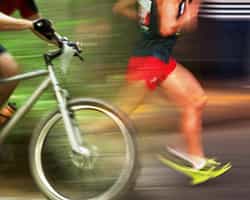
Running is more than just putting one foot in front of the other and maintaining a steady pace. From a regular marathoner or runner to a newbie, everyone acknowledges and understands it. Intense training helps enhance your leg strength, stamina building, and maintaining an injury-free routine. However, just running works only on certain muscles, which grow vulnerable after some time. Therefore, for runners and sports in general, cross training considerably helps deliver better. Cross-training is the process of pursuing two (or more) sports to enhance your performance in the primary sport. High altitude mountain biking is the most effective cross training for the runners, especially the marathoners. This is why usually the runners are mountain bikers as well. Let's see how high altitude mountain biking helps.
blog-image-0
1. Aerobic Replacement: Running is a thorough aerobic exercise. Your lung capacity, blood flow, endurance, efficiency, fat burn, all are on the test. High altitude biking as a cross training is similar in impact because of the nearly equal effort involved. It especially tones the leg muscles and helps your body optimally use oxygen by increasing the blood flow. After some practice, you start running faster and for longer.
2. Endurance Building: Endurance is your body’s ability to derive energy using its fat deposits. This way you are able to have moderately intense, but long training sessions, exactly what a marathoner requires. Mountain cycling at high altitude works by boosting your cardiovascular system. This builds up the stamina to help you last longer on the running stretch, despite the wear tear. Just ensure that the stretch should allow for a fast paced pedaling at a low gear. Working hard against the resistance (high gear) may stress your knees. For the beginners, its especially great, since cycling stresses the body lesser as compared to running. This helps you get sturdy gradually and at the core. In addition, since you are able to start better with cycling than running, you stay motivated to pursue it. On an average, if you plan for a marathon, a spell of 6-7 hours of cycling at high altitude for around a week or 10 days is immensely beneficial in preparing you for the event. Himalayan cycling expeditions are especially rigorous and thorough grooming stretches. The beginners can initially go for lower altitudes. If you are aiming for 6K, 10K kind of running, 2-3 hours of high intensity cycling on a height for 2 days provides a great practice. These biking expeditions help you train for the event the ‘low stress’ way, without compromising on the benefits. Your legs should be allowed the recovery time before the run, cycling helps you do that.
All this while, do keep a check on your heart rate with a heart rate monitor. Push your heart rate during the cycling to match up with that of your running. For a longer and faster run, aim at a controlled, steady heart rate rather than erratic highs and lows.
3. Cycling strengthens complementary muscles & bones: Running works on a certain set of muscles only, especially calves, hamstrings (thigh tendon), and gluteus maximus (hip muscles). With time, you must tone the complementary ones too to leverage your stay on the running track. High altitude cycling helps you do that. It employs different muscles in your legs, especially the quadriceps (front thigh muscles), shin, hips, gluteus medius (pelvic region), and back along with the core ones. The quads are very important in running, but are trained through cycling. They help reduce the impact on your knee when your foot hits the ground. In addition, due to constant training, your bone density and muscle strength grow considerably. This boosts your body’s threshold to deal with the high impact physical stress in an injury free style - an ability that sure helps the marathon runners, especially during their events. Similarly, gluteus medius, when worked on well through high altitude cycling, helps prevent knee and hip pain during/after running. You also invest efforts in covering the rough patches of hills. You push, pull, let go. In the process, your upper body also gets the much needed workout. By the way, all this while you grow faster too.
4. The body gets a ‘break’ while working out: Runners, especially marathoners, put a lot of pressure on their ankles, knees, and hips. Prolonged stress makes them injury prone and increases recovery time. Therefore, running 3 days a week for 2-3 hours is a good practice. The rest of the time, you should work on just building the endurance at a moderate intensity. An RPE (Rated Perceived Exertion) of 6-7 is ideal. Switching your schedule with 3-4 hours of road cycling fit in well. Alternate it with mountain biking at least once a year and preferably per 6 months. It proves to be a good workout session without straining the legs too much, while also reducing the risks of injury. Your lactate is cleared from the body. Your muscles and joints will not be stiff and you don’t even have to miss the workout!
5. Mountain biking can help you run faster: Cycling involves pedaling, which requires consistent motion of the legs and a steady tempo, just like running. Mountain biking requires an increased amount of pedaling (at a low gear) to cover the distance. This rhythm can be translated to running. Studies prove that the best marathoners run around 180 steps every minute, which is roughly equal to 60 RPM (revolutions per minute) of cycling at a low gear on hills and 90 RPM on a flat road. For the beginners, 40-50 RPM on hills and 80 RPM on plain is good to begin with. Ideally, start with smoother gears, eventually graduating to the harder ones. Apply this tempo to run and you will observe a natural increase in your pace. Roughly your running rate in plains equals that of cycling on hills, while 2 miles of cycling on flat roads equals 1 mile of running.
6. The Outdoor Spree: Runners usually are fond of natural stretches. It keeps them mentally rejuvenated and emotionally motivated. Cycling outdoors on hills, particularly the stunning Manali-Leh stretch,Dehradun-Mussoorie route, adequately compensate for this, while physically balancing the running training. Mountain biking also enhances your visual and mental focus as you need to be careful about the terrain you’re covering under the wheels. Your body too learns to adjust and accommodate the rigor.
Apart from shooting up the mental and physical capacity, training should be safe health & fitness wise. Therefore, make sure you work under a professional; else, you are likely to land with physically restraining injuries, as serious as knee damage, hip issues, bone fractures, bruises, and ligament tear to name just some. Your fitting well on the cycle (right seat height, foot seating well on pedal, knee bend, handle) is as crucial for a regular blood flow, avoiding joints’ stress, muscular stiffness, and wounds & cuts. Essentially seek an expert’s guidance when selecting a cycle. The professionals suggest combining cycling with swimming optimally benefits your running.
Armed with the fundamental precautions, get out those wheels or race down the asphalt for the marathon(s). Good luck!

Share
Prev
Bikat Nature Camp
All blogs
Next
A trek through the fields of Malana - Chandrakhani Pass

Leave a Reply

Your email address will not be published.

Max 5 images, total size 3MB
Preview images

Related content

Discover these similar Blogs

10 Mountain Features Every Trekker Should Know: Master the Lingo of the Himalayas

10 Mountain Features Every Trekker Should Know: Master the Lingo of the Himalayas

02 Apr 2026
Kedarkantha vs Dayara Bugyal: The Ultimate Winter Trek Showdown

Kedarkantha vs Dayara Bugyal: The Ultimate Winter Trek Showdown

01 Dec 2025
Skiing in Kashmir: A No-Nonsense Guide to the Gulmarg Skiing Scene

Skiing in Kashmir: A No-Nonsense Guide to the Gulmarg Skiing Scene

09 Nov 2025
Go Nuts November — Official Explainer (How to Enter + Win)

Go Nuts November — Official Explainer (How to Enter + Win)

31 Oct 2025
Gulmarg vs Auli: Where to Learn Skiing in India  (An Honest Guide for 2025)

Gulmarg vs Auli: Where to Learn Skiing in India (An Honest Guide for 2025)

31 Oct 2025
Sleeping Bags that Actually Work in the Himalayan Winters (Not Just on Websites)

Sleeping Bags that Actually Work in the Himalayan Winters (Not Just on Websites)

27 Oct 2025
Snowfall Areas in India You Can Actually Trek Through

Snowfall Areas in India You Can Actually Trek Through

19 Oct 2025
Skiing in India: All You Need to Know Before You Hit the Slopes This Winter

Skiing in India: All You Need to Know Before You Hit the Slopes This Winter

10 Oct 2025
Trekking in Winter: Why Winter Trails Are a Different Kind of Magic

Trekking in Winter: Why Winter Trails Are a Different Kind of Magic

08 Oct 2025
Snow Trekking Shoes in India: What Actually Works on the Himalayan Trails

Snow Trekking Shoes in India: What Actually Works on the Himalayan Trails

08 Oct 2025

Popular tags

Explore more categories and themes from the same trail journal.

March

March

0 treks
April

April

0 treks
Skiing Courses

Skiing Courses

4 treks
May

May

0 treks
June

June

0 treks
Kayaking Courses

Kayaking Courses

0 treks
July

July

0 treks
6000M+ Peaks

6000M+ Peaks

1 treks
Nepal Treks

Nepal Treks

6 treks
Offbeat Treks

Offbeat Treks

26 treks
Scuba Courses

Scuba Courses

2 treks
August

August

0 treks
Wild Life Treks

Wild Life Treks

2 treks
Winter Treks

Winter Treks

28 treks

Subscribe to our newsletter

Get the latest updates and offers.

Contact Us

Whatsapp
Chat With Us
Pre Sale
Pre Booking - 8448680062
Post Sale
Post Booking - 9319028363 /8588878499
Email
Email - info@bikatadventures.com
Email
support@bikatadventures.com

Company

About Us
Careers
Blog
Why Bikat

Support

Contact
Environment Policy
Privacy Policy
Terms and Conditions
Sitemap

Services

Treks
Mountaineering
Crossover Expeditions
Cycling
Bikat Experiences
Skiing
Custom

Mobile

Download on the
Apple Store
Get in on
Google Play
© 2026 Bikat Adventures. All Rights Reserved|Powered by: Novel Knett Software Solutions
Privacy PolicyTerms of Service
FacebookTwitterInstagram