logo icon
  • Treks
    New Category
    • Kedar Kantha Trek
    • Har Ki Dhun Trek
    • Chopta Tugnath Trek
    • Beas Kund Trek
    Medium
    • Valley of Flowers Trek
    • Hampta Pass Trek
    • Sundakphu Trek
    • Goecha La Trek
    Hard
    • Chadar Trek
    • Stok Kangari Trek
    • Rupin Pass Trek
    • Pin Parvati Pass Trek
    image
    Choose your trek difficulty
    View All Treks
  • Expeditions
    New Category
    • New Link
    • New Link
    image
  • Skiing
    • Skiing
  • Why Bikat
  • Full On Travel
  • Blog
  • Shop
  • About

Pure Grit. Pure Adventure.

Bikat means difficult. But with us, that’s not a warning—it’s a promise. Of stories worth telling. Of adventures worth chasing.

Region

Month

Difficulty

Adventure Name

brand
  • Treks
    • Difficulty
      • New Category
        • Kedar Kantha Trek
        • Har Ki Dhun Trek
        • Chopta Tugnath Trek
        • Beas Kund Trek
      • Medium
        • Valley of Flowers Trek
        • Hampta Pass Trek
        • Sundakphu Trek
        • Goecha La Trek
      • Hard
        • Chadar Trek
        • Stok Kangari Trek
        • Rupin Pass Trek
        • Pin Parvati Pass Trek
    • Region
      • Uttarakhand
        • Kedar Kantha
        • Har Ki Dhun
        • Rupin Pass Trek
        • Valley of Flowers Trek
      • Himachal Pradesh
        • Hmpta Pass Trek
        • Beas Kund Trek
        • Pin Parvati Pass Trek
        • New Link
      • Ladakh
        • Chadar Trek
        • Stok Kangari Trek
        • Markha Vallery Trek
        • Lumayuru Trek
      • Sikkim
        • Goecha La Trek
        • Dzongari Trek
        • Greem Lake Trek
      • Bhrigu Pass Trek
        • Annapurna Circuit Trek
        • Langtag valley
        • New Link
    • Season
      • Summer (Apr-Jun)
        • Valley of Flowers
        • Hampta Pass Trek
        • Kedarkantha Trek
      • Monsson (Jul-Sep)
        • Sundakphu Trek
        • Goecha La Trek
        • Markha Valley Trek
      • Autumn (Oct-Nov)
        • Rupin Pass Trek
        • Pin Parvati Trek
        • Har Ki Dhun Trek
      • Winter (Dec-Mar)
        • Chadar Trek
        • Kedarkantha Trek
        • Chopta Tungnath Trek
    • Family Trek
      • Family Treks
        • Chopta Tungnath Trek
        • Har Ki Dun Trek
        • Beas Kund Trek
        • Bhrigu Lake Trek
    • Beginner Friendly
      • Beginner Friendly
        • Kedarkantha Trek
        • Hampta Pass Trek
        • Sandakphu Trek
        • Dzongri Trek
    • Off-beat
      • OFF-BEAT
        • Green Lake Trek
        • Lumayuru Trek
        • Lantang Valley Trek
        • Rupin Pass Trek
    • High Adventures
      • High Adventures
        • Stok Kangari Trek
        • Chadar Trek
        • Pin Parvati Pass Trek
        • Everest Base Camp Trek
    • Bikat Recommends
      • Bikat Recommends
        • Kedarkanth Trek
        • Valley of Flowers Trek
        • Goecha La Trek
        • Chadar Trek
    • Fresh Explorations
      • Fresh Explorations
        • Lamayuru Trek
        • Green Lake Trek
        • Langtang Valley Trek
        • Bhrigu Lake Trek
  • Expeditions
    • New Column
      • New Category
        • New Link
        • New Link
  • Skiing
    • Skiing
  • Why Bikat
  • Full On Travel
  • Blog
  • Shop
  • About
Whatsapp
Chat With Us
Pre Sale
Pre Booking - 8448680062
Post Sale
Post Booking - 9319028363 /8588878499
Email
Email - info@bikatadventures.com
Email
support@bikatadventures.com

Follow us on social media

Subscribe to our newsletter

Get the latest updates and offers.

Contact Us

Whatsapp
Chat With Us
Pre Sale
Pre Booking - 8448680062
Post Sale
Post Booking - 9319028363 /8588878499
Email
Email - info@bikatadventures.com
Email
support@bikatadventures.com

Company

About Us
Careers
Blog
Why Bikat

Support

Contact
Environment Policy
Privacy Policy
Terms and Conditions
Sitemap

Services

Treks
Mountaineering
Crossover Expeditions
Cycling
Bikat Experiences
Skiing
Custom

Mobile

Download on the
Apple Store
Get in on
Google Play
© 2026 Bikat Adventures. All Rights Reserved|Powered by: Novel Knett Software Solutions
Privacy PolicyTerms of Service
FacebookTwitterInstagram
Home
>
Blog
>
The History of Chadar Trek
Informative

The History of Chadar Trek

Rishabh Tiwari
Written by
Rishabh Tiwari
30 Oct 2023
0 views
0 comments
The History of Chadar Trek

The Chadar Trek has been in the spotlight amongst trekking enthusiasts for a while now. But have you ever wondered how the route was discovered, where it stands today and if it will be there at all tomorrow?

 

blog-image-0


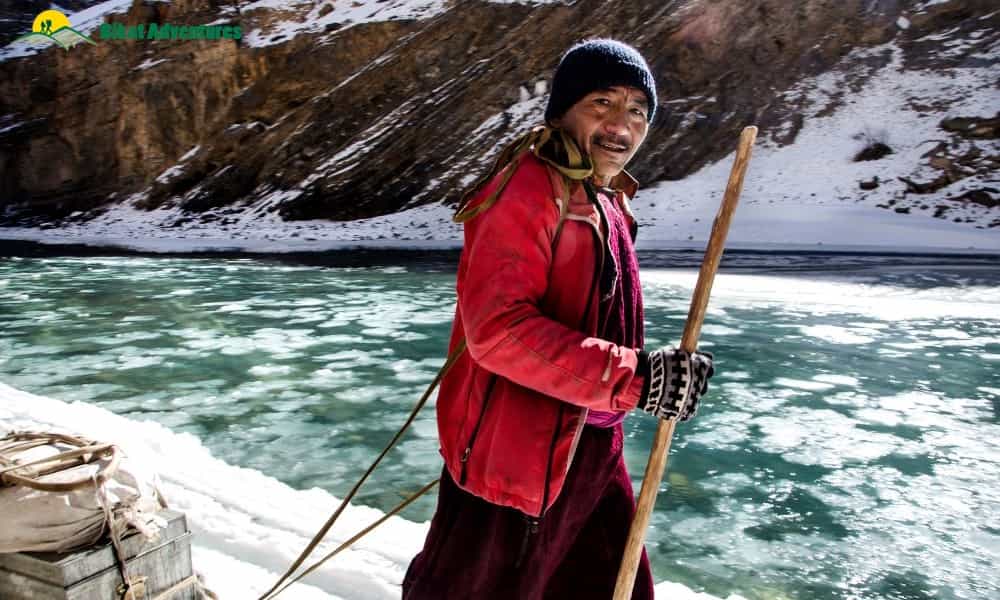
Young children make their way across Chadar, navigating the frozen river and covering a distance of 100 km by foot to reach a school from their home village which remains nestled in the Zanskar region, cut-off from the rest of the world. These villages have remained isolated deep within the mountains for centuries and represent ancient Tibetan and Buddhist culture while also showcasing their agility to adapt to the environmental conditions around them. In 1979, a single road was paved to connect this region to Kargil. Prior to this, trekking through high and treacherous mountain passes was the only way out of the valley.

Come winters and this road also proved to be inaccessible with snowfall making it impossible for vehicles to pass through. Did this mean that the locals had no way out during the winters? The mountain people are more clever than that and they forged an unthinkable path out of the valley. Walking on a 100 km long frozen river. 

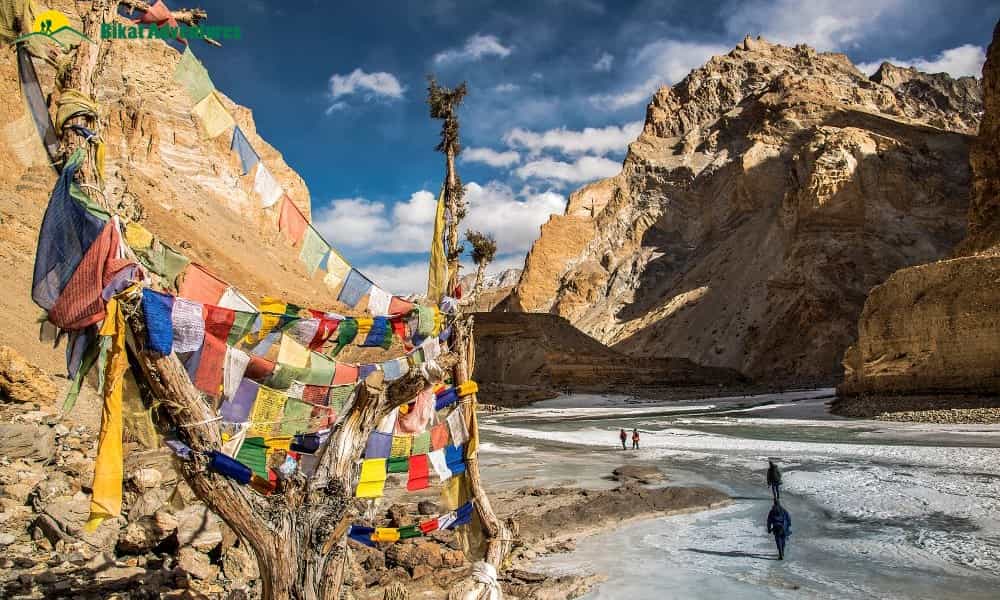
The Zanskar river cuts through the monstrous Himalayan canyons, adding a shade of vibrant turquoise to the otherwise barren landscape. In winters, extreme climatic conditions freeze the top layers of the river. This forms a thick sheet of ice on the river, commonly referred to as Chadar. Chadar has allowed people in the region to access the nearest road even during winters, making it the only way out. Now walking on Chadar is not as easy as it might sound. Over the years, locals have developed their technique of treading on something as fragile as ice. It is now almost second nature to them and they move with grace and consistent speed over the frozen river, completing the distance in two to four days. The route is treacherous to say the least and only someone with complete knowledge and understanding of the ecosystem can safely navigate around it.
 

blog-image-0


Caves are common in the canyons that surround the river and have provided shelter to the Zanskari who were traversing the Chadar for centuries. Black layers of soot on the cave ceilings are testament to the many fires that kept people warm over the years.


Trekkers on Chadar

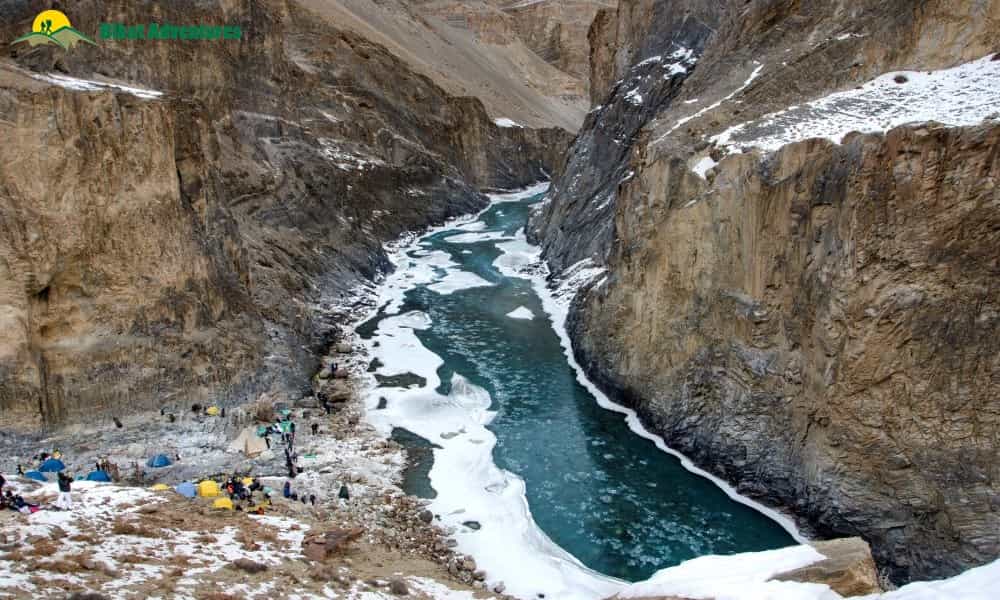
For centuries, Chadar was solely a trade route for the locals in the Zanskar region before trekkers discovered the trail. Almost forty years ago, Olivier Follmi, a photographer from Europe visited the Zanskar region and his photographs along with the writings played a major role in the advent of tourism in the region. While the 80s saw a handful of foreigners trek the Chadar, now trekkers from everywhere throng the route between January to March, when the river is frozen to the optimal level. With a number of trekking organisations offering the Chadar Trek, it is no longer as inaccessible as it once was. Anyone with a high level of fitness and endurance can attempt the trek and experience the feeling of walking on a frozen river. The activity no longer remains something that is known only to the Zanskaris and every winter, the valley sees more trekkers than the previous one.
 

blog-image-0


New Beginnings

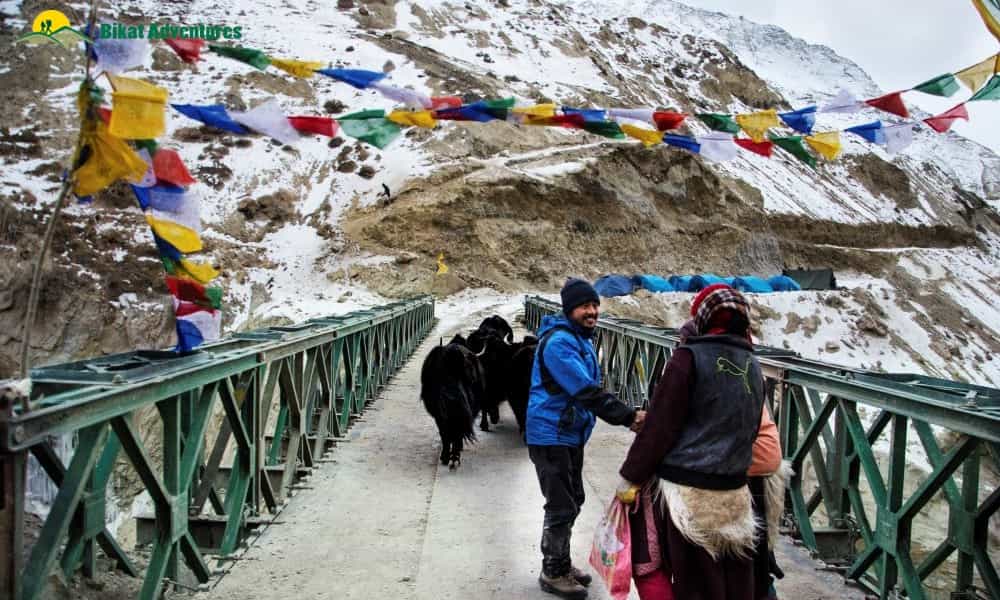
With the new road to the Zanskar region rapidly progressing, a lot is at stake. While this means better access to emergency medical care, resources and infrastructure, it could also bring other changes in the region. The indigenous people of Zanskar hold a rich and ancient cultural heritage which has remained isolated from the fast paced developments everywhere else in the world. While the road to Kargil in 1979 and tourism brought in elements of globalisation to the region, their traditional practice and culture remain intact even as of today. What makes the region and its people unique is their well preserved civilisation and customs which stand at a risk in the face of the new road. The road will inevitably accelerate the rate of interaction with outsiders and bring rapid changes, which is a cause of concern to the Zanskaris. 

However, there is a bigger concern at hand. Global warming, climate change, degradation of the ecosystem and depletion of resources pose a far greater threat to the region currently. With the rapid rise in temperatures across the world, the river is not freezing like it used to before. For it to be walked and trekked upon, it needs to be frozen to the optimal level which makes it a solid base. Additionally, unmindful trekking practices have been adding to this environmental burden. Tourism and trekking have, no doubt, brought in some much needed livelihood to the locals. But, it has been observed that improper waste disposal mechanisms by many trekking groups have been leaving behind a trail of trash, largely consisting of plastic. So, if you are trekking to the Chadar anytime soon, please ensure you do so mindfully. Collect any plastic waste you generate in your backpacks and dispose them once you return to the base. 
 

blog-image-0


Sustainable trekking and tourism practices play a key role in preserving such ecosystems which are pristine and hold cultural heritage that could be lost very soon if not acted upon. As interesting as Chadar’s route and history may be, it is more important to ensure that these places are not subject to degradation and rapid depletion of resources which is adversely affecting the lives of the locals and the ecosystem as a whole.

Share
Prev
Five Best Winter Adventures For 2023
All blogs
Next
Flora of Nag Tibba Trek

Leave a Reply

Your email address will not be published.

Max 5 images, total size 3MB
Preview images

Related content

Discover these similar Blogs

10 Mountain Features Every Trekker Should Know: Master the Lingo of the Himalayas

10 Mountain Features Every Trekker Should Know: Master the Lingo of the Himalayas

02 Apr 2026
Kedarkantha vs Dayara Bugyal: The Ultimate Winter Trek Showdown

Kedarkantha vs Dayara Bugyal: The Ultimate Winter Trek Showdown

01 Dec 2025
Skiing in Kashmir: A No-Nonsense Guide to the Gulmarg Skiing Scene

Skiing in Kashmir: A No-Nonsense Guide to the Gulmarg Skiing Scene

09 Nov 2025
Go Nuts November — Official Explainer (How to Enter + Win)

Go Nuts November — Official Explainer (How to Enter + Win)

31 Oct 2025
Gulmarg vs Auli: Where to Learn Skiing in India  (An Honest Guide for 2025)

Gulmarg vs Auli: Where to Learn Skiing in India (An Honest Guide for 2025)

31 Oct 2025
Sleeping Bags that Actually Work in the Himalayan Winters (Not Just on Websites)

Sleeping Bags that Actually Work in the Himalayan Winters (Not Just on Websites)

27 Oct 2025
Snowfall Areas in India You Can Actually Trek Through

Snowfall Areas in India You Can Actually Trek Through

19 Oct 2025
Skiing in India: All You Need to Know Before You Hit the Slopes This Winter

Skiing in India: All You Need to Know Before You Hit the Slopes This Winter

10 Oct 2025
Trekking in Winter: Why Winter Trails Are a Different Kind of Magic

Trekking in Winter: Why Winter Trails Are a Different Kind of Magic

08 Oct 2025
Snow Trekking Shoes in India: What Actually Works on the Himalayan Trails

Snow Trekking Shoes in India: What Actually Works on the Himalayan Trails

08 Oct 2025

Popular tags

Explore more categories and themes from the same trail journal.

March

March

0 treks
April

April

0 treks
Skiing Courses

Skiing Courses

4 treks
May

May

0 treks
June

June

0 treks
Kayaking Courses

Kayaking Courses

0 treks
July

July

0 treks
6000M+ Peaks

6000M+ Peaks

1 treks
Nepal Treks

Nepal Treks

6 treks
Offbeat Treks

Offbeat Treks

26 treks
Scuba Courses

Scuba Courses

2 treks
August

August

0 treks
Wild Life Treks

Wild Life Treks

2 treks
Winter Treks

Winter Treks

28 treks