logo icon
  • Treks
    New Category
    • Kedar Kantha Trek
    • Har Ki Dhun Trek
    • Chopta Tugnath Trek
    • Beas Kund Trek
    Medium
    • Valley of Flowers Trek
    • Hampta Pass Trek
    • Sundakphu Trek
    • Goecha La Trek
    Hard
    • Chadar Trek
    • Stok Kangari Trek
    • Rupin Pass Trek
    • Pin Parvati Pass Trek
    image
    Choose your trek difficulty
    View All Treks
  • Expeditions
    New Category
    • New Link
    • New Link
    image
  • Skiing
    • Skiing
  • Why Bikat
  • Full On Travel
  • Blog
  • Shop
  • About

Pure Grit. Pure Adventure.

Bikat means difficult. But with us, that’s not a warning—it’s a promise. Of stories worth telling. Of adventures worth chasing.

Region

Month

Difficulty

Adventure Name

brand
  • Treks
    • Difficulty
      • New Category
        • Kedar Kantha Trek
        • Har Ki Dhun Trek
        • Chopta Tugnath Trek
        • Beas Kund Trek
      • Medium
        • Valley of Flowers Trek
        • Hampta Pass Trek
        • Sundakphu Trek
        • Goecha La Trek
      • Hard
        • Chadar Trek
        • Stok Kangari Trek
        • Rupin Pass Trek
        • Pin Parvati Pass Trek
    • Region
      • Uttarakhand
        • Kedar Kantha
        • Har Ki Dhun
        • Rupin Pass Trek
        • Valley of Flowers Trek
      • Himachal Pradesh
        • Hmpta Pass Trek
        • Beas Kund Trek
        • Pin Parvati Pass Trek
        • New Link
      • Ladakh
        • Chadar Trek
        • Stok Kangari Trek
        • Markha Vallery Trek
        • Lumayuru Trek
      • Sikkim
        • Goecha La Trek
        • Dzongari Trek
        • Greem Lake Trek
      • Bhrigu Pass Trek
        • Annapurna Circuit Trek
        • Langtag valley
        • New Link
    • Season
      • Summer (Apr-Jun)
        • Valley of Flowers
        • Hampta Pass Trek
        • Kedarkantha Trek
      • Monsson (Jul-Sep)
        • Sundakphu Trek
        • Goecha La Trek
        • Markha Valley Trek
      • Autumn (Oct-Nov)
        • Rupin Pass Trek
        • Pin Parvati Trek
        • Har Ki Dhun Trek
      • Winter (Dec-Mar)
        • Chadar Trek
        • Kedarkantha Trek
        • Chopta Tungnath Trek
    • Family Trek
      • Family Treks
        • Chopta Tungnath Trek
        • Har Ki Dun Trek
        • Beas Kund Trek
        • Bhrigu Lake Trek
    • Beginner Friendly
      • Beginner Friendly
        • Kedarkantha Trek
        • Hampta Pass Trek
        • Sandakphu Trek
        • Dzongri Trek
    • Off-beat
      • OFF-BEAT
        • Green Lake Trek
        • Lumayuru Trek
        • Lantang Valley Trek
        • Rupin Pass Trek
    • High Adventures
      • High Adventures
        • Stok Kangari Trek
        • Chadar Trek
        • Pin Parvati Pass Trek
        • Everest Base Camp Trek
    • Bikat Recommends
      • Bikat Recommends
        • Kedarkanth Trek
        • Valley of Flowers Trek
        • Goecha La Trek
        • Chadar Trek
    • Fresh Explorations
      • Fresh Explorations
        • Lamayuru Trek
        • Green Lake Trek
        • Langtang Valley Trek
        • Bhrigu Lake Trek
  • Expeditions
    • New Column
      • New Category
        • New Link
        • New Link
  • Skiing
    • Skiing
  • Why Bikat
  • Full On Travel
  • Blog
  • Shop
  • About
Whatsapp
Chat With Us
Pre Sale
Pre Booking - 8448680062
Post Sale
Post Booking - 9319028363 /8588878499
Email
Email - info@bikatadventures.com
Email
support@bikatadventures.com

Follow us on social media

Subscribe to our newsletter

Get the latest updates and offers.

Contact Us

Whatsapp
Chat With Us
Pre Sale
Pre Booking - 8448680062
Post Sale
Post Booking - 9319028363 /8588878499
Email
Email - info@bikatadventures.com
Email
support@bikatadventures.com

Company

About Us
Careers
Blog
Why Bikat

Support

Contact
Environment Policy
Privacy Policy
Terms and Conditions
Sitemap

Services

Treks
Mountaineering
Crossover Expeditions
Cycling
Bikat Experiences
Skiing
Custom

Mobile

Download on the
Apple Store
Get in on
Google Play
© 2026 Bikat Adventures. All Rights Reserved|Powered by: Novel Knett Software Solutions
Privacy PolicyTerms of Service
FacebookTwitterInstagram
Home
>
Blog
>
Why You Should Climb Aconcagua: The Highest Summit Outside Asia
Expeditions

Why You Should Climb Aconcagua: The Highest Summit Outside Asia

Aparna Rastogi
Written by
Aparna Rastogi
05 Jun 2024
0 views
0 comments
Why You Should Climb Aconcagua: The Highest Summit Outside Asia

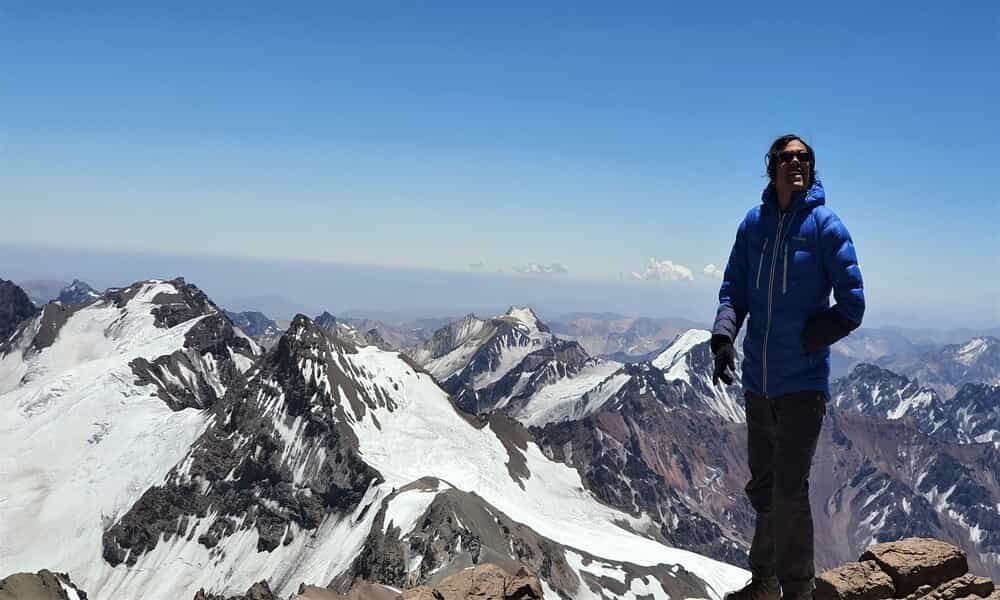
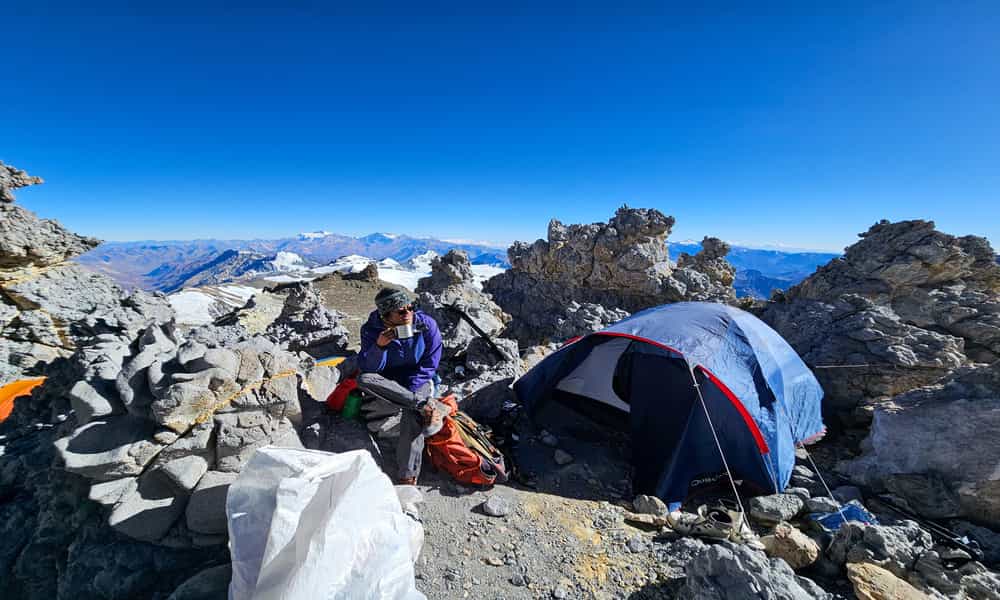
First climbed (as recorded) by a Swiss guide Matthias Zurbriggen as part of a British Expedition in 1897, Aconcagua is the world’s highest summit outside Asia. When the team of nine men led by Englishman Edward Fitzgerald landed up in Argentina, the mountain was so unknown, even the locals weren’t able to point them in the right direction. Guided only by the rough notes of German climber Gussfeldt from a decade ago, the team spent months after long months mapping out the mountain and valleys of the high desert regions of Argentina and Chile, the maps which served as essential guides for climbers to come, in the rich climbing history of the mountain since. The expedition proved to be a massive success - three members of the team made it to the summit of Aconcagua – the highest point man is recorded to have reached at the time. The leader, Fitzgerald himself, however, could not make the climb beyond 6000M even though he attempted it a whooping EIGHT times. The experience of the team which is instrumental in making many scientific discoveries and were the first recorded team to climb Tupungato (6,570M) and Aconcagua (6,962M) is a testament to the challenges the mountain presents to its climbers – it may not be a technical mountain but it sure is brutal.


blog-image-0
blog-image-1

Image by: Neeti Singhal


I’ve loved walking in the footsteps of these giant men in history and feeling the many feelings they felt as they carved out a route on this crumbling mountain of dust and rock. There are one too many reasons why you should climb this peak, but here are a select few of its highlights that made it an exciting mountain for me to climb – and one of great significance.   


1. The Andes Are a Class Apart

Aconcagua is the highest point of the Andes range of mountains – the longest mountain range in the world! If you are into numbers, the Andean range is a whooping 8,900 kms long which is more than THREE AND A HALF TIMES longer than the Himalayan Range (2,500 kms). That should help you imagine the scale of this massive range which stretches through SEVEN countries in South America: Bolivia, Colombia, Ecuador, Peru, Argentina, Chile, Venezuela.

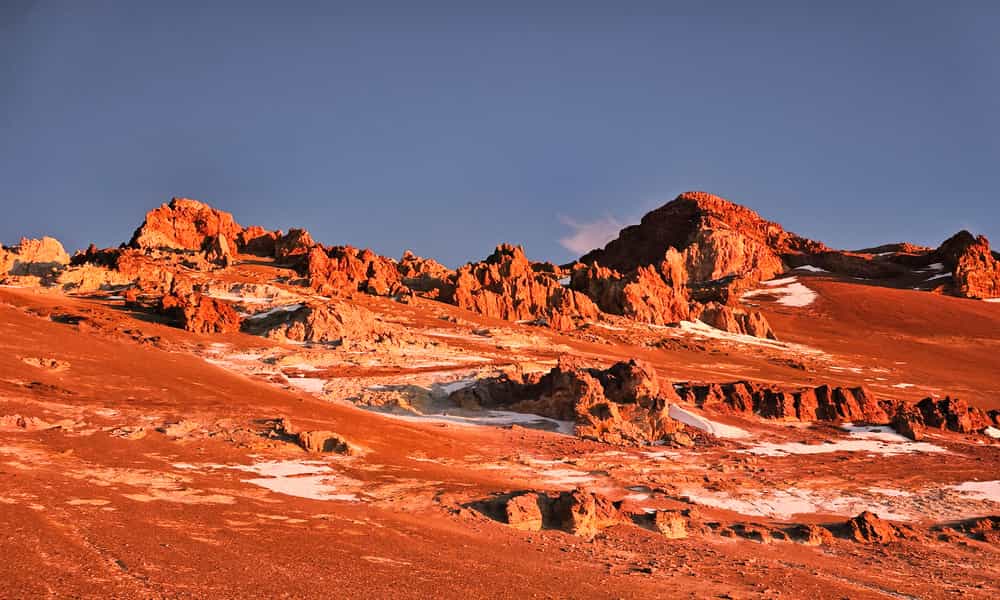
The range has the widest collection of volcanic mountains. Climbing Aconcagua gives you the right flavour of this fascinating mountain range. In fact, Aconcagua is also a volcanic landform which has originated from volcanic activity; that explains it’s dry, smoky terrain. The climb puts you at the crown of this volcanic rubble, to get a bird’s eye view of the desert-like Andes stretching wide in all directions for as far as your eye can see. When you get to the top, you’ll see it is an entire city of mountains – all shapes and sizes – blocking the existence of the world beyond its borders.

Here's another interesting fact about the Andes which for me, makes them a winner in the category of the most interesting range of mountains in the world:

The entire Andean range is part of the Pacific Ring of Fire which is a 40,235 km horseshoe-shaped chain of volcanoes and seismically active sites that outline the Pacific Ocean. The Central Andes between Chile and Argentina are dominated by volcanoes. The region has over 200 potentially active volcanoes and at least 12 giant caldera systems. The Andes have more volcanoes that have been active during the Holocene (past 10,000 years) than any other volcanic region in the world.

If you are looking to feel the sheer expanse of this mountain range, I’d suggest you watch Society of the Snow which is the story of the survivors of a plane crash in 1972 – the crash forced the plane’s occupants to become mountaineers and find their way out of this jigsaw puzzle that is the Andean range. Watching this movie makes the realization of the magnanimity of this mountain range hit you in the chest like a gushing wave.  


2. Seven Summits and Many More Titles

Getting its name rolling off your tongue may take a few dozen attempts, Aconcagua is one name on the tip of every mountaineer’s tongue nonetheless. Apart from being the tallest mountain in the longest mountain range in the world, Aconcagua also has itself a sizeable collection of lofty titles that makes it an attractive mountain for climbers of all skill levels:

  •       The highest mountain in the Andes

  •       The highest mountain in South America which makes it part of the Seven Summits Challenge
  •       The highest outside of the Himalayan range makes it the highest mountain outside Asia
  •       The highest in the Western and Southern Hemispheres and
  •       After Mount Everest, the world’s highest topographically prominent summit

Oh! And since it is such a popular mountain, here is where you will brush shoulders with climbers from across the globe and are sure to bump into some big names from the field of mountaineering.


3. Strange Topography: Very Distinct from the Himalayas

Climbing in the Andes is so different from climbing in the Himalayas; it demands different skills and as non-technical as the Normal Route may be, Aconcagua is still very high which makes it a challenging mountain to climb. Its dry, dusty, completely barren terrain is unique when compared to mountains of its height in other ranges.

I have climbed a fair bit in the Himalayas – and personally, I have never seen a mountain that is dry as a bone with no snow all the way up to its crown which is as high as 6,961M.  No snow at that height, that’s absurd, right? Just something you can expect in the Andes. In fact, it is so dry that water is one of the biggest challenges on the mountain even in higher camps.

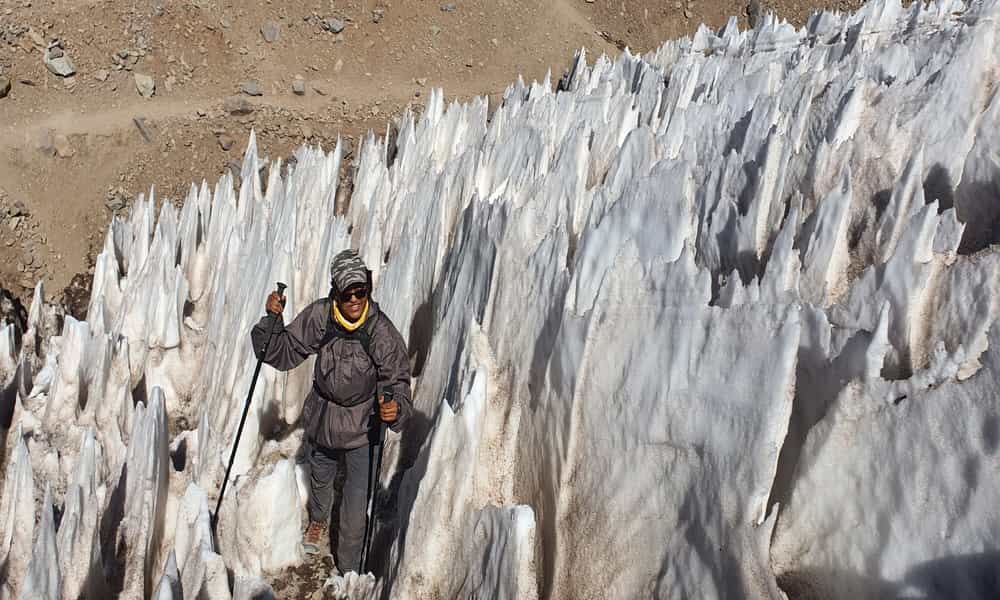
The other geographically strange feature of Aconcagua is Nieves Penitentes. They are sharp, long, needle-like protrusions of snow clumped together closely in small pockets on the mountain. In fact, these are what one uses as a source of water in the absence of a spread of snow on the mountain. These strange things stand misshapen but tall in an otherwise brown terrain – standing stubbornly even under the harsh afternoon sun. In fact, they are like the sunflowers of high-altitude - these elongated, thin blades of hardened ice are usually found pointing in the general direction of the sun, as if offering a prayer. This is actually where they get their name from as well – their close resemblance to a crowd of penitentes (or a holy practitioner) kneeling for penance.


 

blog-image-0

Image by: Neeti Singhal


Charles Darwin, when he crossed them, confirmed the local belief that these absurd structures are formed by the strong winds of the Andes. The ice of these structures doesn’t melt but directly evaporates in the sun skipping the step of turning to liquid – no wonder the land and the air in the region feel as dry as a parched throat.

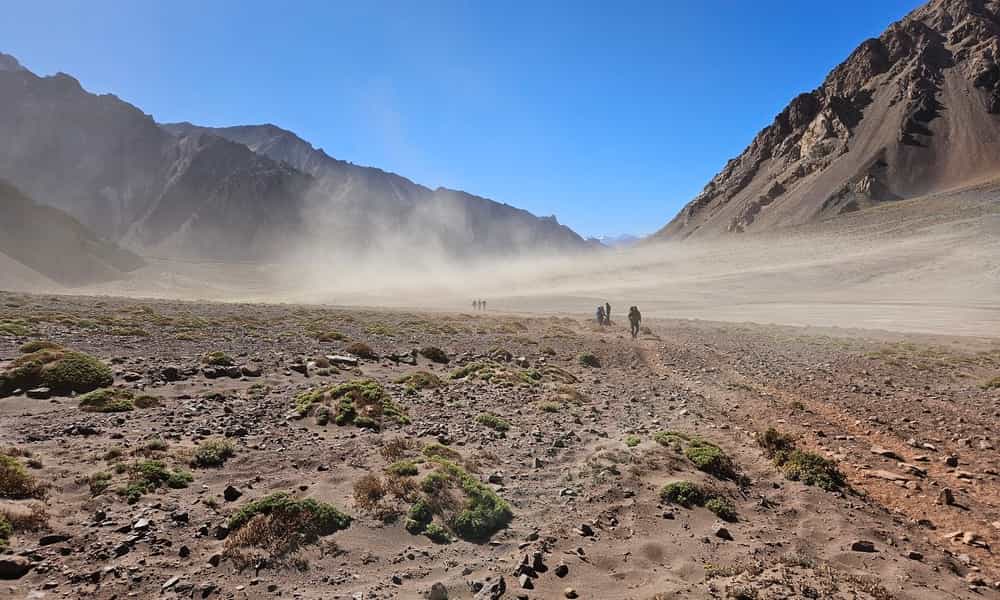
Speaking of air, the winds here – the speed, the intensity, the throw - all of it is absolutely brutal. Walking on Aconcagua is like crossing the ancient trans-Saharan trade route – 100kmph winds and sandstorms are everyday events here. Getting blown off the mountain and swallowing 15 kgs of dust each day feature on the top of my list of challenges I faced on this mountain.

The overall terrain here is quite different – it’s all brown. While we have mountains in the Himalayas which are all loose rock and scree like for example CB13 or Pangarchulla, but I haven’t ever climbed a mountain in the Himalayas which is all loose scree all the way up to 6960M with no sign of snow but still is so cold that it can give you frostbite in 10 minutes of being out in the high wind and cold of the mountain. These factors in themselves make the climb really different because if I speak from my experience, I realized that everything I had learnt from climbing in my home country sort of didn’t apply here. I had to build my strategy very differently for this climb – and it’s quite crazy to realize that no matter how much information you go armed with in a new region, there are some things you will only learn about the place from first-hand experience.


4. Interesting Challenges

As I see it, the mountain is not technically challenging, and I am speaking solely of the Normal Route which is one of the three routes you can take to reach the top most point of South America, BUT there are a few challenges which are unique to climbing this mountain which puts the success rate for this peak at just a little over 30%. These make the climb hard but definitely add to the fun of the experience. Some of the most challenging things about climbing Aconcagua are:

  •   The endlessly long distances between some sections on the mountain
  •   The excruciatingly long summit push where the elevation gain is a 1000M and would take you a minimum of 12-16 hours
  •   The high winds of the Andes which can be quite menacing
  •   The biting cold of this region combined with its altitude which adds all kinds of complexities to the climb and
  •   The lack of snow which makes arranging for water really difficult. 


blog-image-0

 Image by: Neeti Singhal


If you look at difficulty from this perspective, it is quite a painful mountain to climb and one that requires careful planning; its high level of unpredictability can get very uncomfortable. But also, each challenge is like a complex problem-solving task which keeps you hooked to the moment.


5. Relatively Manageable

Despite all these challenges and the height of the mountain, climbing from the Normal Route is quite manageable. In fact, Aconcagua is said to be one of the highest trekkable peaks in the world. So, if you want to experience the altitude eliminating the complexity of using highly technical gear, this mountain is your answer!

And if you are an experienced climber who wants to test yourself on a self-guided high-altitude expedition, this one might be a safer bet than a lot of the mountains its height.


blog-image-0

Image by: Neeti Singhal


6. Climbing in a Different Country and Mountain Range

Other than its many titles and the bragging rights that come with reaching this height, it is interesting to climb in different countries and mountain ranges for 2 reasons, in my opinion:

  •       Climbing in different geographical conditions and varied terrains adds to the skillset, you get a sense of how the sport itself is perceived in different countries which is reflected in the mountain culture, the organization of the climb, the way in which services are offered on the mountain and the ease of these services allowing different sports like trail running, traditional climbing, speed climbing etc possible in some regions and not in others.
  •   It is interesting to engage with the ecosystem as a whole to get exposed to a lot of new ways of climbing by the way of interacting with a new environment and a new set of people and also to understand how regional cultures interact with a global sport to make climbing in every new country a very different experience.


7. Hospitality and Management

The service on this mountain is top-notch. This being my second of the Seven Summits, one thing I am slowly getting certain of is that the Seven Summits sure give you a polished or I might go as far as to say, a royal experience. Here are some things that are especially impressive:


a. Safety and Operations

The one thing that definitely stood out on this mountain was the level of organization and the smooth, seamless processes put in place for safety and monitoring. There are multiple checkpoints along the way to get your permit signed off – the park rangers who manage this system are also well-equipped with any kind of information and assistance (they have chopper services to locate missing people, medical professionals etc.). There are two places where each climber gets medically examined and gets sanctioned to go to the next camp – this is mandatory. Rescue services are very quick and efficient.

 b. Hygiene and Cleanliness

Trash of all kind is handled really well. When you enter the park, the park rangers hand each climber one trash bag and one poop bag which needs to be submitted before you exit the park after your climb. Failing to do so carries heavy fines. The method mostly works super well and the mountain route is trash and poop-free even though it receives over 3000 climbers a season.

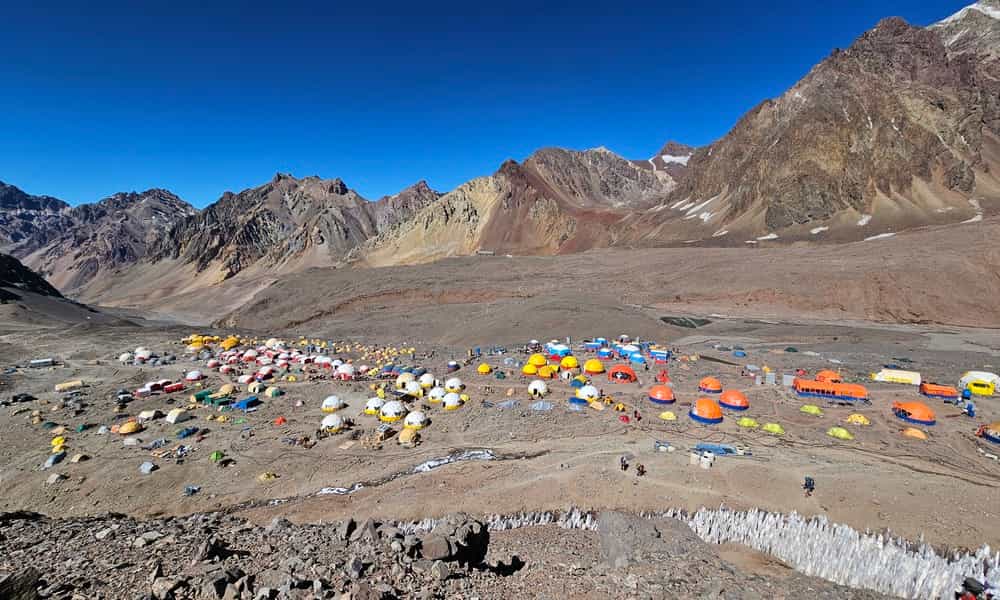
The dry pits (used till the Base Camp) are really clean with a proper mechanism to maintain optimum hygiene in a busy campsite – did you know Aconcagua has the second largest Base Camp after Everest? Imagine managing the waste on such a packed establishment in the middle of nowhere – wouldn’t be easy, for sure.


blog-image-0

Image by: Neeti Singhal


c. Route & Terrain

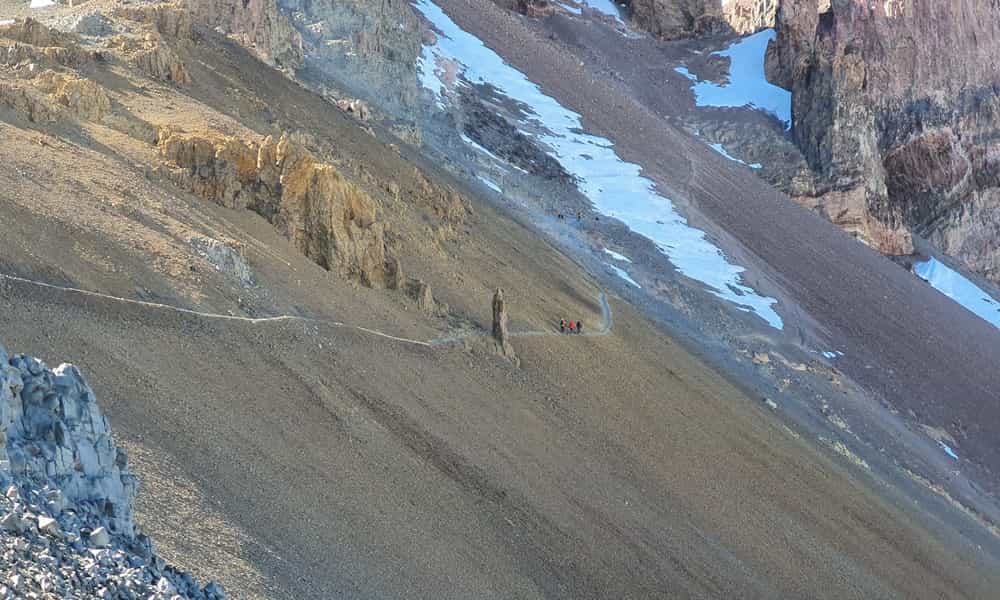
The route here is very clear. Because the area sees a lot of climbers in high season, the route is extremely well-defined all the way to the end.


d. Customer Experience

This will vary based on which outfitter you choose to take services from but as a relative standard, the customer experience on Aconcagua is TOP-NOTCH. The coordination between the different teams across camps and porters, kitchen staff etc is impeccable and the kind and quality of services, hospitality, general demeanor of the entire staff, efficiency of delivery and communication are all very impressive. It is the right combination of competence and compassion.

The food is exceptionally good. You get three course meals three times a day prepared by a chef. The food covers all nutritional groups and is lip-smackingly good. No matter how long you stay at the Base Camp, it’s improbable you will eat the same dish twice – that is how wide their menu is.


e. Language

Language is a bit of a problem since English is not widely spoken or understood, but this doesn’t take away from the exquisite hospitality of the service providers or the people in general.


8. Spoilt for Choices

On Aconcagua you are spoilt for choices on how you want to reach the summit. Fifteen kilometres from the border between Chile and Argentina, there are three most popular routes which bring you to its head. Although there are numerous more possible routes, those are technical and demand a lot more experience.

Aconcagua can be approached from 2 separate valleys: Horcones Valley and Vacas Valley. Based on your starting point, the three main routes to get to the top of the Andes Mountains are:

  1. The Normal Route which goes through the Horcones Valley and is a straight route (meaning it goes and comes back the same way). This is the most commonly used route and hence relatively more crowded than the other route.
  2. The Polish Glacier Route which gets technical towards the end. It goes through the Vacas Valley and is a straight route too (meaning it goes and comes back the same way). This route is the best for those who want to make this difficult mountain even more challenging to climb by adding technical sections on your way to the top. The technical sections being a 1000M glacier wall with an approximate 50-60 degree slope towards the end of the climb i.e. above 6000M!


blog-image-0

Image by: Neeti Singhal


  1. The Polish Traverse Route: This one is a circuit route – you start climbing from the Vacas Valley. We surpass the technical section of the Polish Glacier Route and traverse through the mountain to join the Normal Route. The climb back down is through the Horcones Valley i.e. we use the Normal Route for descent. This one is the most interesting route (if you want to do a non-technical climb) as it gives you a 360-degree tour of the mountain. However, this one ends up being a little bit longer in duration. It is also more likely to spot some wildlife in the region through the Vacas Valley routes.


I wish I could describe the mountain in much more detail to do its beauty some justice, but I sure do hope you get to witness it in person. My personal favourite thing about the mountain was its glorious sunsets which turned the world of dull dust a shimmering gold and the cloudy dawn when the sun would just about wake up and you realise you are walking on clouds that hide the inconsequential world underneath its soft belly. Ah magic!


Share
Prev
A DIY Guide to Savandurga Trek
All blogs
Next
Simplifying The Visa Process for Climbing Aconcagua (6,961M)

Leave a Reply

Your email address will not be published.

Max 5 images, total size 3MB
Preview images

Related content

Discover these similar Blogs

10 Mountain Features Every Trekker Should Know: Master the Lingo of the Himalayas

10 Mountain Features Every Trekker Should Know: Master the Lingo of the Himalayas

02 Apr 2026
Kedarkantha vs Dayara Bugyal: The Ultimate Winter Trek Showdown

Kedarkantha vs Dayara Bugyal: The Ultimate Winter Trek Showdown

01 Dec 2025
Skiing in Kashmir: A No-Nonsense Guide to the Gulmarg Skiing Scene

Skiing in Kashmir: A No-Nonsense Guide to the Gulmarg Skiing Scene

09 Nov 2025
Go Nuts November — Official Explainer (How to Enter + Win)

Go Nuts November — Official Explainer (How to Enter + Win)

31 Oct 2025
Gulmarg vs Auli: Where to Learn Skiing in India  (An Honest Guide for 2025)

Gulmarg vs Auli: Where to Learn Skiing in India (An Honest Guide for 2025)

31 Oct 2025
Sleeping Bags that Actually Work in the Himalayan Winters (Not Just on Websites)

Sleeping Bags that Actually Work in the Himalayan Winters (Not Just on Websites)

27 Oct 2025
Snowfall Areas in India You Can Actually Trek Through

Snowfall Areas in India You Can Actually Trek Through

19 Oct 2025
Skiing in India: All You Need to Know Before You Hit the Slopes This Winter

Skiing in India: All You Need to Know Before You Hit the Slopes This Winter

10 Oct 2025
Trekking in Winter: Why Winter Trails Are a Different Kind of Magic

Trekking in Winter: Why Winter Trails Are a Different Kind of Magic

08 Oct 2025
Snow Trekking Shoes in India: What Actually Works on the Himalayan Trails

Snow Trekking Shoes in India: What Actually Works on the Himalayan Trails

08 Oct 2025

Popular tags

Explore more categories and themes from the same trail journal.

March

March

0 treks
April

April

0 treks
Skiing Courses

Skiing Courses

4 treks
May

May

0 treks
June

June

0 treks
Kayaking Courses

Kayaking Courses

0 treks
July

July

0 treks
6000M+ Peaks

6000M+ Peaks

1 treks
Nepal Treks

Nepal Treks

6 treks
Offbeat Treks

Offbeat Treks

26 treks
Scuba Courses

Scuba Courses

2 treks
August

August

0 treks
Wild Life Treks

Wild Life Treks

2 treks
Winter Treks

Winter Treks

28 treks