
logo icon
  • Treks
    New Category
    • Kedar Kantha Trek
    • Har Ki Dhun Trek
    • Chopta Tugnath Trek
    • Beas Kund Trek
    Medium
    • Valley of Flowers Trek
    • Hampta Pass Trek
    • Sundakphu Trek
    • Goecha La Trek
    Hard
    • Chadar Trek
    • Stok Kangari Trek
    • Rupin Pass Trek
    • Pin Parvati Pass Trek
    image
    Choose your trek difficulty
    View All Treks
  • Expeditions
    New Category
    • New Link
    • New Link
    image
  • Skiing
    • Skiing
  • Why Bikat
  • Full On Travel
  • Blog
  • Shop
  • About

Pure Grit. Pure Adventure.

Bikat means difficult. But with us, that’s not a warning—it’s a promise. Of stories worth telling. Of adventures worth chasing.

Region

Month

Difficulty

Adventure Name

brand
  • Treks
    • Difficulty
      • New Category
        • Kedar Kantha Trek
        • Har Ki Dhun Trek
        • Chopta Tugnath Trek
        • Beas Kund Trek
      • Medium
        • Valley of Flowers Trek
        • Hampta Pass Trek
        • Sundakphu Trek
        • Goecha La Trek
      • Hard
        • Chadar Trek
        • Stok Kangari Trek
        • Rupin Pass Trek
        • Pin Parvati Pass Trek
    • Region
      • Uttarakhand
        • Kedar Kantha
        • Har Ki Dhun
        • Rupin Pass Trek
        • Valley of Flowers Trek
      • Himachal Pradesh
        • Hmpta Pass Trek
        • Beas Kund Trek
        • Pin Parvati Pass Trek
        • New Link
      • Ladakh
        • Chadar Trek
        • Stok Kangari Trek
        • Markha Vallery Trek
        • Lumayuru Trek
      • Sikkim
        • Goecha La Trek
        • Dzongari Trek
        • Greem Lake Trek
      • Bhrigu Pass Trek
        • Annapurna Circuit Trek
        • Langtag valley
        • New Link
    • Season
      • Summer (Apr-Jun)
        • Valley of Flowers
        • Hampta Pass Trek
        • Kedarkantha Trek
      • Monsson (Jul-Sep)
        • Sundakphu Trek
        • Goecha La Trek
        • Markha Valley Trek
      • Autumn (Oct-Nov)
        • Rupin Pass Trek
        • Pin Parvati Trek
        • Har Ki Dhun Trek
      • Winter (Dec-Mar)
        • Chadar Trek
        • Kedarkantha Trek
        • Chopta Tungnath Trek
    • Family Trek
      • Family Treks
        • Chopta Tungnath Trek
        • Har Ki Dun Trek
        • Beas Kund Trek
        • Bhrigu Lake Trek
    • Beginner Friendly
      • Beginner Friendly
        • Kedarkantha Trek
        • Hampta Pass Trek
        • Sandakphu Trek
        • Dzongri Trek
    • Off-beat
      • OFF-BEAT
        • Green Lake Trek
        • Lumayuru Trek
        • Lantang Valley Trek
        • Rupin Pass Trek
    • High Adventures
      • High Adventures
        • Stok Kangari Trek
        • Chadar Trek
        • Pin Parvati Pass Trek
        • Everest Base Camp Trek
    • Bikat Recommends
      • Bikat Recommends
        • Kedarkanth Trek
        • Valley of Flowers Trek
        • Goecha La Trek
        • Chadar Trek
    • Fresh Explorations
      • Fresh Explorations
        • Lamayuru Trek
        • Green Lake Trek
        • Langtang Valley Trek
        • Bhrigu Lake Trek
  • Expeditions
    • New Column
      • New Category
        • New Link
        • New Link
  • Skiing
    • Skiing
  • Why Bikat
  • Full On Travel
  • Blog
  • Shop
  • About
Whatsapp
Chat With Us
Pre Sale
Pre Booking - 8448680062
Post Sale
Post Booking - 9319028363 /8588878499
Email
Email - info@bikatadventures.com
Email
support@bikatadventures.com

Follow us on social media

Subscribe to our newsletter

Get the latest updates and offers.

Contact Us

Whatsapp
Chat With Us
Pre Sale
Pre Booking - 8448680062
Post Sale
Post Booking - 9319028363 /8588878499
Email
Email - info@bikatadventures.com
Email
support@bikatadventures.com

Company

About Us
Careers
Blog
Why Bikat

Support

Contact
Environment Policy
Privacy Policy
Terms and Conditions
Sitemap

Services

Treks
Mountaineering
Crossover Expeditions
Cycling
Bikat Experiences
Skiing
Custom

Mobile

Download on the
Apple Store
Get in on
Google Play
© 2026 Bikat Adventures. All Rights Reserved|Powered by: Novel Knett Software Solutions
Privacy PolicyTerms of Service
FacebookTwitterInstagram
Home
>
Blog
>
A Travel Guide to Sikkim
Informative

A Travel Guide to Sikkim

Rishabh Tiwari
Written by
Rishabh Tiwari
28 Sept 2023
0 views
2 comments
A Travel Guide to Sikkim

History called it the Garden of Indra, Lepcha people who are the original inhabitants of Sikkim call it Paradise, the Bhutias call it The Hidden Valley of Rice and the Limbu word for Sikkim translates to New Palace. These names together list out all that defines Sikkim and truly bring out the personality of the state. 

Sikkim is the only brother state of the Seven Sisters that make up Northeast India. Attached securely to mainland India, it is also the only northeastern state that lies on the other side of the 22 km long Chicken’s Neck that connects the other seven states from mainland India. This state that houses a wide range of distinctive beauty characteristic of the Northeastern landscape, shares its borders with West Bengal in the south, Nepal in the west, China in the north and Bhutan in the east. It is a melting pot of cultures and religions which the state proudly showcases in its mural-filled walls and architectural design.

(Read, Nine Places to Visit in Northeast India in Summers)


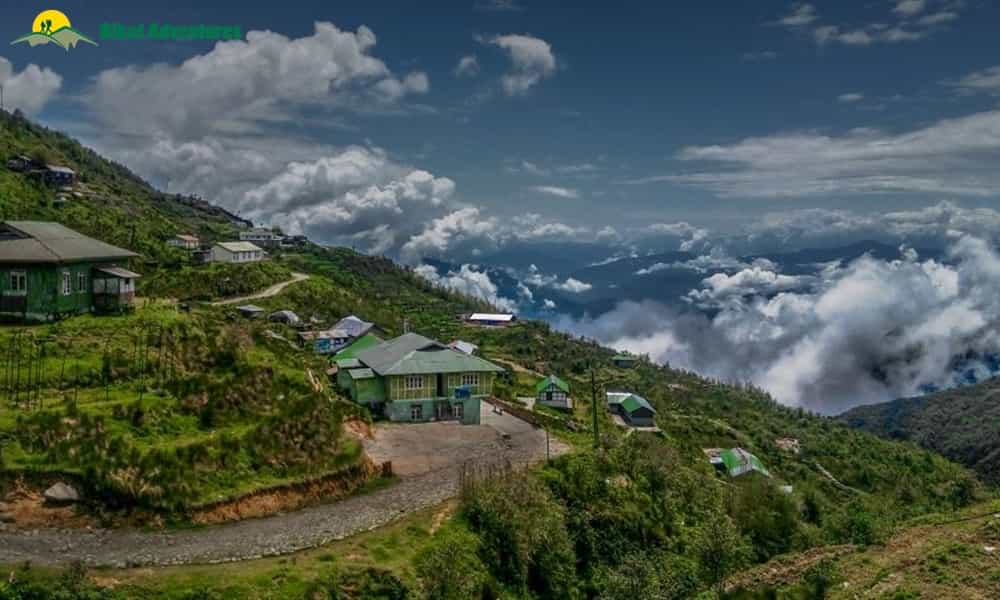
With over 500 species of birds including some which are declared endangered, over 1400 species of butterflies and a large variety of mammals and reptiles such as Himalayan crestless porcupine, pangolin and the Burmese python, Sikkim supports a rich and unique ecosystem. The lower reaches of the state are thick with orchids, apple orchards, cardamom, ginger, orange groves and massive stretches of paddy fields. The upper reaches of the state are rich in countless colours of rhododendrons and a distinctive alpine terrain full with high mountain walls, dense forests and glacial lakes.
 

blog-image-0


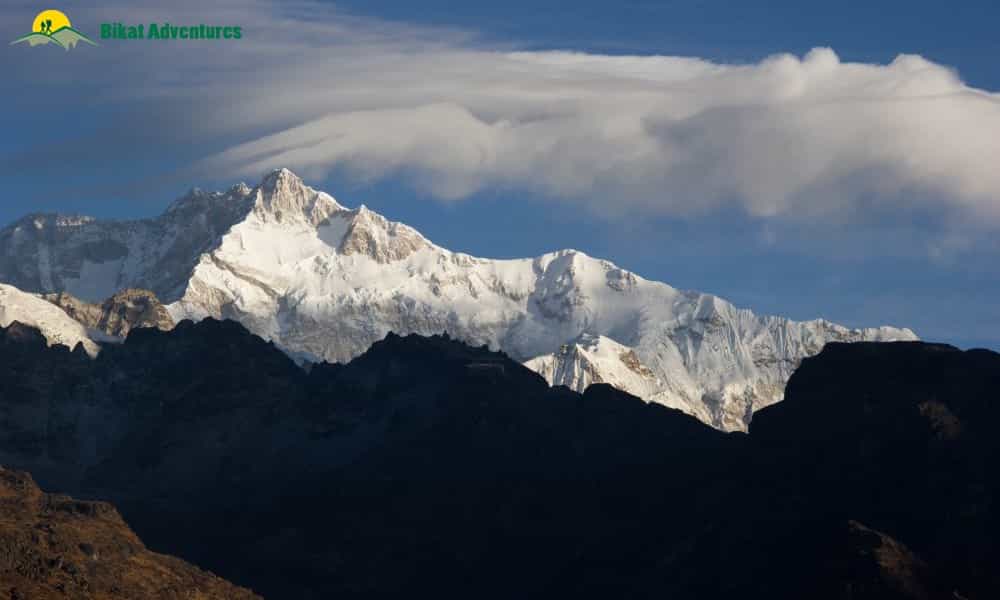
Although the second smallest state in India, Sikkim houses a world of experiences within its limited boundaries. From scorching valleys with not too much elevation to some of the highest mountains in the world, Sikkim has it all. Home to the third highest peak in the world, Kanchenjunga (8,586M), Sikkim has so much beauty in the form of its high rise mountains, lush green forests, its rich flora and fauna, the rivers that run amuck all throughout the state, the many medicinal hot springs and of course its people. A growing circuit of roads penetrate the many corners of this mountainous state – and where the roads end, you can always find some remarkable trekking routes to take you deeper into the state.

Here is all you need to know to plan your trip to this beautiful mountain state.


Why Should You Travel to Sikkim: Five Interesting Facts About The State

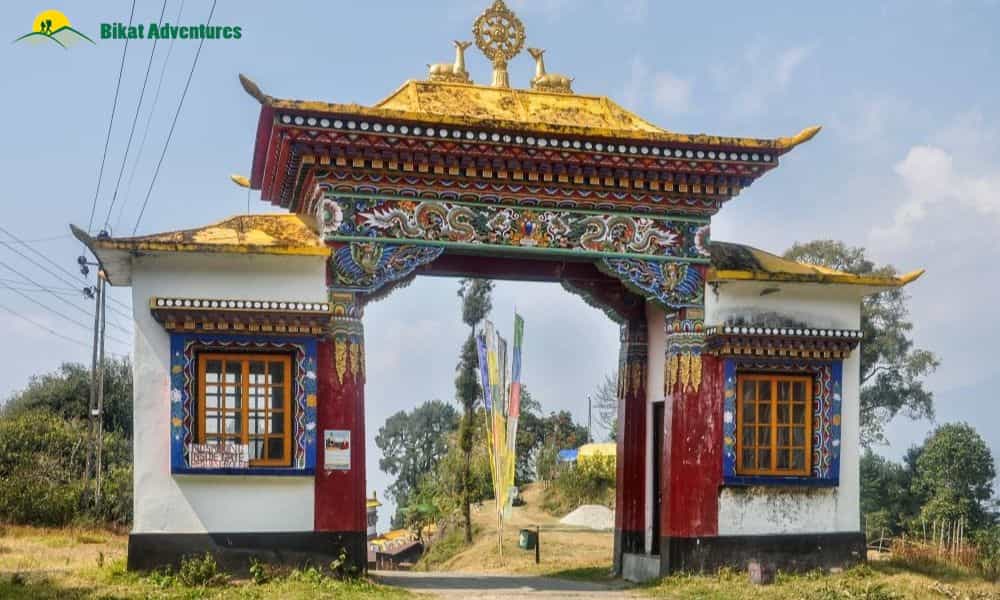
1. Sikkim became part of India in 1975 before which it was an independent mountain kingdom. It was added to the North Eastern Council (NEC) as recently as December of 2002. The state retains its distinctive personality and the remembrances of its many titles through its diversity in traditions and religions. The state has over TWO HUNDRED monasteries. The most famous ones are Rumtek Monastery and Phodong Monastery, both of which are easily accessible from the capital city of Gangtok.


2. In 2016, Sikkim became the first organic state in the world. An agrarian economy for the most part, Sikkim banned chemical fertilizers and pesticides. They implemented 100% organic farming as early as 2003. The state was also cited to be a crime-free state with the best governance. The government had a major role to play in turning the massive 138,000 hectares of cropped area into organic land by providing resources, subsidies, awareness drives and recognition for behavior change and monitoring through imposing heavy fines. The state is now bearing fruit of these hard labours in the form of increased production of crops, a healthy environment and healthy people. 

(Read, Interesting Facts about Northeast India)


3. Sikkim is the second largest producer of cardamom worldwide. It is also famous for producing the hottest chilli in the world, Dalle Khorsani. Remember to try some with your food when you pay this lovely state a visit – don’t forget to keep a bottle of water next to you, because you will definitely need it!


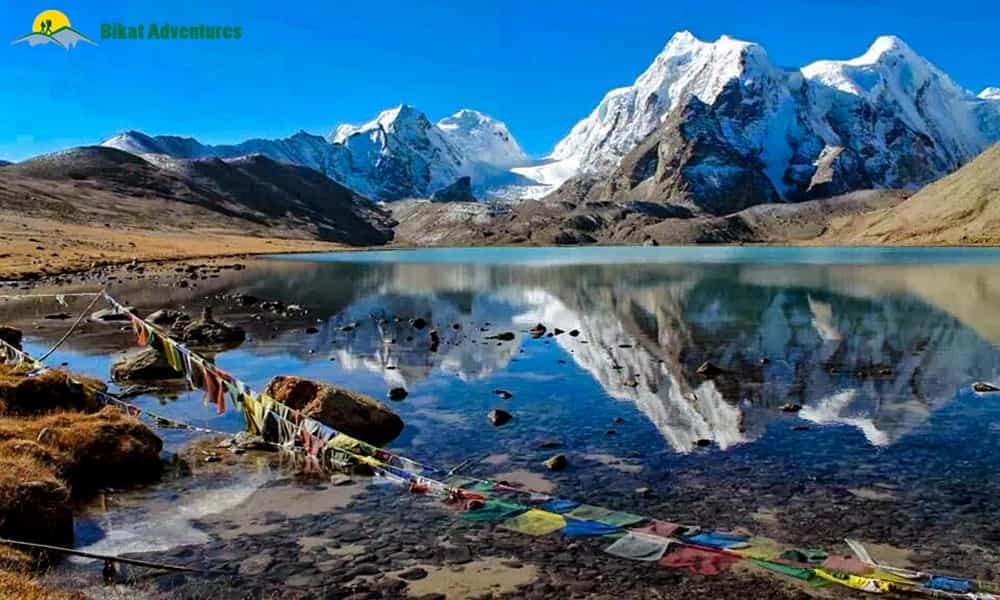
4. Over 45% of the geographical landmass of Sikkim is covered in forests. The total forested area is divided between at least 6 National Parks, one of which, the Kangchenjunga National Park, is a UNESCO site. The state also has one of the highest numbers of high-altitude glacial lakes some of which are Gurudongmar Lake (5,150M) and Tso Lhamo (5,100M).


blog-image-0


Teesta river, which is one of the largest tributaries of the Brahmaputra River originates in Sikkim. The Zemu glacier, which is one of the largest glaciers in Northeastern Himalayas, is the birthplace of Teesta which nourishes the entire state of Sikkim.  


How to Get to Sikkim

By Air

The newly inaugurated airport in Sikkim, Pakyong, which is 32 kms from the capital city Gangtok, receives flights from Delhi and Kolkata. These, however, may be expensive and infrequent. Another way to get into Sikkim is to fly to Bagdogra, in West Bengal. Bagdogra receives frequent flights from all major cities in India. Gangtok is 125 kms away from Bagdogra. There are shared and private cabs available right outside the airport to bring you to Gangtok. Sikkim Tourism Board also operates helicopter services between Bagdogra and Gangtok.


By Rail

The closest railway station to Sikkim is New Jalpaiguri (NJP) in West Bengal. It is 125 kms from Gangtok. Shared and private cabs are easily available from here to get to Gangtok. 


By Road

The Sikkim Nationalised Transport (SNT) bus service connects Gangtok to all the neighbouring states like Kalimpong, Darjelling and Siliguri. 


Permits And Documentation Required to Travel to Sikkim

While a special permit is not required by nationals to enter the borders of the state, foreigners need an Inner Line Permit to get into Sikkim. The validity of the permits is time bound. Certain areas are restricted to foreigners and domestic travelers need official permits to visit these areas like Nathula Pass, as well. Trekking trails require permits too. But these are usually taken care of by the agency you go through. Single foreign nationals are not allowed on some of the trekking trails in Sikkim. They get a permit only if there are two or more foreign travelers in a group. Since Sikkim falls along the border with China, the Indian Army has control over a large part of the state, as it is a sensitive border area. Information about which areas are accessible to foreigners and areas requiring a PAP/ILP can be found here. 


Understanding The Map Of Sikkim

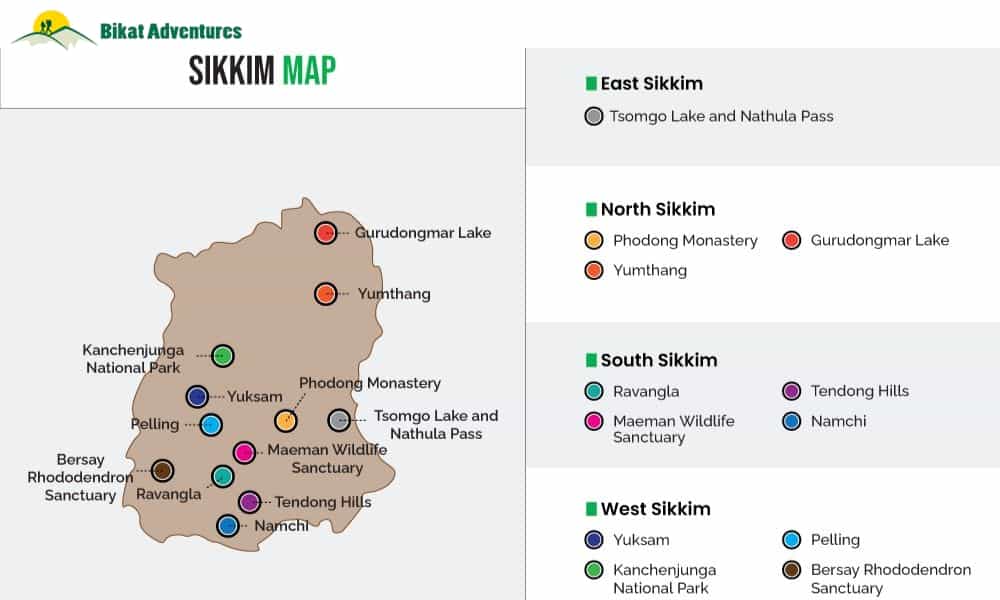
Sikkim is broadly divided in 4 districts. Each district boasts of highlights of its own.


blog-image-0


East Sikkim

The bustling cosmopolitan city of Gangtok, which is the capital of Sikkim, sits on one edge of East Sikkim. At an elevation of 1,650M, the city overlooks the Ranikhola River which meanders in the valley below. Some interesting places to visit in East Sikkim are Tsomgo Lake and Nathula Pass. 


North Sikkim

As the largest area in Sikkim but also the least populous, the district boasts of immense and untouched natural beauty. It is an area with the maximum green cover found anywhere in Sikkim and a wide variety of flora and fauna. It is literally a naturalist’s paradise. The district exudes the strong Himalayan vibe Northeastern states are most famous for. Phodong Monastery, Gurudongmar Lake and Yumthang are some of the most sought after places in North Sikkim. 


South Sikkim

South Sikkim has not gained as much popularity as North Sikkim which automatically means that it has sparser crowds. It, hence, is the best place to travel to if you are looking for some solitude. Home to the only tea gardens in the state, the Temi Tea Gardens, South Sikkim is a peaceful district where numerous trekking trails bring you to the many quiet villages and different vantage points, each of which introduces you to a unique face of the district. Maeman Wildlife Sanctuary, Tendong Hills, Ravangla and Namchi are some of the places that are worth a visit.


West Sikkim

Home to the UNESCO site and one of the most important biodiversity hotspots in India, Kanchenjunga National Park, West Sikkim is a rich ecological zone with striking altitudinal variations. It has everything from temperate to alpine terrain. West Sikkim is the best place to be if you are looking for some stunning trekking trails rich in all that is unique about the Northeastern landscape. Some of the most well-known trekking trails like the Goechala Trek, Dzongri Trek and the like are part of West Sikkim. Yuksam, which is a trekking hub and the starting point of most treks in Sikkim lies in this district. Other places like the Hilley – Bersay Rhododendron Sanctuary are best visited in spring when the forests thick with rhododendrons are in full bloom. Pelling is another interesting town worth a visit.


blog-image-0


Five Things You Absolutely Must Do In Sikkim

1. Visit the countless monasteries stationed in the most peculiar places all across the state

2. Backpack through the many glorious trekking trails in Sikkim

3. Visit the Kanchenjunga National Park and other biosphere hubs in the state

4. Get a slice of history at Nathula Pass and top it up by visiting the sacred Gurudongmar Lake 

5. Immerse yourself in the culture of this lively state and definitely try their distinctive local cuisine


Five Best Places In Sikkim For An Adventure Lover

1. Goechala Trek 

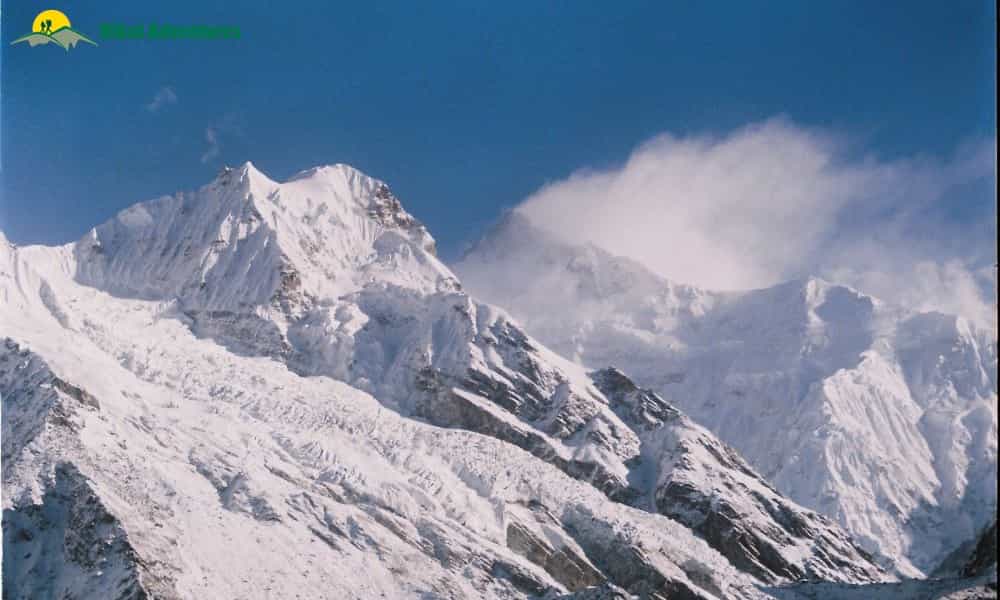
This is probably one of the most popular treks in the Northeastern region and rightly so. The beauty of the Kanchenjunga National Park is truly one of a kind and very characteristic of the beauty of this entire region. 

Burrowed deep within the leafy jungles of the Kanchenjunga National Park, the coveted Goechala trek takes you disarmingly close to the third highest mountain range in the world. What fascinates us most about this trek is how up-close and life size some of the celebrated peaks of the Himalayas appear on this trail. 

There is a lot that is special about this trail and what’s even better is the way it changes its character in different seasons giving you a whole different experience each time.


blog-image-0


2. Danphebir La Pass Trek 

While Goechala trek invites a fair number of trekkers on its trail each year, the Danphebir La Pass trek is a bit shyer in comparison. 

Trailing right alongside the border, this off-beat trek in West Sikkim blurs the boundaries between Nepal and India. In the already less explored state of Sikkim, the trail to Danphebir La, the high mountain pass called the Pass of the Pheasant sitting at an elevation of 4,530M, remains fully untouched.


blog-image-0


3. Nathu La Pass

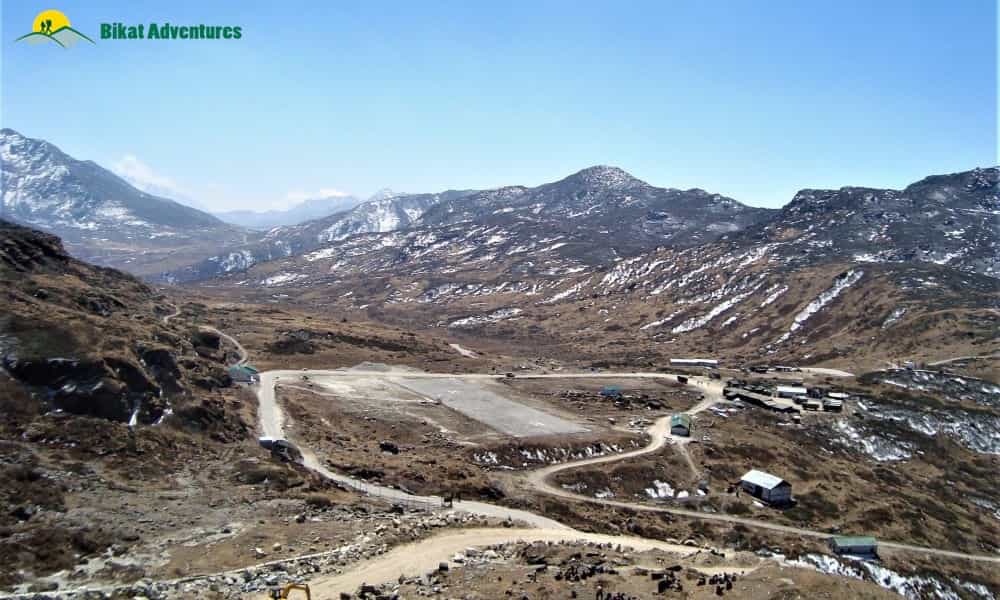
Traditionally stated to mean ‘the whistling pass’, Nathu La at 4,310M is a high-mountain pass in East Sikkim which connects Kalimpong and Gangtok to the villages of lower Chumbi Valley. Strong winds and heavy snow fall for 7-8 months of a year in the region makes the pass hard to access. Summers are the best shot one has of actually making it there. The area is rich in a wide variety of flora and fauna; it is a safe home to some endangered species like Tibetan wolf, snow leopard, Tibetan gazelle, ruddy shelduck, the golden eagle, lammergeyer and many more. It is a literal paradise for bird lovers. Species like the laughing thrush, redstarts, forktails, warblers, kestrels, monals and many more are very easy to spot since they thrive here in large numbers. Since it is right at the border with just a barbed wire separating the two nations, the pass of high military significance. Only Indian nationals are allowed to visit the pass on specific days of the week after obtaining a special permit from Gangtok. The pass is only 70 kms and a two hour drive away from Gangtok.


blog-image-0


4. Valley of Flowers in Yumthang

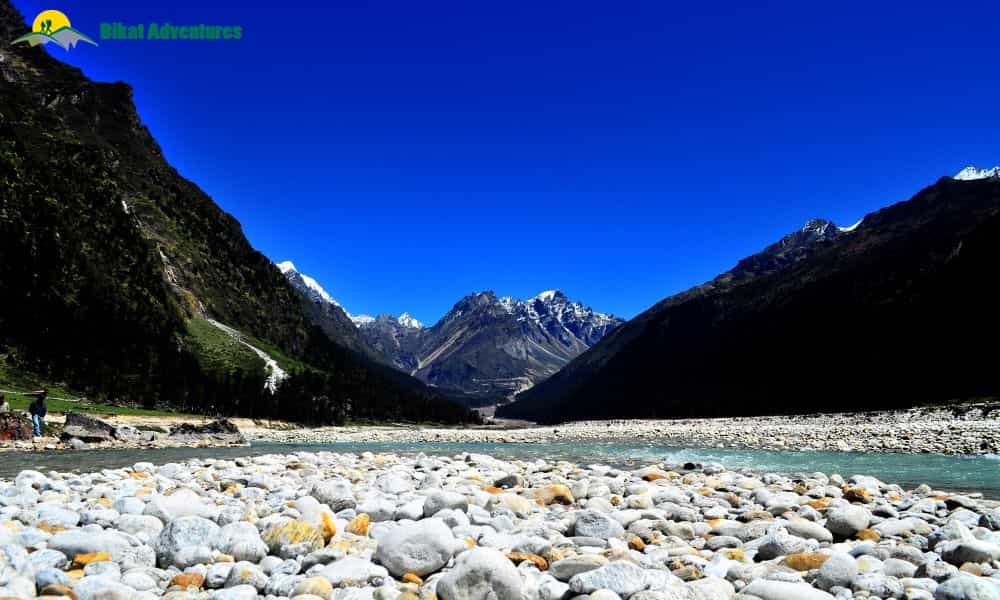
Situated 150 kms from Gangtok to the North of Sikkim, Yumthang is a tiny ecosystem all on its own with rivers, hot springs, grazing yaks, rolling meadows and an infinite stretch of stunning flowers that cover the entire valley. Somehow this pretty amazing spread of beauty gets even more spellbinding when placed against the hard texture of the Eastern Himalayan peaks standing thousands of meters tall in the background.

The Shingba Rhododendron Sanctuary in Yumthang is home to over 35 different species of rhododendrons. Besides that, miles on end are filled with delightful flora such as the iris, cobra lilies, poppies, louseworts and primulas. For its fill of the flowers across all its valleys, no wonder rhododendrons are the state flower of Sikkim!


blog-image-0


The flowering season is late February to mid-June which means this is the perfect place to be on your summer visit to the northeast. 

Point to remember: Because it is right by the border with China, you need a special permit to get here. You can get the permit made in Gangtok. The 100 kms between Gangtok and Lachung – the nearest village with accommodation, can be covered in about a 4 hour drive.


5. Kishong Lake 

This offbeat trek in North Sikkim brings you to a largely untouched landscape. This unexplored region greets you to herds of yak grazing under the towering snow-capped peaks of the Kanchenjunga range of mountains. From the beautifully forested valleys to the higher alpine regions to the land of the high mountains, the route for this minimally explored trek greets you with surprises on every turn to eventually bring you to the high-altitude lake. Of the over 200 lakes in the mountainous state of Sikkim, Kishong Lake is one of the holiest. It holds great significance for the Lepcha tribe, believed to be one of the oldest tribes to live, to this day. They believe this lake at the altitude of 4,500M marks the way to heaven and also that this is where their people originated from.


Share
Prev
A Travel Guide to Nagaland
All blogs
Next
A Travel Guide to Meghalaya

Guest reviews

rj nivah
rj nivah
31 Mar 2026

Really well put together guide—covers both practical info and the unique charm of Sikkim beautifully. The district-wise breakdown and trekking insights are especially helpful. West Sikkim always feels underrated, and places like Pelling deserve more attention. For anyone planning that side, this could help with stays https://rajniva.com/stay-in-pelling .

rj nivah
rj nivah
10 Mar 2026

This is such a thorough and inspiring guide to Sikkim! I love how it captures the diversity of landscapes, culture, and adventure the state has to offer. From the vibrant monasteries to the stunning treks in North and West Sikkim, it really makes me want to explore every corner. For anyone planning a trip, it’s also helpful to check out comfortable stays in Gangtok here: https://rajniva.com/stay-in-gangtok.

Leave a Reply

Your email address will not be published.

Max 5 images, total size 3MB
Preview images

Related content

Discover these similar Blogs

10 Mountain Features Every Trekker Should Know: Master the Lingo of the Himalayas

10 Mountain Features Every Trekker Should Know: Master the Lingo of the Himalayas

02 Apr 2026
Kedarkantha vs Dayara Bugyal: The Ultimate Winter Trek Showdown

Kedarkantha vs Dayara Bugyal: The Ultimate Winter Trek Showdown

01 Dec 2025
Skiing in Kashmir: A No-Nonsense Guide to the Gulmarg Skiing Scene

Skiing in Kashmir: A No-Nonsense Guide to the Gulmarg Skiing Scene

09 Nov 2025
Go Nuts November — Official Explainer (How to Enter + Win)

Go Nuts November — Official Explainer (How to Enter + Win)

31 Oct 2025
Gulmarg vs Auli: Where to Learn Skiing in India  (An Honest Guide for 2025)

Gulmarg vs Auli: Where to Learn Skiing in India (An Honest Guide for 2025)

31 Oct 2025
Sleeping Bags that Actually Work in the Himalayan Winters (Not Just on Websites)

Sleeping Bags that Actually Work in the Himalayan Winters (Not Just on Websites)

27 Oct 2025
Snowfall Areas in India You Can Actually Trek Through

Snowfall Areas in India You Can Actually Trek Through

19 Oct 2025
Skiing in India: All You Need to Know Before You Hit the Slopes This Winter

Skiing in India: All You Need to Know Before You Hit the Slopes This Winter

10 Oct 2025
Trekking in Winter: Why Winter Trails Are a Different Kind of Magic

Trekking in Winter: Why Winter Trails Are a Different Kind of Magic

08 Oct 2025
Snow Trekking Shoes in India: What Actually Works on the Himalayan Trails

Snow Trekking Shoes in India: What Actually Works on the Himalayan Trails

08 Oct 2025

Popular tags

Explore more categories and themes from the same trail journal.

March

March

0 treks
April

April

0 treks
Skiing Courses

Skiing Courses

4 treks
May

May

0 treks
June

June

0 treks
Kayaking Courses

Kayaking Courses

0 treks
July

July

0 treks
6000M+ Peaks

6000M+ Peaks

1 treks
Nepal Treks

Nepal Treks

6 treks
Offbeat Treks

Offbeat Treks

26 treks
Scuba Courses

Scuba Courses

2 treks
August

August

0 treks
Wild Life Treks

Wild Life Treks

2 treks
Winter Treks

Winter Treks

28 treks