logo icon
  • Treks
    New Category
    • Kedar Kantha Trek
    • Har Ki Dhun Trek
    • Chopta Tugnath Trek
    • Beas Kund Trek
    Medium
    • Valley of Flowers Trek
    • Hampta Pass Trek
    • Sundakphu Trek
    • Goecha La Trek
    Hard
    • Chadar Trek
    • Stok Kangari Trek
    • Rupin Pass Trek
    • Pin Parvati Pass Trek
    image
    Choose your trek difficulty
    View All Treks
  • Expeditions
    New Category
    • New Link
    • New Link
    image
  • Skiing
    • Skiing
  • Why Bikat
  • Full On Travel
  • Blog
  • Shop
  • About

Pure Grit. Pure Adventure.

Bikat means difficult. But with us, that’s not a warning—it’s a promise. Of stories worth telling. Of adventures worth chasing.

Region

Month

Difficulty

Adventure Name

brand
  • Treks
    • Difficulty
      • New Category
        • Kedar Kantha Trek
        • Har Ki Dhun Trek
        • Chopta Tugnath Trek
        • Beas Kund Trek
      • Medium
        • Valley of Flowers Trek
        • Hampta Pass Trek
        • Sundakphu Trek
        • Goecha La Trek
      • Hard
        • Chadar Trek
        • Stok Kangari Trek
        • Rupin Pass Trek
        • Pin Parvati Pass Trek
    • Region
      • Uttarakhand
        • Kedar Kantha
        • Har Ki Dhun
        • Rupin Pass Trek
        • Valley of Flowers Trek
      • Himachal Pradesh
        • Hmpta Pass Trek
        • Beas Kund Trek
        • Pin Parvati Pass Trek
        • New Link
      • Ladakh
        • Chadar Trek
        • Stok Kangari Trek
        • Markha Vallery Trek
        • Lumayuru Trek
      • Sikkim
        • Goecha La Trek
        • Dzongari Trek
        • Greem Lake Trek
      • Bhrigu Pass Trek
        • Annapurna Circuit Trek
        • Langtag valley
        • New Link
    • Season
      • Summer (Apr-Jun)
        • Valley of Flowers
        • Hampta Pass Trek
        • Kedarkantha Trek
      • Monsson (Jul-Sep)
        • Sundakphu Trek
        • Goecha La Trek
        • Markha Valley Trek
      • Autumn (Oct-Nov)
        • Rupin Pass Trek
        • Pin Parvati Trek
        • Har Ki Dhun Trek
      • Winter (Dec-Mar)
        • Chadar Trek
        • Kedarkantha Trek
        • Chopta Tungnath Trek
    • Family Trek
      • Family Treks
        • Chopta Tungnath Trek
        • Har Ki Dun Trek
        • Beas Kund Trek
        • Bhrigu Lake Trek
    • Beginner Friendly
      • Beginner Friendly
        • Kedarkantha Trek
        • Hampta Pass Trek
        • Sandakphu Trek
        • Dzongri Trek
    • Off-beat
      • OFF-BEAT
        • Green Lake Trek
        • Lumayuru Trek
        • Lantang Valley Trek
        • Rupin Pass Trek
    • High Adventures
      • High Adventures
        • Stok Kangari Trek
        • Chadar Trek
        • Pin Parvati Pass Trek
        • Everest Base Camp Trek
    • Bikat Recommends
      • Bikat Recommends
        • Kedarkanth Trek
        • Valley of Flowers Trek
        • Goecha La Trek
        • Chadar Trek
    • Fresh Explorations
      • Fresh Explorations
        • Lamayuru Trek
        • Green Lake Trek
        • Langtang Valley Trek
        • Bhrigu Lake Trek
  • Expeditions
    • New Column
      • New Category
        • New Link
        • New Link
  • Skiing
    • Skiing
  • Why Bikat
  • Full On Travel
  • Blog
  • Shop
  • About
Whatsapp
Chat With Us
Pre Sale
Pre Booking - 8448680062
Post Sale
Post Booking - 9319028363 /8588878499
Email
Email - info@bikatadventures.com
Email
support@bikatadventures.com

Follow us on social media

Subscribe to our newsletter

Get the latest updates and offers.

Contact Us

Whatsapp
Chat With Us
Pre Sale
Pre Booking - 8448680062
Post Sale
Post Booking - 9319028363 /8588878499
Email
Email - info@bikatadventures.com
Email
support@bikatadventures.com

Company

About Us
Careers
Blog
Why Bikat

Support

Contact
Environment Policy
Privacy Policy
Terms and Conditions
Sitemap

Services

Treks
Mountaineering
Crossover Expeditions
Cycling
Bikat Experiences
Skiing
Custom

Mobile

Download on the
Apple Store
Get in on
Google Play
© 2026 Bikat Adventures. All Rights Reserved|Powered by: Novel Knett Software Solutions
Privacy PolicyTerms of Service
FacebookTwitterInstagram
Home
>
Blog
>
Dzongri Trek: Who is This Meant For ?
Informative

Dzongri Trek: Who is This Meant For ?

Rishabh Tiwari
Written by
Rishabh Tiwari
11 Aug 2023
0 views
0 comments
Dzongri Trek: Who is This Meant For ?

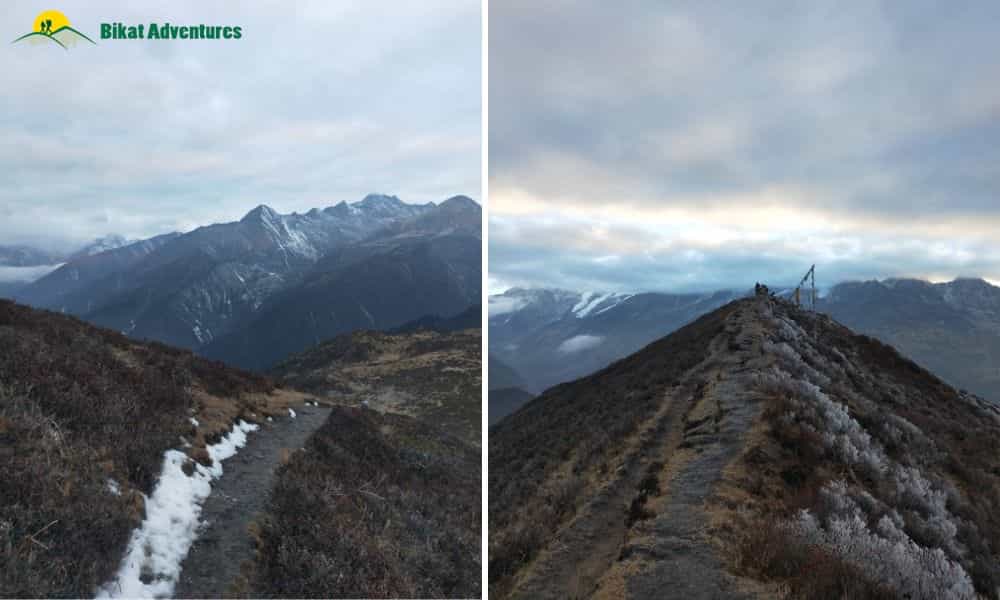
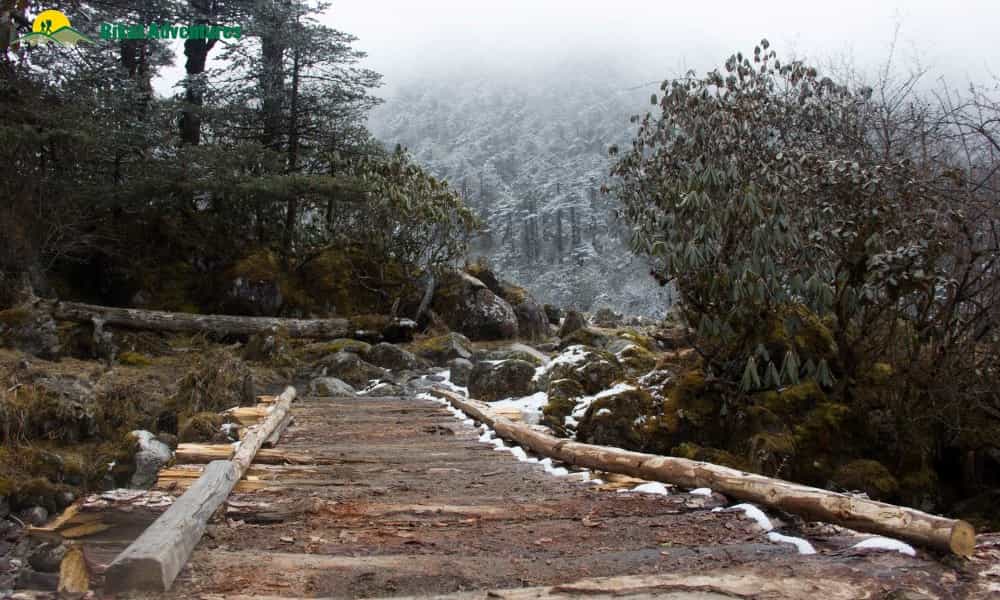
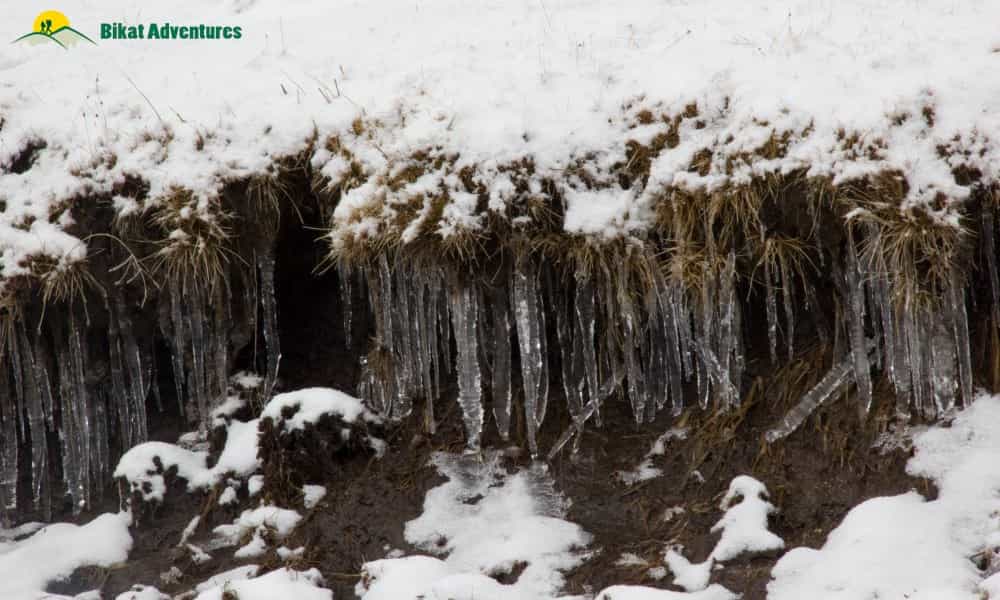
Don’t have enough time to go till Goechala Pass, but still want to greet the Kanchenjunga range up close? Then venturing on the Dzongri trek would make your wish come true. Located around 16 kilometers before the Goechala Pass, Dzongri Top sits on a ridge that offers a 360-degree view of snow-cloaked mountain ranges. Following the same route as the Goechala Trek, the Dzongri Trek takes you through dense leafy forests, rhododendron blooms, and suspension bridges decorated with multicolored prayer flags. In winter the trail becomes a frozen wonderland, as you get to have snowball fights on the trail between Sachen and Dzongri.


blog-image-0


As beautiful and playful as the trek sounds, it comes with its own package of difficulties. This is evident in the extremely steep paths, the bone-chilling winds, and the damp weather you encounter along the way. These ordeals push your limits while introducing you to the unique climate and topography of the Eastern Himalayas. But don’t worry, we are here to acquaint you with some of the challenges that you can face on the trek and offer tips on how you can tackle them.


blog-image-0


Difficulty Level of the Trek

Dzongri is a level 5 trek on the Bikat Rating Scale.

About the BRS: The Bikat Rating Scale rates the difficulty level of all treks and expeditions in our portfolio after taking into account their geographical and climatic conditions. 

According to this scale, if you are a beginner who is unsure of your fitness level and doesn’t know what to expect on a trek, a trek rated one will be a good place to start. 

If you liked your very first trekking experience and are looking to test your limits next, the treks rated 2 or 3 will do the job for you.

A beginner who is sure of their fitness level on the other hand is welcome to skip the first two levels and directly start with one of the treks rated 3.

From 4 onwards, the rules change a little. It is mandatory to have trekking experience at the previous level to participate in the next level.


The Trails of Dzongri

Although there is not much change in terrain, the Dzongri trail is known for its incredibly steep paths that can leave you gasping for air, besides a lingering dampness that creeps into clothes and shoes. Good preparation to deal with these challenges can allow for a smooth trek while enjoying the beautiful trail. The pink and red rhododendrons in spring and summer and the glittering cloak of fresh snow in winter are pretty sights to relish. Besides, the trail also takes you as close as possible to the Kanchenjunga range which houses the world’s third-highest peak. To enjoy all these goodies, it is best to do some homework on the possible challenges faced on the Dzongri trek.


blog-image-0
blog-image-1


Challenge 1: Acclimatization

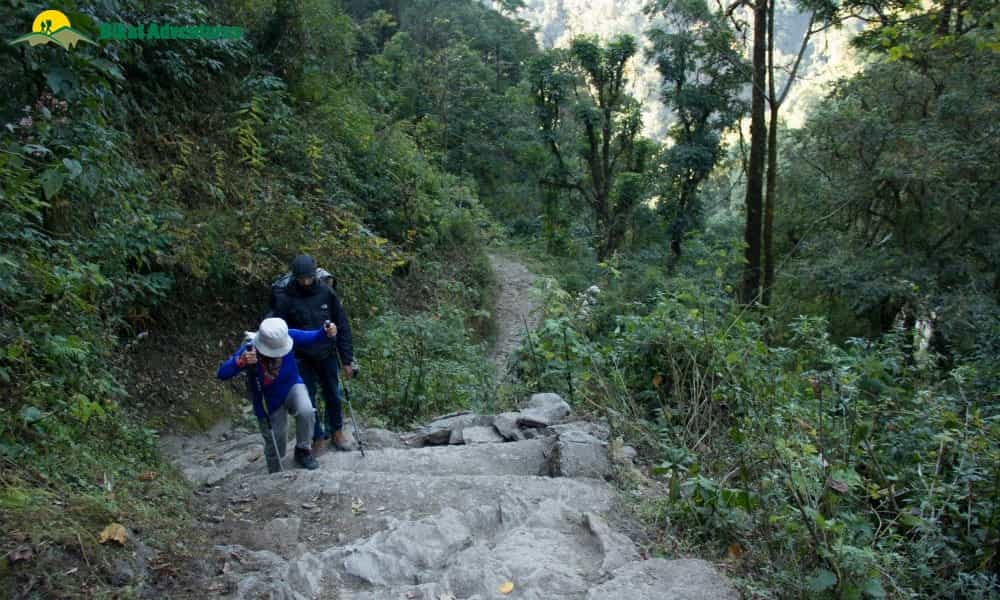
The Dzongri trail is marked by steep gradients and hence a rapid gain in altitude. It involves an ascent of over 500M each day through steep jungle paths. This requires a certain level of physical strength. Besides that, since there is continuous gain in altitude without any breaks, acclimatization under these conditions is a real challenge.


blog-image-0


Some tips to make sure you keep yourself safe from altitude-related health hazards are – to stay well-hydrated, pace yourself, never skip a meal and layer up properly to prevent yourself from the cold mountain air.


Challenge 2: Very Steep Paths

The rhododendron-strewn paths sure are gorgeous, but they get challenging when the gradients turn steep and the distances between camps see a steady increase over days. While the initial stretch from Yuksom (1,720 m) is easy to navigate, the path becomes steep after the second suspension bridge on the way to Sachen (2,195 m). The trail from here on is a continuous upward slope with barely any flat patches. The trail is particularly testing on the 4th day from Tshokha (2,900 m) to Dzongri (3,950 m) where we cover 1000 long meters in a single day.


blog-image-0


The physical strain is a lot and calls for your fittest self to the battle stations. Adopting a workout regime at least two months in advance can hone your stamina and endurance levels for this trek. On the trail itself, it is important to have proper meals, enough water, and adequate sleep to cope with physical exhaustion.


Challenge 3: Scarcity of Water

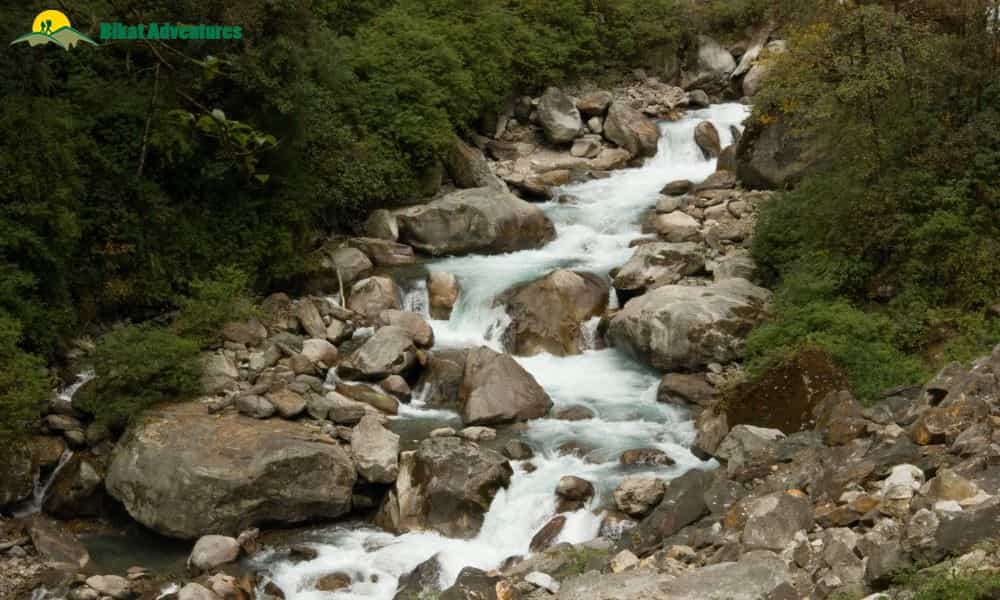
On a trek like Dzongri where the gradient is steep and distances long, water is essential as it helps cope with physical exhaustion and acclimatization. Although natural springs are aplenty along the first stretch of the trail, they dwindle as the path pushes upwards. Further up the altitude at Bakhim, it is not possible to camp for the night as there are no water sources. The next available water source is up 2 kilometers of steep path to the next campsite, Tshokha. The need to carry extra water adding to the weight of the heavy backpacks can make the already difficult route a little more challenging.


blog-image-0


Challenge 4: Unpredictable Weather

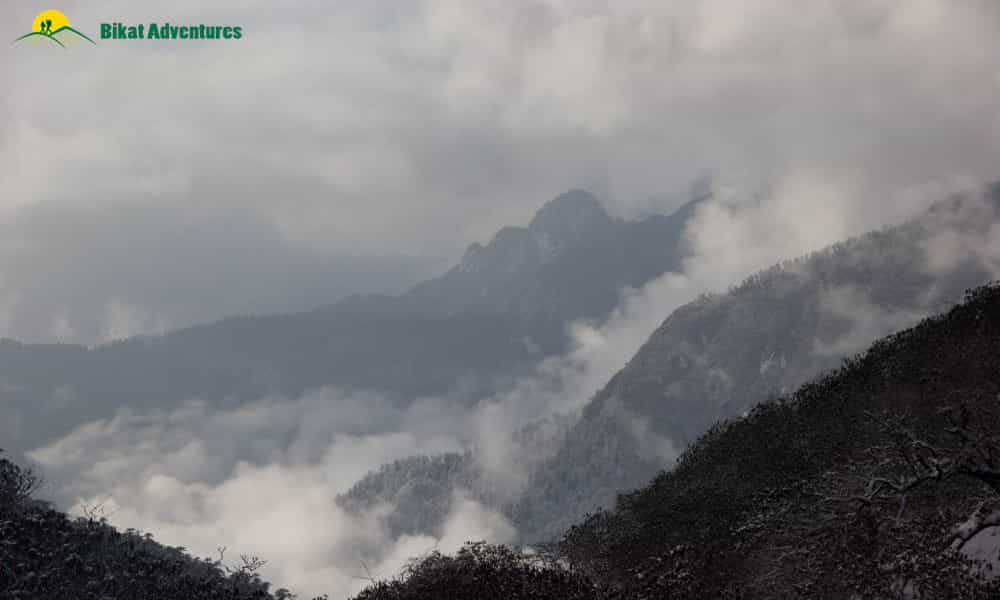
In contrast to city weather which is mostly stable and unchanging, the constant shifts in temperature on the Dzongri trail take getting used to. Sudden bouts of heavy rain followed by longer bouts of drizzle can leave you dripping from head to toe. In winter, the soft snowflakes melting on exposed skin and clothes make adapting to the already freezing temperatures a lot harder. Do not forget to pack your rainwear for this trek. It is best to be prepared for all the constantly changing moods of the sky on the trails of Dzongri.


blog-image-0


Challenge 5: Dampness

Treks in the Eastern Himalayas differ from those in the Western Himalayas primarily in their level of dampness. Due to thick vegetation, the trails of the Northeast like that of Dzongri are more rain-infested than the trails found in Himachal or Uttarakhand, contributing to naturally slippery paths. It is essential to avoid mossy and slippery boulders while on the Dzongri trek. You need to be cautious while descending steep trails when it is raining, as one wrong step can land you painfully on your buttocks.


blog-image-0


Gear Required for Dzongri

While we will be providing most of the technical equipment needed for the trek (tents, sleeping bags), there is some basic gear you will need from your end to get through your hike comfortably. 

Some of the things you will need are:


1) A sturdy, lightweight backpack: A good backpack that sits comfortably on your back without putting too much pressure on it can be the deciding factor between making it to the summit or not. Good, however, is not a synonym for expensive.

One of our founders, Pankaj, purchased a non-branded pack for INR 1100 in 2010 and the pack continues to work just fine for him even today. In the article linked below, he shares some helpful tips on what to look for when choosing a trekking backpack.  

How to choose your backpack 


2) Comfortable trekking shoes: Happy feet equal a happy trek. Conventional sports shoes don’t suit trekking trails. We recommend wearing high-ankle waterproof trekking shoes with sturdy soles for a damp trail like Dzongri. These not only provide better support but also reduce the possibility of injuries while hiking. In case, you need help with a list of deciding factors that make for good trekking shoes, please refer to the article below.

How to choose a good pair of hiking shoes 


3) Right Clothing: Any high-altitude trek requires specific kinds of clothing. It should be warm but lightweight. It should also be such that it is easily packaged. On high-altitude treks like Dzongri, we usually employ the layering method where you put on multiple layers of clothing instead of one very heavy, thick jacket. This is for two reasons:

- The weather in the Himalayan regions is unpredictable and changes very quickly. Layering gives you the freedom to adapt to that accordingly so that you are not left feeling too hot or too cold.

- These are easy to carry and are packing-friendly.


4) Right Sunglasses: Although the Dzongri trail is mostly shaded by heavy, leafy forests, sunglasses are still essential in open spaces of bright sunlight and also snow patches. When you know you are going to be in and around snow or in any high-altitude location where the sun is harsh, you might want to carry a good pair of sunglasses. A lack of these could prove to be fatal. The article below can help you pick out just the right pair.

How to pick high-altitude UV protection glasses?


Skills Required for Dzongri

Bikat Adventures is primarily an adventure learning organization. This means our key objective is not just to help trekkers complete their treks but also to ensure they pick up some valuable lessons and skills in trekking along the way. 

To achieve this, we have created learning modules and paired them to different levels on the Bikat Rating Scale. 

These modules are taught in real-time on the trails by our trek leaders. 

The following are some skills that are likely to come in handy on a trek like Dzongri.

While you will have all the assistance you need on the trek from our capable trek leaders and guides, we suggest browsing through the articles below to get an idea of what is involved.

1) Ascending Descending on Trails

Dzongri is full of steep ascents and equally steep descents. While ascending and descending on rocky terrain is difficult, achieving this on slippery snow slopes is trickier. A set of simple techniques can help you navigate rocky as well as snow landscapes with considerable ease while also reducing the chances of injuries and stress to specific body parts. The guide linked below shares some useful tips on how to ascend and descend on trails.

Ascending and Descending on Trails


2) Packing Your Rucksack

Given how unpredictable the weather gets on Dzongri, you are likely to keep changing your layering frequently along the way. Also, due to the vast difference in day temperature and that at night, you most probably will spend a lot of time packing and re-packing your sack.

Accessing your stuff can get a bit messy and confusing during this process.

A sack packed right can facilitate your trekking while incorrect packing can make even an easy trail seem difficult. Worry not, we are here to help. The article linked below shares some useful guidelines you can follow to pack efficiently. 

How to pack your rucksack


3) How to Pitch a Tent

Our trek leaders will be guiding you on how to pitch a tent during the trek. Nevertheless, we are linking the article below for anyone who might be interested in reading about it.

How to pitch a tent 


4) Layering Basics

Layering appropriately to protect you from the cold is essential. The article linked below will give you a fair idea of the winter layers you will need and guide you on how to layer up at campsites and while hiking.

Hiking attire and layering 


5) Understanding Equipment

Despite little shifts in terrain, the Dzongri trail is difficult in terms of gradient and altitude, being rife with sharp ascents and equally sharp descents on slippery paths. This, along with heavy snowfall in winter require you to use some mountaineering equipment. The articles below will acquaint you to a few of these and help you understand how to use them as well as how they can facilitate your climb.

How to use a trekking pole?  

How to use gaiters?


We hope this article answers all the questions you may have about the Dzongri trek. In case you need further assistance/information with something, please feel free to reach out to us. We are only a phone call away.


 

Share
Prev
5 Best Treks In Northeast India
All blogs
Next
How Wise is it to Attempt Pangarchulla Peak in the Winters: All You Need to Know

Leave a Reply

Your email address will not be published.

Max 5 images, total size 3MB
Preview images

Related content

Discover these similar Blogs

10 Mountain Features Every Trekker Should Know: Master the Lingo of the Himalayas

10 Mountain Features Every Trekker Should Know: Master the Lingo of the Himalayas

02 Apr 2026
Kedarkantha vs Dayara Bugyal: The Ultimate Winter Trek Showdown

Kedarkantha vs Dayara Bugyal: The Ultimate Winter Trek Showdown

01 Dec 2025
Skiing in Kashmir: A No-Nonsense Guide to the Gulmarg Skiing Scene

Skiing in Kashmir: A No-Nonsense Guide to the Gulmarg Skiing Scene

09 Nov 2025
Go Nuts November — Official Explainer (How to Enter + Win)

Go Nuts November — Official Explainer (How to Enter + Win)

31 Oct 2025
Gulmarg vs Auli: Where to Learn Skiing in India  (An Honest Guide for 2025)

Gulmarg vs Auli: Where to Learn Skiing in India (An Honest Guide for 2025)

31 Oct 2025
Sleeping Bags that Actually Work in the Himalayan Winters (Not Just on Websites)

Sleeping Bags that Actually Work in the Himalayan Winters (Not Just on Websites)

27 Oct 2025
Snowfall Areas in India You Can Actually Trek Through

Snowfall Areas in India You Can Actually Trek Through

19 Oct 2025
Skiing in India: All You Need to Know Before You Hit the Slopes This Winter

Skiing in India: All You Need to Know Before You Hit the Slopes This Winter

10 Oct 2025
Trekking in Winter: Why Winter Trails Are a Different Kind of Magic

Trekking in Winter: Why Winter Trails Are a Different Kind of Magic

08 Oct 2025
Snow Trekking Shoes in India: What Actually Works on the Himalayan Trails

Snow Trekking Shoes in India: What Actually Works on the Himalayan Trails

08 Oct 2025

Popular tags

Explore more categories and themes from the same trail journal.

March

March

0 treks
April

April

0 treks
Skiing Courses

Skiing Courses

4 treks
May

May

0 treks
June

June

0 treks
Kayaking Courses

Kayaking Courses

0 treks
July

July

0 treks
6000M+ Peaks

6000M+ Peaks

1 treks
Nepal Treks

Nepal Treks

6 treks
Offbeat Treks

Offbeat Treks

26 treks
Scuba Courses

Scuba Courses

2 treks
August

August

0 treks
Wild Life Treks

Wild Life Treks

2 treks
Winter Treks

Winter Treks

28 treks