logo icon
  • Treks
    New Category
    • Kedar Kantha Trek
    • Har Ki Dhun Trek
    • Chopta Tugnath Trek
    • Beas Kund Trek
    Medium
    • Valley of Flowers Trek
    • Hampta Pass Trek
    • Sundakphu Trek
    • Goecha La Trek
    Hard
    • Chadar Trek
    • Stok Kangari Trek
    • Rupin Pass Trek
    • Pin Parvati Pass Trek
    image
    Choose your trek difficulty
    View All Treks
  • Expeditions
    New Category
    • New Link
    • New Link
    image
  • Skiing
    • Skiing
  • Why Bikat
  • Full On Travel
  • Blog
  • Shop
  • About

Pure Grit. Pure Adventure.

Bikat means difficult. But with us, that’s not a warning—it’s a promise. Of stories worth telling. Of adventures worth chasing.

Region

Month

Difficulty

Adventure Name

brand
  • Treks
    • Difficulty
      • New Category
        • Kedar Kantha Trek
        • Har Ki Dhun Trek
        • Chopta Tugnath Trek
        • Beas Kund Trek
      • Medium
        • Valley of Flowers Trek
        • Hampta Pass Trek
        • Sundakphu Trek
        • Goecha La Trek
      • Hard
        • Chadar Trek
        • Stok Kangari Trek
        • Rupin Pass Trek
        • Pin Parvati Pass Trek
    • Region
      • Uttarakhand
        • Kedar Kantha
        • Har Ki Dhun
        • Rupin Pass Trek
        • Valley of Flowers Trek
      • Himachal Pradesh
        • Hmpta Pass Trek
        • Beas Kund Trek
        • Pin Parvati Pass Trek
        • New Link
      • Ladakh
        • Chadar Trek
        • Stok Kangari Trek
        • Markha Vallery Trek
        • Lumayuru Trek
      • Sikkim
        • Goecha La Trek
        • Dzongari Trek
        • Greem Lake Trek
      • Bhrigu Pass Trek
        • Annapurna Circuit Trek
        • Langtag valley
        • New Link
    • Season
      • Summer (Apr-Jun)
        • Valley of Flowers
        • Hampta Pass Trek
        • Kedarkantha Trek
      • Monsson (Jul-Sep)
        • Sundakphu Trek
        • Goecha La Trek
        • Markha Valley Trek
      • Autumn (Oct-Nov)
        • Rupin Pass Trek
        • Pin Parvati Trek
        • Har Ki Dhun Trek
      • Winter (Dec-Mar)
        • Chadar Trek
        • Kedarkantha Trek
        • Chopta Tungnath Trek
    • Family Trek
      • Family Treks
        • Chopta Tungnath Trek
        • Har Ki Dun Trek
        • Beas Kund Trek
        • Bhrigu Lake Trek
    • Beginner Friendly
      • Beginner Friendly
        • Kedarkantha Trek
        • Hampta Pass Trek
        • Sandakphu Trek
        • Dzongri Trek
    • Off-beat
      • OFF-BEAT
        • Green Lake Trek
        • Lumayuru Trek
        • Lantang Valley Trek
        • Rupin Pass Trek
    • High Adventures
      • High Adventures
        • Stok Kangari Trek
        • Chadar Trek
        • Pin Parvati Pass Trek
        • Everest Base Camp Trek
    • Bikat Recommends
      • Bikat Recommends
        • Kedarkanth Trek
        • Valley of Flowers Trek
        • Goecha La Trek
        • Chadar Trek
    • Fresh Explorations
      • Fresh Explorations
        • Lamayuru Trek
        • Green Lake Trek
        • Langtang Valley Trek
        • Bhrigu Lake Trek
  • Expeditions
    • New Column
      • New Category
        • New Link
        • New Link
  • Skiing
    • Skiing
  • Why Bikat
  • Full On Travel
  • Blog
  • Shop
  • About
Whatsapp
Chat With Us
Pre Sale
Pre Booking - 8448680062
Post Sale
Post Booking - 9319028363 /8588878499
Email
Email - info@bikatadventures.com
Email
support@bikatadventures.com

Follow us on social media

Subscribe to our newsletter

Get the latest updates and offers.

Contact Us

Whatsapp
Chat With Us
Pre Sale
Pre Booking - 8448680062
Post Sale
Post Booking - 9319028363 /8588878499
Email
Email - info@bikatadventures.com
Email
support@bikatadventures.com

Company

About Us
Careers
Blog
Why Bikat

Support

Contact
Environment Policy
Privacy Policy
Terms and Conditions
Sitemap

Services

Treks
Mountaineering
Crossover Expeditions
Cycling
Bikat Experiences
Skiing
Custom

Mobile

Download on the
Apple Store
Get in on
Google Play
© 2026 Bikat Adventures. All Rights Reserved|Powered by: Novel Knett Software Solutions
Privacy PolicyTerms of Service
FacebookTwitterInstagram
Home
>
Blog
>
How Wise is it to Attempt Pangarchulla Peak in the Winters: All You Need to Know
Informative

How Wise is it to Attempt Pangarchulla Peak in the Winters: All You Need to Know

R
Written by
Rishabh Tiwari
16 Aug 2023
0 views
0 comments
How Wise is it to Attempt Pangarchulla Peak in the Winters: All You Need to Know

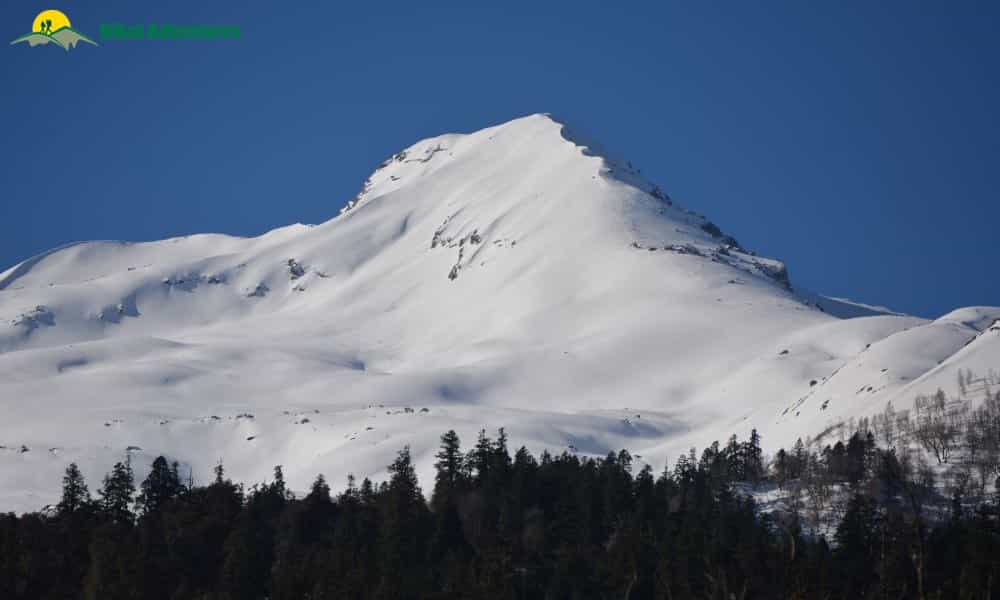
The Garhwal Range of mountains in Uttarakhand houses some of the most reverential giants in the Himalayas such as Nanda Devi, Kamet, Choukhamba, Hathi Ghoda, Mana, Trishul (to name a few). Pangarchulla Peak at its humble height of 4,590M contributes massively to lending beauty and challenge to this already stunning range of peaks. A perfect union of beauty and rigour, it is one of the many peaks that make this gorgeous range a calling for climbers who experience thrill in the midst of a challenge. 

A difficult trek, one requiring strength and endurance, Pangarchulla is a perfect introductory peak most popular amongst climbers who want to up their trekking game by a notch or three.


blog-image-0


The peak season to climb this mountain is usually the summer months of March and April. Why these months remain popular amongst climbers to attempt Pangarchulla is because the region receives a fair amount of snowfall during the winters making it easier to walk the trail in these months. Although nothing in the Himalayas is exempt from changeability, a thick sheet of snow makes the climb up this peak relatively easier. 

However, this begs the question, can it be attempted in other seasons? How safe is it to climb during winters? Do the summit rates drop if you don’t pick peak season to climb? Are there any benefits to attempting Pangarchulla in the winters?

We will use this article to answer all of these questions. We want to equip our trekkers to make an informed decision about the adventures they wish to undertake.


1. What is peak season?  

Let’s start with what peak season is not. Peak season is not synonymous to the ‘right season’. It, in fact, by definition means the time of year when a lot of people choose to trek. And hence, peak season can be equated to ‘popular season’ but definitely not the ‘safest season’. To bust more myths about off-season trekking, read, Myths and Facts about Off-Season Treks.


2. Who is this trek meant for? 

Now let’s look at some of the basic requirements which qualify you to attempt Pangarchulla. 

Pangarchulla Peak is a level 5 trek on the Bikat Rating Scale.

About the BRS: The Bikat Rating Scale rates the difficulty level of all treks and expeditions in our portfolio after taking into account their geographical and climatic conditions. 

While levels 1, 2 and 3 are the ones conducive for a first Himalayan trekking experience, from 4 onwards, the rules change a little. It is mandatory to have trekking experience of the previous level to participate in the next level.


blog-image-0


Given that this trek is at BRS 5, it automatically conveys that it is a climb trekkers familiar with altitude and the ones having previous experience in the Himalayas should undertake. You ideally should have done a few moderate level treks and hiked to an altitude of more than 3,500 meters before attempting Pangarchulla peak. While this does not ensure success, it will make it easier for you to adapt to the environment and also make the experience a joyous one. Since trekking in the high mountains is not only about physical strength, but also calls for a very strong mental acumen, previous experience helps to get you in the right frame of mind to make such an arduous journey.  

This basic requirement stays the same whether you choose to climb the peak in peak season or off-season. What ultimately ensures success in the mountains is the right attitude of the climbers coupled with the right amount of experience and training. To delve more into detail about what to expect on winter versions of summer trails, check out, Mountaineering Expeditions: Winter Versions of Summer Treks.


3. What are some of the challenges of this trek? 

Pangarchulla is a summit trek. It is known for its insanely long summit push which takes you close to 12-14 hours to cover with a vertical height gain of around 1,200M and an equal descent – all in one day. This sudden gain of altitude which starts in the dead of the night is a challenging endeavor, without a doubt. The trail for Pangarchulla Peak takes you on some very exposed ridges leaving you bare to the cold winds. These challenges remain the same in either season, amplified in degree in the winters. For more details on the kind of challenges you are likely to encounter on this trek, check out, Pangarchulla Peak: Who is this Trek Meant for?

While no climb in the Himalayas, irrespective of the altitude you decide to hit, is devoid of challenges. The need to push limits in addition to the unpredictability is what appeals to climbers in the first place. That is, in fact, intrinsic to the very nature of the word adventure. Given the fact that Pangarchulla is at level 5 on the BRS, we can safely assume that the trekkers who have opted for this have willingly sought out conditions as encountered on this trek, since they want a bigger challenge and want to upgrade their skills of mountaineering. This draw to the difficulty of the climb is truer for the people seeking out this challenge since they have already got the taste for the high mountains. This is not to say there should be any compromise on safety, however. Irrespective of the season, some of the factors that make the perfect recipe for a safe trek, from our perspective, are as follows:


1. Planning: There is no alternative to good planning in terms of checking for weather forecasts, having your resources in place, logistics, operations and gathering the right mix of experts. Along with planning, for the nature of the Himalayan terrain and weather, being prepared for any kind of adversity and having back up plans plus mechanisms for rescue operation in case of emergency, are vital.    


2. Resources: Resources, both, in terms of equipment, trained experts and personal gear like the right kind of clothing and accessories required for the trek should be in place to make any trekking experience a seamless one. Our teams put in ample effort in ensuring that all of this is in place. Our teams are composed of certified leaders plus local guides who are extremely well versed with the terrain, geography, route and are in tune with the beat of the area.

 

blog-image-0


3. Training and Experience: This is two-fold. Training and experience of the ones leading the trek – i.e. trek leaders and local guides on the one hand. On the other hand, it is also important for the trekkers to have an experience of high-altitude and basic knowledge of how to use gears and equipment in the said terrain. To this end, we as a training organization, provide resources for the trekkers to get acquainted to these plus provide on-field training for the same. This also comes in handy when trekkers want to upgrade their skills in the mountains to take on bigger challenges and to be more self-reliant.  


4. Emergency Supplies: First-aid kits, medical supplies, extra ration, backup teams and proper equipment for evacuation in emergency situations – these are some of the things which should always be a part of trekking supplies. Our trek leaders are trained in basic medicine and first response and are adept at handling any kind of situation, if the need arises.  


5. Self-Care: It is each trekker’s responsibility to keep themselves fueled and hydrated at all times in order to acclimatize to the thin air. While the wind does get colder in the winters, proper clothing and self-care routines can beat the cold and its consequences.   


6. The Right Attitude: Physical strength is one part of what makes for a successful climb. The bigger and more important factor is a climber’s approach to climbing – we want our trekkers to experience the Himalayas for all that they are instead of focusing on summit-bagging. Knowing when to turn back, and making astute judgments is key whenever you are in the mountains. While it’s true, summit ratio for Pagarchulla is close to 20% lesser in the winters, the experience and thrill of this sport is much more than a climb to the top.  


7. Availability of Support: One major concern while being outdoors and especially in the mountains is accessibility to support and medical services in case of an emergency. While most trekking trails take you off the grid completely, the route for Pangarchulla is not one of them. There is network connectivity almost throughout the entire trail. It also takes you through a lot of villages which means that the campsites are not more than minutes away from any kind of support required. 


Off-Season Benefits 

This leaves us with the last question – is it worth attempting to climb Pangarchulla in off-season? Are there any benefits of braving twice the amount of cold and walking a heavily-bouldered terrain for a 20% lesser chance at summiting the peak? 

The short answer is ‘yes’. We would say whether you take up to the challenge of this exquisite peak in March and April which is the popular season or in October to December, which is considered off-season, would depend entirely on what you are looking to gain from the experience. Each season metes out its own share of challenges and its own share of joys. One thing that is undeniable though, each season provides for a completely unique experience.


blog-image-0


We have seen an upsurge in the number of trekkers choosing to do this peak in the winters over the years, which makes us think that we are not the only ones who see merit in choosing winters to befriend Pangarchulla.

While the internet is bursting with the highlights of the mountain in peak season, here are some of the benefits we see (based on our experience) of going to Pangarchulla in winters:


1. The Trail Less Travelled  

Given that winter is not a popular season amongst trekkers to scale Pangarchulla, the trail for this trek remains scarcely populated. Pangarchulla may be a popular peak but in winters is an off-beat trek which means that the magnificent views it hides are only for your viewing. It's like all the major peaks in Uttarakhand including the second and third highest mountain in India, Nanda Devi and Kamet, show up just for you - watching over you and guiding you every step of the way! Who wouldn't want that? 


2. Cloudless Skies

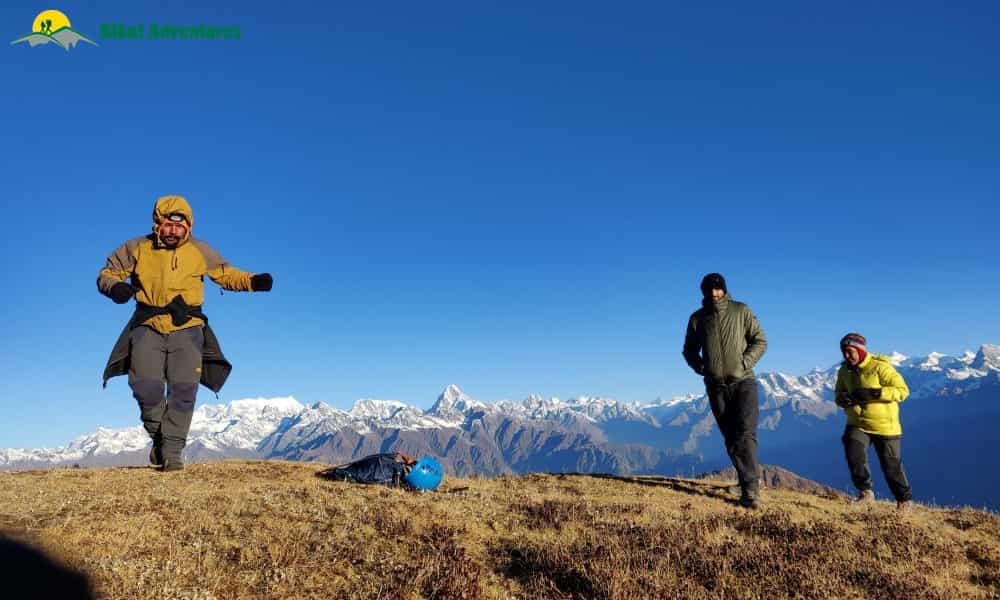
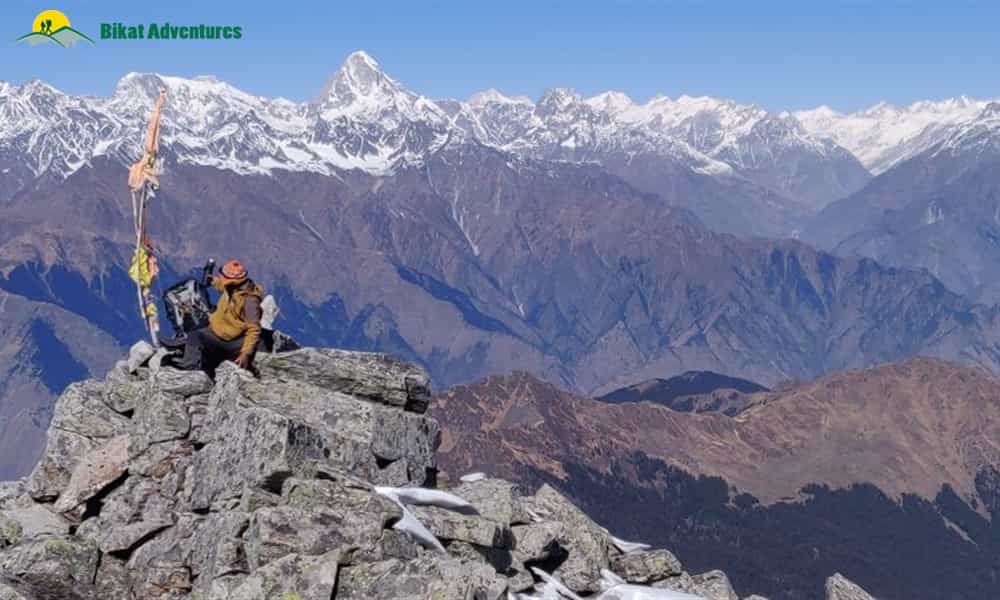
Pangarchulla offers some of the best views you would find on a trek. You are in the company of giants much before you reach the trail head at Dhak – these reverential peaks soaked in mythology and mountaineering stories alike continue to be with you all the way to the end! Pangarchulla Peak trek unveils, little by little, the gems of the Garhwal Range of mountains in Uttarakhand. The prize for getting to the summit is a 360 degree, unobstructed view of the entire range with the massive peaks celebrating your success. While the months of March and April witness cloudy skies slyly hiding all that the trail has to offer, winters experience extremely clear skies with clear and continuous views of these peaks in question. The changing colours of the most prominent peaks in the Garhwal Range against the changing colours of the skies - from golden to pastel to deep hues - it's like the skies and the mountains are talking to each other in colours! Whatever they might be saying, it's a beautiful conversation - one you wouldn't want to miss. 

The skies are clearer, the views are better and the nights are full with a blanket of stars – stuff you would rarely find in March-April.


blog-image-0


3. Mountaineering Experience 

To scale Pangarchulla requires considerable endurance but to scale Pangarchulla in winters will introduce you to a whole new level of grit required to climb any Himalayan peak. We pride ourselves on having tapped into a niche community of climbers who are always on the lookout for bigger and better challenges – they have an unquenchable thirst for adventure just like us! We have developed this community slowly by being an organization that not only holds treks but has dared to venture into the lesser explored world of high-altitude mountaineering expeditions. We want to have something in our portfolio for everyone, irrespective of their level. We also have designed our treks in a manner so as to provide our trekkers with an opportunity to constantly upgrade their skillset in the mountains. Pangarchulla in the winters, is a perfect opportunity for someone who experiences thrill in the midst of a challenge. Its boulder-strewn landscape blanketed with ice is a perfect union of beauty and challenge and hence provides for a unique trekking experience.


4. Terrain 

Winter landscape on Pangarchulla is not synonymous to bland scenery. Taking you through Nanda Devi National Park , Pangarchulla Trek offers up the most spectacular views all throughout its assortment of terrains - from magical views of all the revered mountains in the Uttarakhand region to massive expanses of Oak and Pine tree forests to large meadows and of course some snow and big boulders to end the trail. Pangarchulla's got it all! The clear winter skies sure add to the magic of the trail.


blog-image-0


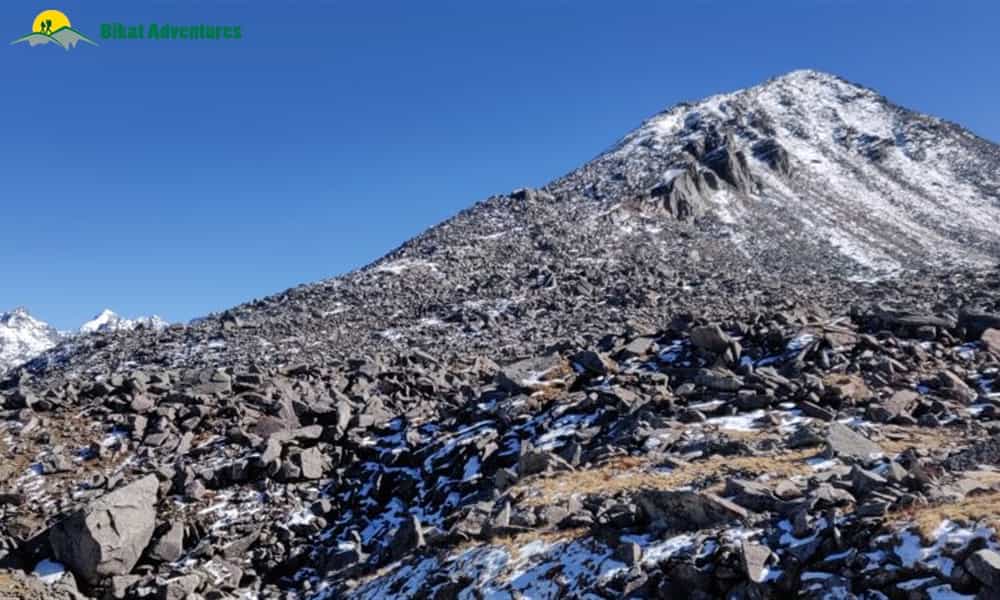
Pangarchulla is especially challenging in the winters for the old snow melts away leaving a massive trail of rocks in its wake. These exposed boulders make the already long run to the summit seem even longer but that's what makes every step forward seem like an achievement. 

We hope we were able to help you make up your mind about the season you want to take yourself up the trail of Pangarchulla. In case you have any more questions, we are only a phone call away.

Share
Prev
Dzongri Trek: Who is This Meant For ?
All blogs
Next
What Legends Live in Deoriatal Chandrashila ? We Might Have the Answer

Leave a Reply

Your email address will not be published.

Max 5 images, total size 3MB
Preview images

Related content

Discover these similar Blogs

10 Mountain Features Every Trekker Should Know: Master the Lingo of the Himalayas

10 Mountain Features Every Trekker Should Know: Master the Lingo of the Himalayas

02 Apr 2026
Kedarkantha vs Dayara Bugyal: The Ultimate Winter Trek Showdown

Kedarkantha vs Dayara Bugyal: The Ultimate Winter Trek Showdown

01 Dec 2025
Skiing in Kashmir: A No-Nonsense Guide to the Gulmarg Skiing Scene

Skiing in Kashmir: A No-Nonsense Guide to the Gulmarg Skiing Scene

09 Nov 2025
Go Nuts November — Official Explainer (How to Enter + Win)

Go Nuts November — Official Explainer (How to Enter + Win)

31 Oct 2025
Gulmarg vs Auli: Where to Learn Skiing in India  (An Honest Guide for 2025)

Gulmarg vs Auli: Where to Learn Skiing in India (An Honest Guide for 2025)

31 Oct 2025
Sleeping Bags that Actually Work in the Himalayan Winters (Not Just on Websites)

Sleeping Bags that Actually Work in the Himalayan Winters (Not Just on Websites)

27 Oct 2025
Snowfall Areas in India You Can Actually Trek Through

Snowfall Areas in India You Can Actually Trek Through

19 Oct 2025
Skiing in India: All You Need to Know Before You Hit the Slopes This Winter

Skiing in India: All You Need to Know Before You Hit the Slopes This Winter

10 Oct 2025
Trekking in Winter: Why Winter Trails Are a Different Kind of Magic

Trekking in Winter: Why Winter Trails Are a Different Kind of Magic

08 Oct 2025
Snow Trekking Shoes in India: What Actually Works on the Himalayan Trails

Snow Trekking Shoes in India: What Actually Works on the Himalayan Trails

08 Oct 2025

Popular tags

Explore more categories and themes from the same trail journal.

March

March

0 treks
April

April

0 treks
Skiing Courses

Skiing Courses

4 treks
May

May

0 treks
June

June

0 treks
Kayaking Courses

Kayaking Courses

0 treks
July

July

0 treks
6000M+ Peaks

6000M+ Peaks

1 treks
Nepal Treks

Nepal Treks

6 treks
Offbeat Treks

Offbeat Treks

26 treks
Scuba Courses

Scuba Courses

2 treks
August

August

0 treks
Wild Life Treks

Wild Life Treks

2 treks
Winter Treks

Winter Treks

28 treks