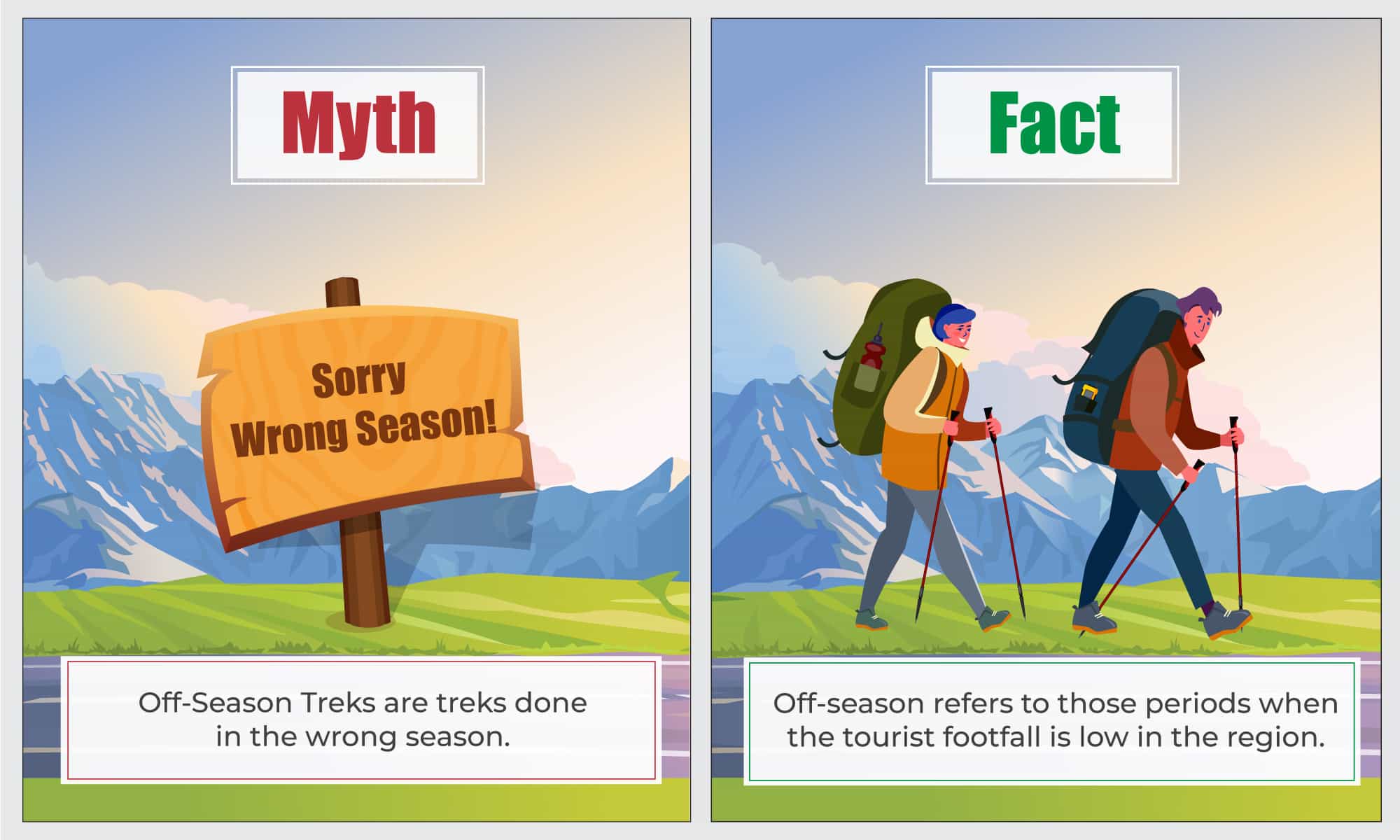
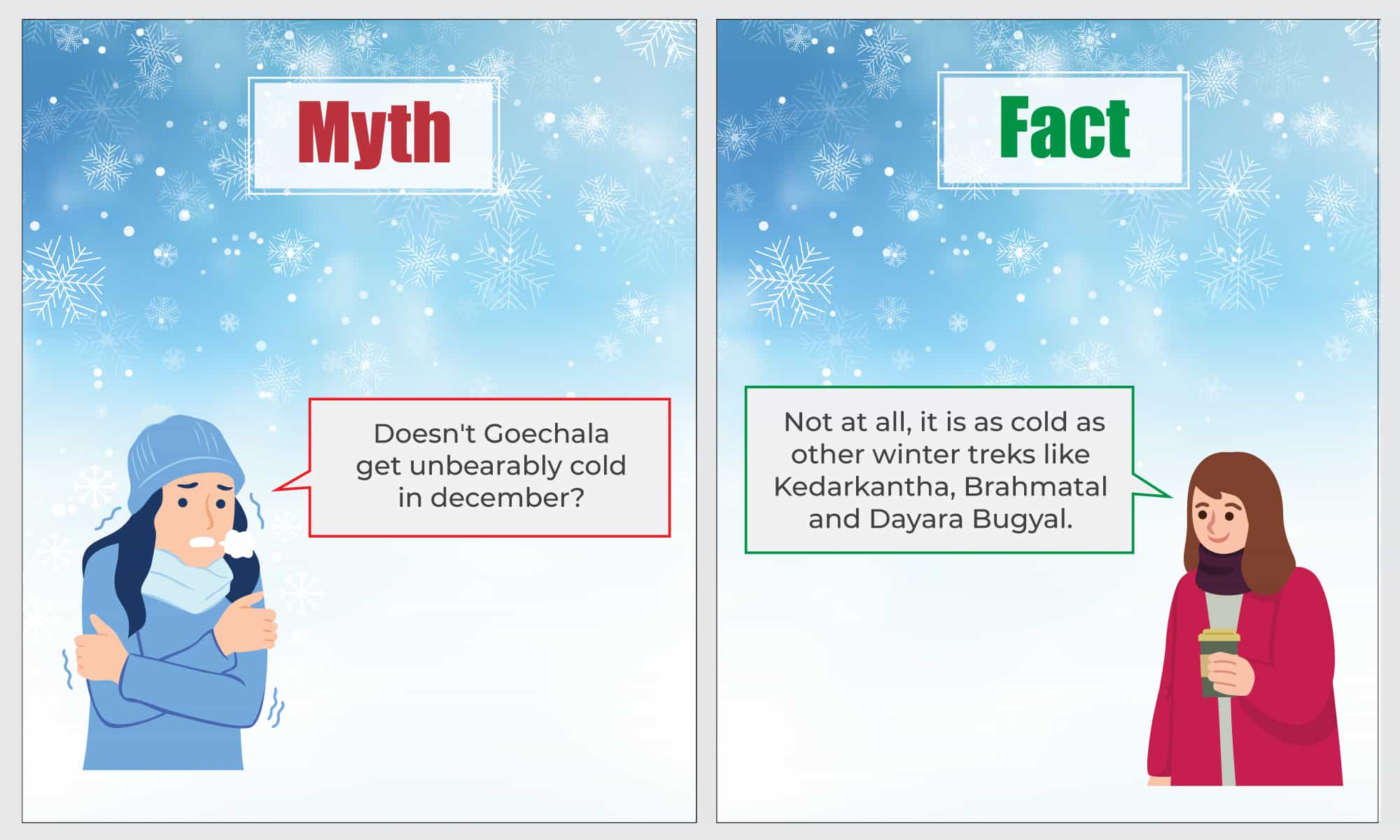
Goechala, Pangarchulla, and Markha Valley are the only treks we hold off-season out of all our itineraries.
Of the three, we have noticed that
Goechala has higher summit rates in the off-season time than the main season.
Markha Valley is relatively unaffected by the season. Homestay options are available on this trail during winters (making sure that the route is always open) and they provide good warmth, allowing for easier acclimatisation.
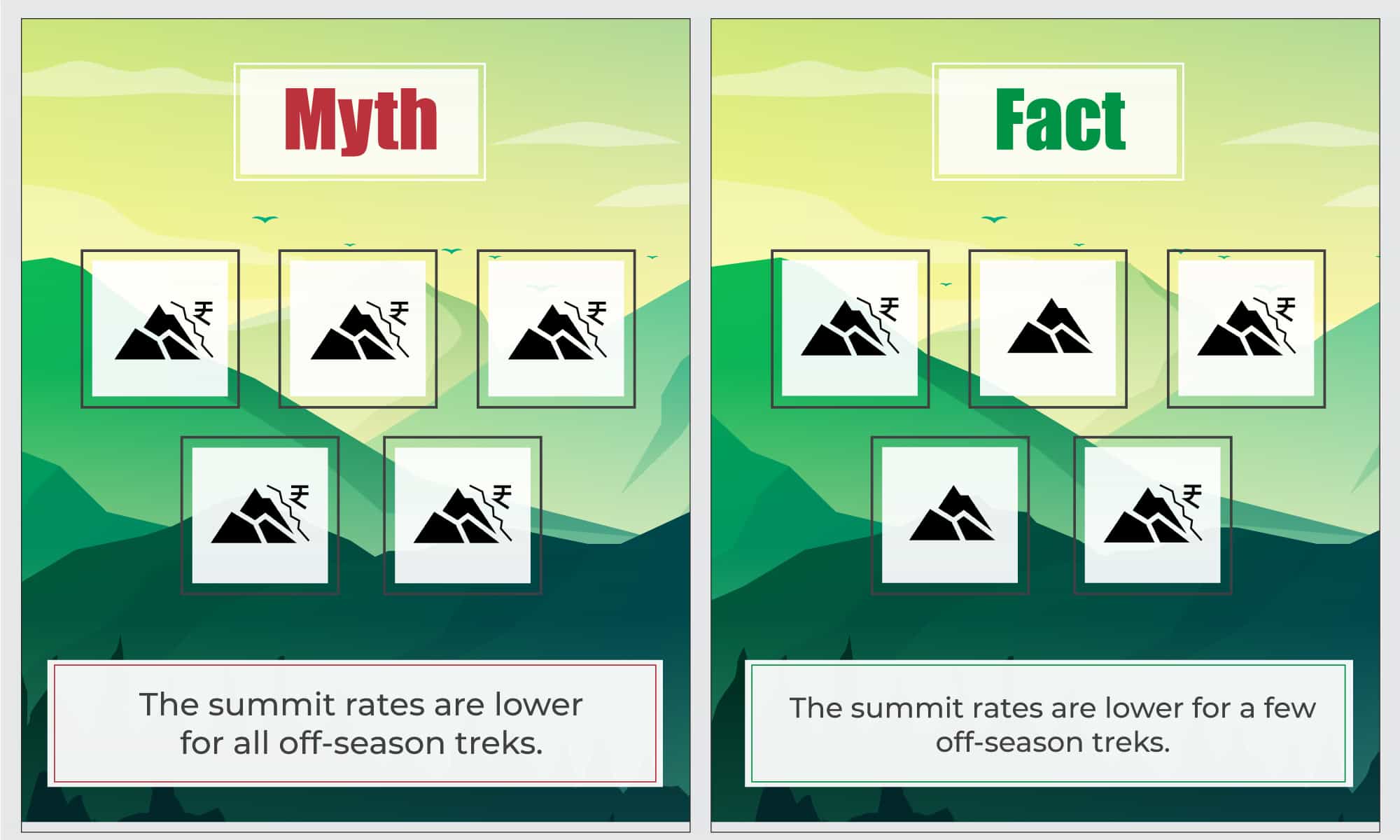
Pangarchulla alone experiences lower summit rates. Our past data shows that summit rates in the winters are 20-30 % lower thant the summers because the trail is more prone to weather and terrain fluctuations.
Despite this, we hold Pangarchulla off-season because of the unique terrain it offers during the winters.
We have a niche community of climbers who are constantly on the lookout for unique and tougher challenges. Attempting Pangarchulla in the winters often ranks highly on that list. This is because the terrain serves as an excellent practice ground for taking on tricky challenges.
If you have completed a BRS level 4 trek and are looking for a challenge to step up your trekking game, Pangarchulla is a great option even if you don’t reach the summit.
But if completing the trek is your priority, we recommend choosing the Goechala or Markha Valley trek.
All in all:
When we first entered the industry ten years ago, we noticed that trekking was largely promoted as a leisure activity in India.
Aiming to touch greater altitudes and off-season treks were not only frowned upon, some operators even used them as tools of intimidation. Lack of safety was often cited to stop trekkers from looking beyond the limited itineraries they offered.
At Bikat Adventures, we wanted to change this. We wanted the trekking community in India to go beyond mainstream trekking- to tackle newer terrain, build better climbing skills, and progress towards technical peaks like Mt. Deo Tibba, Mt. Nun and Mt. Black Peak.
We want the community to enjoy trekking for the sport that it is, a sport to test our limits, push us out of our comfort zones, to learn from, explore and grow as individuals.
Attempting some of the summer treks during winters does exactly that – but on a smaller scale. It tests our mental and physical endurance in compelling ways and prepares trekkers better for technical expeditions that rank higher up on the BRS scale (BRS 6, BRS 7, and BRS 8).
With a trained team and a right climbing attitude to back you, no season is unsafe, no altitude unattainable and no feat unconquerable.
We wish you the happiest and the most splendid of trekking journeys this year and hope to see you venturing into some of our winter expeditions of summer hikes :)