

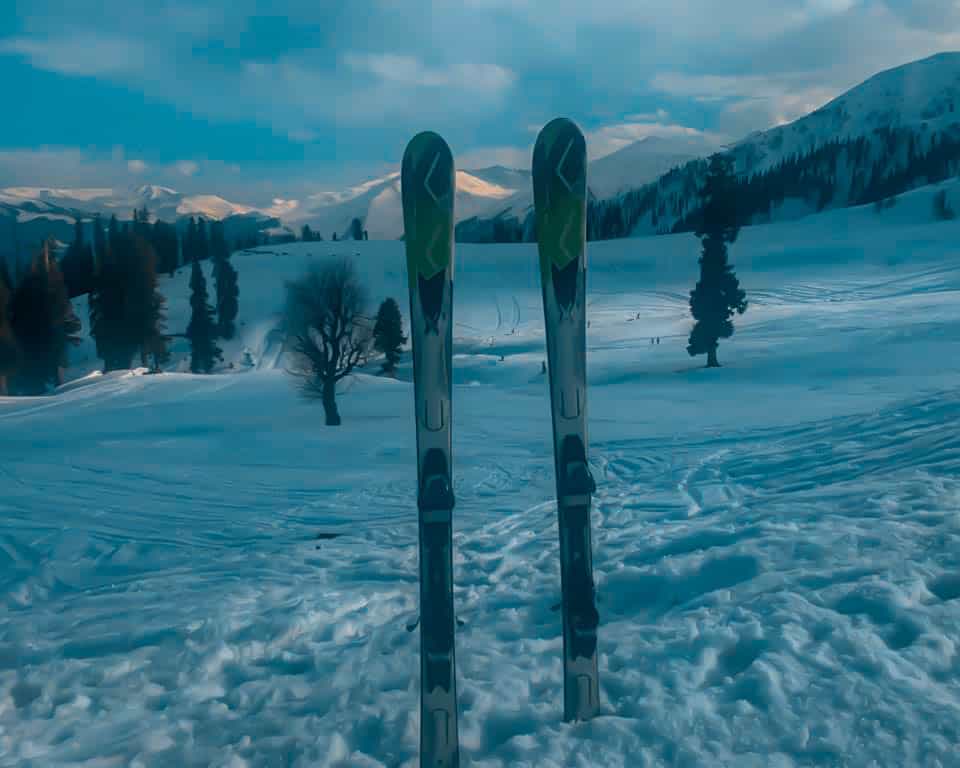
Did you know Skiing or traveling over snow on skis has a history of over eight millennia? Since then, skiing has evolved from being a purely utilitarian activity to one of recreational activity and sport.
The word “Ski” (derived from the old Norse Word skíð ) in fact means “cleft wood” or a “stick of wood”. Needless to say, much like the activity itself, the structure and construction of skis have undergone extensive changes over time.
In this article, we will be discussing the different parts of a Ski along with the purposes each part serves. This is also the first module that will be taught in the Basic Skiing Course by Bikat Adventures.
Different Parts of a Ski
Nose of the Ski:
The nose of the Ski refers to the tip of the Ski in front of your toes. This area isn’t entirely flat. It noticeably curves upward much like an elf’s shoe. Since it is the nose that strikes the snow first while skiing, the upward curve allows a Ski to ride over the snow effortlessly.
But, this shape also makes the nose of the ski more vulnerable to breakage/damage. This is the main reason why one should never plant the skis on its nose when holding them vertically.


