logo icon
  • Treks
    New Category
    • Kedar Kantha Trek
    • Har Ki Dhun Trek
    • Chopta Tugnath Trek
    • Beas Kund Trek
    Medium
    • Valley of Flowers Trek
    • Hampta Pass Trek
    • Sundakphu Trek
    • Goecha La Trek
    Hard
    • Chadar Trek
    • Stok Kangari Trek
    • Rupin Pass Trek
    • Pin Parvati Pass Trek
    image
    Choose your trek difficulty
    View All Treks
  • Expeditions
    New Category
    • New Link
    • New Link
    image
  • Skiing
    • Skiing
  • Why Bikat
  • Full On Travel
  • Blog
  • Shop
  • About

Pure Grit. Pure Adventure.

Bikat means difficult. But with us, that’s not a warning—it’s a promise. Of stories worth telling. Of adventures worth chasing.

Region

Month

Difficulty

Adventure Name

brand
  • Treks
    • Difficulty
      • New Category
        • Kedar Kantha Trek
        • Har Ki Dhun Trek
        • Chopta Tugnath Trek
        • Beas Kund Trek
      • Medium
        • Valley of Flowers Trek
        • Hampta Pass Trek
        • Sundakphu Trek
        • Goecha La Trek
      • Hard
        • Chadar Trek
        • Stok Kangari Trek
        • Rupin Pass Trek
        • Pin Parvati Pass Trek
    • Region
      • Uttarakhand
        • Kedar Kantha
        • Har Ki Dhun
        • Rupin Pass Trek
        • Valley of Flowers Trek
      • Himachal Pradesh
        • Hmpta Pass Trek
        • Beas Kund Trek
        • Pin Parvati Pass Trek
        • New Link
      • Ladakh
        • Chadar Trek
        • Stok Kangari Trek
        • Markha Vallery Trek
        • Lumayuru Trek
      • Sikkim
        • Goecha La Trek
        • Dzongari Trek
        • Greem Lake Trek
      • Bhrigu Pass Trek
        • Annapurna Circuit Trek
        • Langtag valley
        • New Link
    • Season
      • Summer (Apr-Jun)
        • Valley of Flowers
        • Hampta Pass Trek
        • Kedarkantha Trek
      • Monsson (Jul-Sep)
        • Sundakphu Trek
        • Goecha La Trek
        • Markha Valley Trek
      • Autumn (Oct-Nov)
        • Rupin Pass Trek
        • Pin Parvati Trek
        • Har Ki Dhun Trek
      • Winter (Dec-Mar)
        • Chadar Trek
        • Kedarkantha Trek
        • Chopta Tungnath Trek
    • Family Trek
      • Family Treks
        • Chopta Tungnath Trek
        • Har Ki Dun Trek
        • Beas Kund Trek
        • Bhrigu Lake Trek
    • Beginner Friendly
      • Beginner Friendly
        • Kedarkantha Trek
        • Hampta Pass Trek
        • Sandakphu Trek
        • Dzongri Trek
    • Off-beat
      • OFF-BEAT
        • Green Lake Trek
        • Lumayuru Trek
        • Lantang Valley Trek
        • Rupin Pass Trek
    • High Adventures
      • High Adventures
        • Stok Kangari Trek
        • Chadar Trek
        • Pin Parvati Pass Trek
        • Everest Base Camp Trek
    • Bikat Recommends
      • Bikat Recommends
        • Kedarkanth Trek
        • Valley of Flowers Trek
        • Goecha La Trek
        • Chadar Trek
    • Fresh Explorations
      • Fresh Explorations
        • Lamayuru Trek
        • Green Lake Trek
        • Langtang Valley Trek
        • Bhrigu Lake Trek
  • Expeditions
    • New Column
      • New Category
        • New Link
        • New Link
  • Skiing
    • Skiing
  • Why Bikat
  • Full On Travel
  • Blog
  • Shop
  • About
Whatsapp
Chat With Us
Pre Sale
Pre Booking - 8448680062
Post Sale
Post Booking - 9319028363 /8588878499
Email
Email - info@bikatadventures.com
Email
support@bikatadventures.com

Follow us on social media

Subscribe to our newsletter

Get the latest updates and offers.

Contact Us

Whatsapp
Chat With Us
Pre Sale
Pre Booking - 8448680062
Post Sale
Post Booking - 9319028363 /8588878499
Email
Email - info@bikatadventures.com
Email
support@bikatadventures.com

Company

About Us
Careers
Blog
Why Bikat

Support

Contact
Environment Policy
Privacy Policy
Terms and Conditions
Sitemap

Services

Treks
Mountaineering
Crossover Expeditions
Cycling
Bikat Experiences
Skiing
Custom

Mobile

Download on the
Apple Store
Get in on
Google Play
© 2026 Bikat Adventures. All Rights Reserved|Powered by: Novel Knett Software Solutions
Privacy PolicyTerms of Service
FacebookTwitterInstagram
Home
>
Blog
>
Things to Remember for a Self Guided Expedition
Informative

Things to Remember for a Self Guided Expedition

Rishabh Tiwari
Written by
Rishabh Tiwari
06 Jul 2023
0 views
0 comments
Things to Remember for a Self Guided Expedition

Planning your own expedition or trek involves working through numerous logistics and you might still find yourself lost after checking off everything on the list. One of the main reasons why people opt for organised or guided treks and expeditions is to simplify the process for themselves and leave the logistics to the professionals who have been doing it for years. However, if you are seeking some adventure and looking to start from scratch, a self-guided expedition or trek would satisfy your quest for that rush of adrenaline. Although not easy, it is not impossible to figure out the logistics involved in the process.


blog-image-0


This article provides a quick guide to the things you will need to work through while planning your own mountain adventure. Please keep in mind that this list is not exhaustive but only an indicator of the common things to help guide you.


blog-image-0
blog-image-1


Climate and Weather

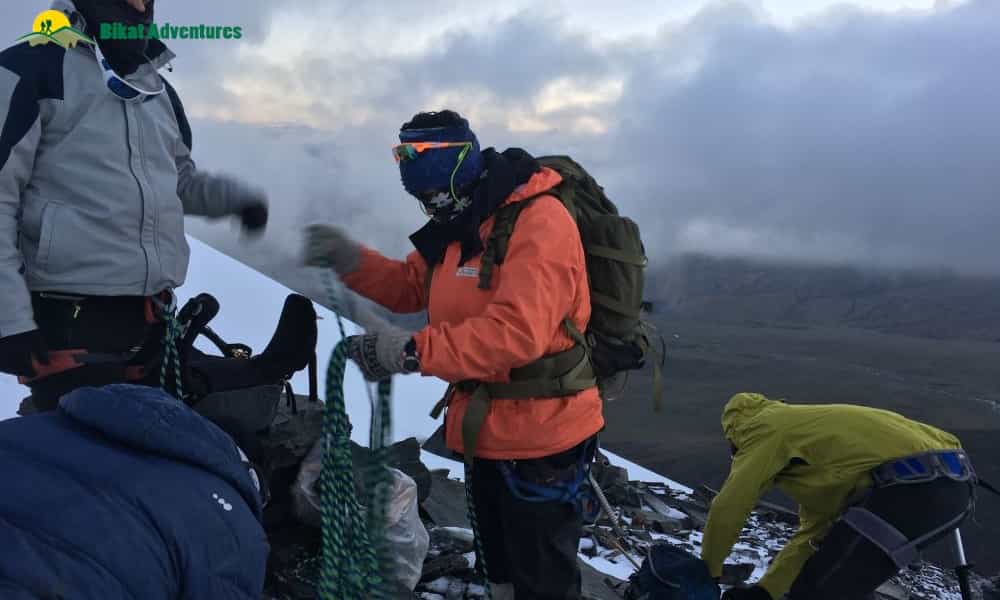
One of the most important things to consider while planning an expedition or trek in the mountains is the prevailing climate during your expected period of travel and the possible weather conditions you might encounter. While extreme cold and snow are almost unavoidable on expeditions and high altitude treks, a general rule of thumb in mountaineering is that the best time to plan a climb is in spring, early autumn or summer. The weather during these seasons is more or less suitable with relatively less winds and snow. However, this might vary from one mountain range to another and the best season for climbing depends on the location. Regardless of the location, you can expect rougher weather conditions during the winter and early spring months with heavy snowfall, strong winds and highly unpredictable weather. It is crucial to understand the weather of the location and be fully prepared to tackle any changes in the climatic conditions without too much difficulty. The following are a few points that will help you understand and read mountain seasons and weather better:


1. Mountains are known to be notoriously unpredictable in terms of weather and climate. Sometimes even the most ideal weather forecast could prove to be inaccurate. You might start off your journey on a bright sunny day only to have the clouds build up and get caught in a storm that there was no forecast for! The increase in altitude is directly proportional to the rise in winds and precipitation. For every 1000m you gain, you will notice a temperature drop of approximately 6℃. Simply speaking, weather conditions in the mountains get windier, wetter and colder when compared to low altitude regions.


2. Use an effective weather forecast app and keep an eye on the conditions while planning and also in the weeks leading up to the climb. Check the weather for the exact location of your climb and not the nearest town or base camp. Do not limit your checks to temperature alone. Make a note of wind speed and the possibility of precipitation. Do not hesitate to postpone your trip if the weather forecast has changed for the worse.


3. Get in touch with the locals. Nobody understands mountain weather better than the locals who live in the region. They will be able to tell you if your planned dates of travel are ideal, how the weather might change, direction of winds and rain and actual temperatures. Speak to them and get a thorough idea along with tips on how best to navigate the route in different weather conditions.


4. Keep an eye on the sky. This could be your best tool for weather forecast while actually out on the expedition or trek. You will learn to read mountain weather better with more experience but a simple point to remember is that if you see the weather changing quickly, adjust your plan to avoid getting stuck in bad conditions.


5. Understanding the clouds above you. Once you have figured out how to read the clouds, you will be able to predict if a storm is headed your way and how severe it is going to be. Lenticular clouds, which typically have a distinctive shape like that of a flying saucer, are bound to bring a storm in the following 6-24 hours when accompanied by strong winds. Cirrus clouds are found in higher altitudes and have a detached and hair-like look. If you spot them alone, the weather is going to be alright. However, if you see them in a combination with low stratus clouds (low level clouds with a uniform base, usually white or grey in colour), you can expect precipitation. Cumulus clouds are fluffy, cotton-like clouds with a flat base and usually indicate good weather. However, if you notice them getting bigger with more bumps, it could mean they are turning into cumulonimbus clouds that bring lightning, thunder, strong winds and even hail.


6. While not always true, if you encounter moderately bad weather at lower altitudes, it is likely that the weather conditions are worse higher up.

If you are carrying a pocket barometer, you can keep a check on the air pressure. A sudden drop in air pressure means that a storm is approaching.


 

blog-image-0


In spite of planning for the best season and checking the weather forecast, it is still possible to get caught up in bad weather during an expedition or trek. Your best bet would be to be prepared and carry all the required gear/clothing that you might need to protect yourself. Do not hesitate to turn back if you are hit by bad weather.


Gear

Going on a self-guided expedition or trek inevitably means possessing and carrying your own gear. Ensure that you thoroughly research the route you wish to explore, with a special focus on the geographical features, terrain and weather conditions you are likely to encounter. You can refer to our article on Geographical Features and Kinds of Terrain Encountered on Expeditions to get a better idea. Once you are clear on this, have a list of equipment and clothing that you will need to navigate such terrain and weather. It would be a shame to realise midway through your journey that you cannot make it any further as you forgot to carry crampons or an ice axe. Certain kinds of terrain require the use of specialised equipment and it is important that you have it all in place before embarking on your adventure. Our articles on mountaineering gear and clothing are a good place to start to understand what you might be needing for your expedition or trek.


blog-image-0
blog-image-1


Travel

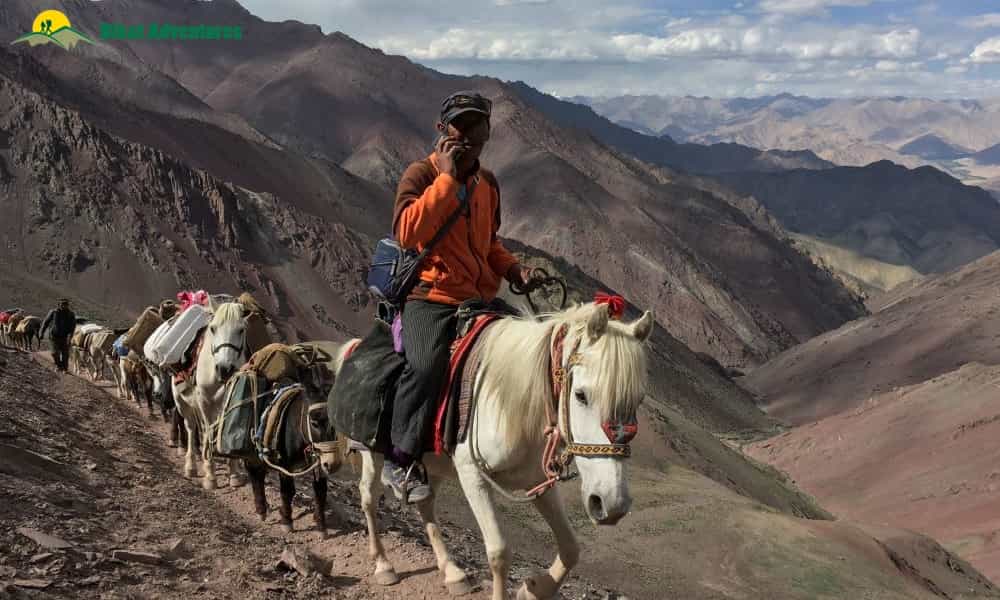
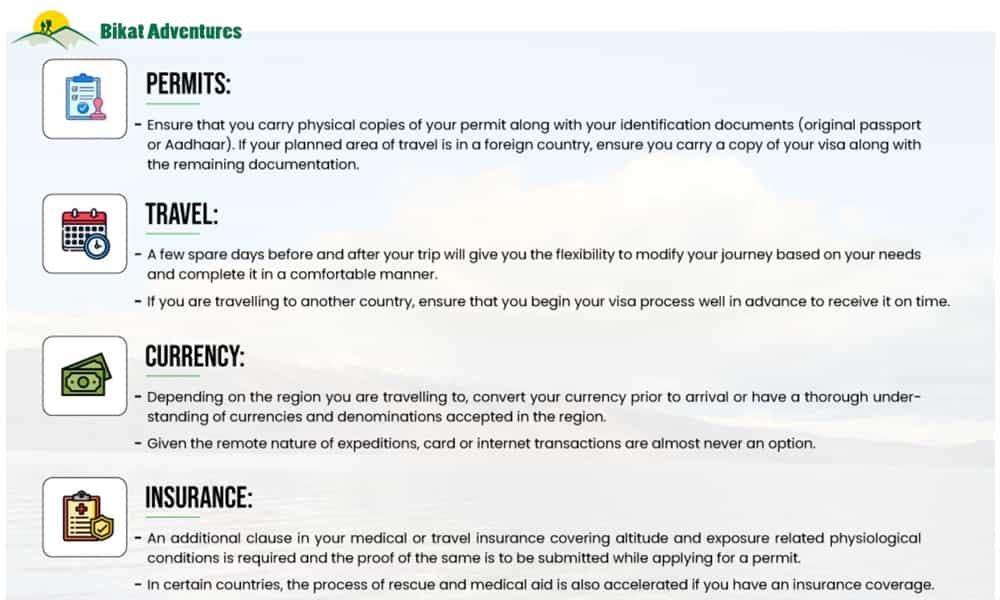
Given that you might need to adjust your plan based on local weather conditions, plan your travel dates to and from the base camp with enough buffer days to account for such changes. A few spare days before and after your trip will give you the flexibility to modify your journey based on your needs and complete it in a comfortable manner. You can then book your flights and local transport to the base camp accordingly. Book refundable tickets wherever possible. If you are travelling to another country, ensure that you begin your visa process well in advance to receive it on time.


blog-image-0


Currency

If you are travelling to another country, ensure that you have sufficient liquid currency in hand. Depending on the region you are travelling to, convert your currency prior to arrival or have a thorough understanding of currencies and denominations accepted in the region. For example, Nepal accepts both Indian Rupees and US Dollars apart from their own currency. Given the remote nature of expeditions, card or internet transactions are almost never an option.


Insurance

An insurance coverage for your expedition or trek is indispensable if you are trekking in a foreign country and is also mandated by the mountaineering federations of different countries even for their own citizens embarking on mountaineering expeditions. An additional clause in your medical or travel insurance covering altitude and exposure related physiological conditions is required and the proof of the same is to be submitted while applying for a permit. Considering that you are traversing in high risk regions, having an insurance would ease any financial burden you might incur due to an accident or mishap. In certain countries, the process of rescue and medical aid is also accelerated if you have an insurance coverage.


blog-image-0


Packing

There is more to packing than just adding everything on the equipment and clothing check-list to the bag. It is important to have your bag packed in such a manner that anything you need is easily accessible at any point during your journey. For example, layer your bag in such a way that your raincover or windcheater is placed on top for easy access in case of unforeseen changes in weather conditions, which is bound to happen in the mountains. Plan and predict what you might likely need for your route on a particular day and ensure that the respective piece of gear/clothing can be accessed with no difficulty. For gear that have sharp tips (crampons, ice axe etc.), use protective casing to avoid abrasions and tears in your backpack or clothing. Most importantly, have a personal first aid kit with basic and prescribed medications (if any) along with dressing, disinfectant and bandages. Remember that on a self-guided expedition or trek, you are more or less on your own and it becomes extremely crucial for you to be self-sufficient in case of a medical emergency. It would also be wise to carry a high range wireless radio to make contact in case of an emergency situation. (Read: How to pack a Backpack?)


Information on the Location and Base Camp

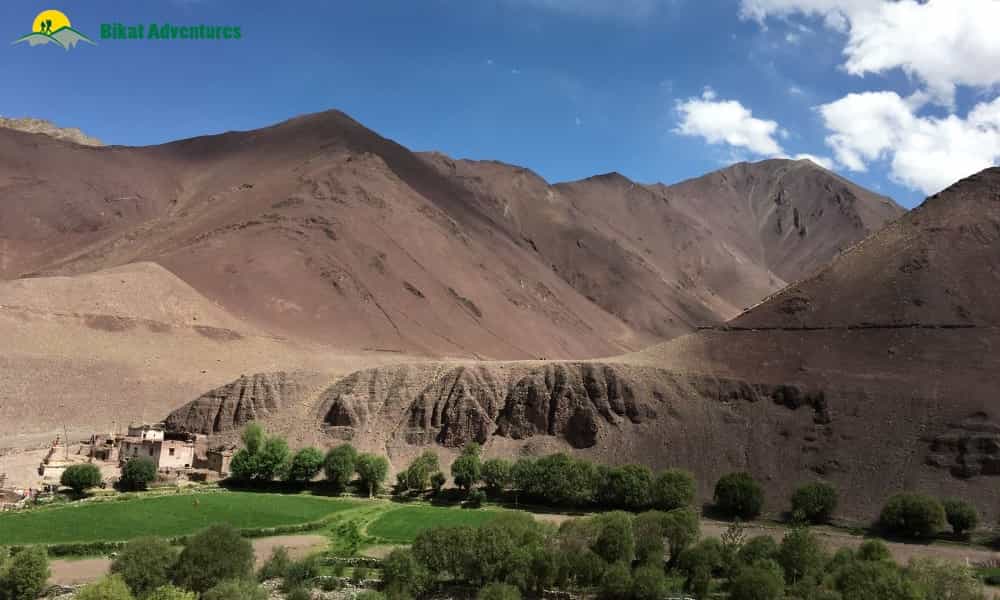
Make sure that you have all possible information about the route, the region of your travel and the base camp from where you intend to start your expedition or trek. Use internet resources to their full potential and get further information by contacting locals, tourism departments or the mountaineering federations to get an idea of what to expect and also be prepared. Information pertaining to how to reach the base camp, costs involved, types of food available, cellular network coverage, availability of stores to purchase any other resources that you might need and options for stay should be gathered and verified while planning your journey.


blog-image-0


Difficulty Level and Skills Required

Most high altitude treks require you to have prior multi-day trekking experience. It is no walk in the park venturing into such heights in the mountains and it is important that you are physically fit to attempt such journeys. It would also require you to have knowledge of mountaineering techniques, equipment and how to use them. A general sense of camping and wilderness awareness are also mandatory. 


However, in case of expeditions, there is a requirement to have successfully completed a basic mountaineering course from a recognised mountaineering school that is affiliated with the country’s mountaineering foundation. Some expeditions could even require you to have completed the advanced course before attempting them. It would help to check the respective country’s mountaineering foundation portal to understand the qualifications and requirements that are to be met. To get a general sense of difficulty levels of various trekking routes in India, you can go through the Bikat Rating Scale and get a sense of what might best suit you.


blog-image-0


Using the above points as a guide while planning your self-guided expedition or trek would go a long way in ensuring that you have a smooth and glitch free experience. It is always best to venture into the outdoors while having yourself covered on all possible fronts and minimising the scope for any disappointments and mishaps. Should you need further guidance or have any questions, feel free to reach out to our team.

Share
Prev
Types of Mountaineering and Common Climbing Techniques
All blogs
Next
Basic Mountaineering Gears and Their Uses

Leave a Reply

Your email address will not be published.

Max 5 images, total size 3MB
Preview images

Related content

Discover these similar Blogs

10 Mountain Features Every Trekker Should Know: Master the Lingo of the Himalayas

10 Mountain Features Every Trekker Should Know: Master the Lingo of the Himalayas

02 Apr 2026
Kedarkantha vs Dayara Bugyal: The Ultimate Winter Trek Showdown

Kedarkantha vs Dayara Bugyal: The Ultimate Winter Trek Showdown

01 Dec 2025
Skiing in Kashmir: A No-Nonsense Guide to the Gulmarg Skiing Scene

Skiing in Kashmir: A No-Nonsense Guide to the Gulmarg Skiing Scene

09 Nov 2025
Go Nuts November — Official Explainer (How to Enter + Win)

Go Nuts November — Official Explainer (How to Enter + Win)

31 Oct 2025
Gulmarg vs Auli: Where to Learn Skiing in India  (An Honest Guide for 2025)

Gulmarg vs Auli: Where to Learn Skiing in India (An Honest Guide for 2025)

31 Oct 2025
Sleeping Bags that Actually Work in the Himalayan Winters (Not Just on Websites)

Sleeping Bags that Actually Work in the Himalayan Winters (Not Just on Websites)

27 Oct 2025
Snowfall Areas in India You Can Actually Trek Through

Snowfall Areas in India You Can Actually Trek Through

19 Oct 2025
Skiing in India: All You Need to Know Before You Hit the Slopes This Winter

Skiing in India: All You Need to Know Before You Hit the Slopes This Winter

10 Oct 2025
Trekking in Winter: Why Winter Trails Are a Different Kind of Magic

Trekking in Winter: Why Winter Trails Are a Different Kind of Magic

08 Oct 2025
Snow Trekking Shoes in India: What Actually Works on the Himalayan Trails

Snow Trekking Shoes in India: What Actually Works on the Himalayan Trails

08 Oct 2025

Popular tags

Explore more categories and themes from the same trail journal.

March

March

0 treks
April

April

0 treks
Skiing Courses

Skiing Courses

4 treks
May

May

0 treks
June

June

0 treks
Kayaking Courses

Kayaking Courses

0 treks
July

July

0 treks
6000M+ Peaks

6000M+ Peaks

1 treks
Nepal Treks

Nepal Treks

6 treks
Offbeat Treks

Offbeat Treks

26 treks
Scuba Courses

Scuba Courses

2 treks
August

August

0 treks
Wild Life Treks

Wild Life Treks

2 treks
Winter Treks

Winter Treks

28 treks